Wednesday, 31 October 2018

Rajnath’s Revelations

Khursheed Wani

On October 23, Home Minister Rajnath Singh arrived in Srinagar for a daylong visit to oversee the security and developmental scenario. The visit was planned in a time period between the conclusion of the municipal polls and the formal beginning of the panchayat polls. This was Rajnath’s first visit to Kashmir after the imposition of Governor’s rule following the demeaning dismissal of Mehbooba Mufti-led BJPDP alliance in July.

Singh pretended that the situation in Kashmir has shown signs of improvement as he cited the down spiral in incidents of stone-pelting and fresh recruitment in militant ranks. Last time, his yardstick for improvement was a motor ride from the airport through a city highway on a no-shutdown day and his participation in a sports event managed by the then ruling party. This time, a complete shutdown against a spree of killings greeted him and he was flown to and from Nehru Guest House in a state chopper.

Singh’s engagements were brief and targeted. He held separate meetings with two former chief ministers, Omar Abdullah and Mehbooba Mufti, apart from talking to delegations of four prominent mainstream parties including National Conference and Peoples Democratic Party. Indications were given that the two parties have mellowed down their stance on their participation in the upcoming panchayat polls scheduled to be held between November 17 and December 11. The two parties would not publicly announce their participation in the village polls as the candidates would not be required to contest on party basis.

The PDP and NC announced to stay away from the polls on the plea that the central government linked the conduct of polls with a bunch of litigations in the Supreme Court challenging the special constitutional status of Jammu and Kashmir. It was NC’s patriarch Farooq Abdullah who surprised his party colleagues by deciding to stay away from the polls. The PDP was constrained to follow suit, and its decision to stay away from the polls was driven by the local political compulsions. Informed sources said that Congress High Command was also mulling to stay away from the polls but the state level leadership took the plunge to refuse the BJP a walkover.

At least two senior leaders in PDP and NC told this writer that the conduct of municipal polls, in whatever manner they were held, has unnerved many top leaders of these parties. They think that the emergence of a new bunch of political entities, who would take over several municipalities, would begin threatening their relevance in future. These leaders concede that their political relevance is a function of their participation in elections, with or without the popular support.

Perhaps Rajnath Singh conveyed to the two former chief ministers that despite their cold shoulder to the municipal polls, the process was concluded and it would not be very difficult to hold the panchayat polls in the same manner. The message was clear that they must not discourage their party rank and file to involve in the upcoming polls. The predicament of these parties is that the Lok Sabha and state assembly polls would be announced any time after the conclusion of panchayat polls. Boycotting these polls would not be affordable.

The timing of Singh’s visit was significant on the security front also. Three days after his visit, the Dubar Move offices closed in Srinagar for bi-annual shifting to winter capital Jammu. This was technically the last security review meeting in Srinagar as the Unified Headquarters would operate from Jammu in the subsequent months. Informed sources said that the home minister devised a strategy for the crucial four weeks between the conclusion of municipal polls and voting for the first phase of panchayat polls. This explains the sudden uptick in the incidents of violence and frequency of encounters between militants and the counter-insurgent forces.

Ignoring ground realities and refusing agency to the people of Kashmir is not a new phenomenon, but BJP is doing it in the most brazen way. Celebrating victory which is actually a humiliating defeat to the idea of democracy is part of the brazenness the party is showing in the wake of general elections in India. The two influential pro-India parties in Kashmir, however, have failed to devise an effective strategy to offset the BJP’s inroads in Kashmir. The possible covert participation in the upcoming polls would further compromise the two parties’ politics in the region. Governor Satya Pal Malik’s incessant attacks on the political philosophies of these parties are not misplaced. He deliberately targets the options of political resolution within the ambit of the Indian constitution, which has been the hallmark of the politics of these parties since their existence.

In the pursuit of its political objectives, the worst targets of the BJP’s vendetta would continue to be the separatists in Kashmir. This explains why Singh squarely refused to engage in any kind of dialogue process. The government has even sidelined Dineshwar Sharma, the Center’s special representative, who was mandated to talk to stakeholders in Kashmir. He is not even relevant to talk to street boys to offer them cricket bats.


from Kashmir Life https://ift.tt/2P1iLFF
via IFTTThttps://kashmirlife.net

Project Corruption

Home Minister Rajnath Singh flew to Srinagar to drop one clear hint that the administration led by governor Satya Pal Malik is going to take the complaints of corruption seriously. He had barely taken off that the government announced the setting up of the Anti-Corruption Bureau. The announcement coincided with the announcement of annulling an agreement with the Reliance Insurance that would take care of the medical insurance of the employees of the state government. Malik told a TV that he has identified the problems that suggested the lack of transparency and presence of a front group in bagging the Rs 325 insurance order.

Corruption has remained a key crisis in the history of Kashmir. At one point of time, in the allotment of liquor thekas, the government decided to get a computer and skip the draw of lots. The computer use also favoured one, and when the investigation was launched, it proved the beneficiary had intelligently influenced the computer and the software supplier well before he inked the supply deal. Another anecdote was when former Deputy Chief Minister Muzaffar Hussain Baig went to Delhi and started exploring the possibility of getting a former Supreme Court judge to head the state’s anti-graft commission that his government had set-up. He was privately told by his judge friends that nobody was willing to come to Kashmir because they fear they might be killed by the corruption mafia.

While the Jammu and Kashmir might have a “respected” status in the corruption index in India, this also is a reality that the state has evolved with a series of anti-corruption bodies. There is a full-fledged State Accountability Commission (SAC) that was set up to tackle the white collar crime. Earlier, the state had the State Vigilance Organisation that would tackle all cases of corruption. Manned by the state police, the SVO has been working for decades now to hunt the corrupt and send them to jails. But its conviction rate is too small. It stands reduced to a scare crow status.

Later, the State Vigilance Commission came into being as a constitutional entity. It has also been working over the years. In Ghulam Nabi Azad era, the state government approved a law that have the graft investigating agency to take over the properties built with the black money. Various properties were seized only to be released later under the order of the court.

But nobody in Jammu and Kashmir is happy over the state of corruption. People seldom talk against it. It has become such a routine that people know there are costs and they are always willing to pay as long as the “service” is delivered.

But the new dispensation that has come at a time when the assembly is in suspended animation is keen to create the ACB as a new organisation to fight the menace. The ACB, Chief Secretary BVR Subrahmanyam said he would do away with the shortcomings and multiplicity of roles in the existing anti-corruption mechanism operational in the State. The Bureau will be based on the best models in the country. He has said the SVO and SVC have many shortcomings which hamper the effective implementation of the provisions of the anti corruption laws and the ACB will do away with all those shortcomings. Governor has amended the anti-corruption laws to get ACB “more teeth”.

Instead of adding a new apparatus, was there a possibility of strengthening either of the existing systems? This is something that was at the core of the table talks in the civil secretariat the day it closed for next six months. Many ask if the ACB will solve the routine corruption or the high end cases involving the politics and the bureaucracy.


from Kashmir Life https://ift.tt/2CRNTjA
via IFTTThttps://kashmirlife.net

Batting Blindly

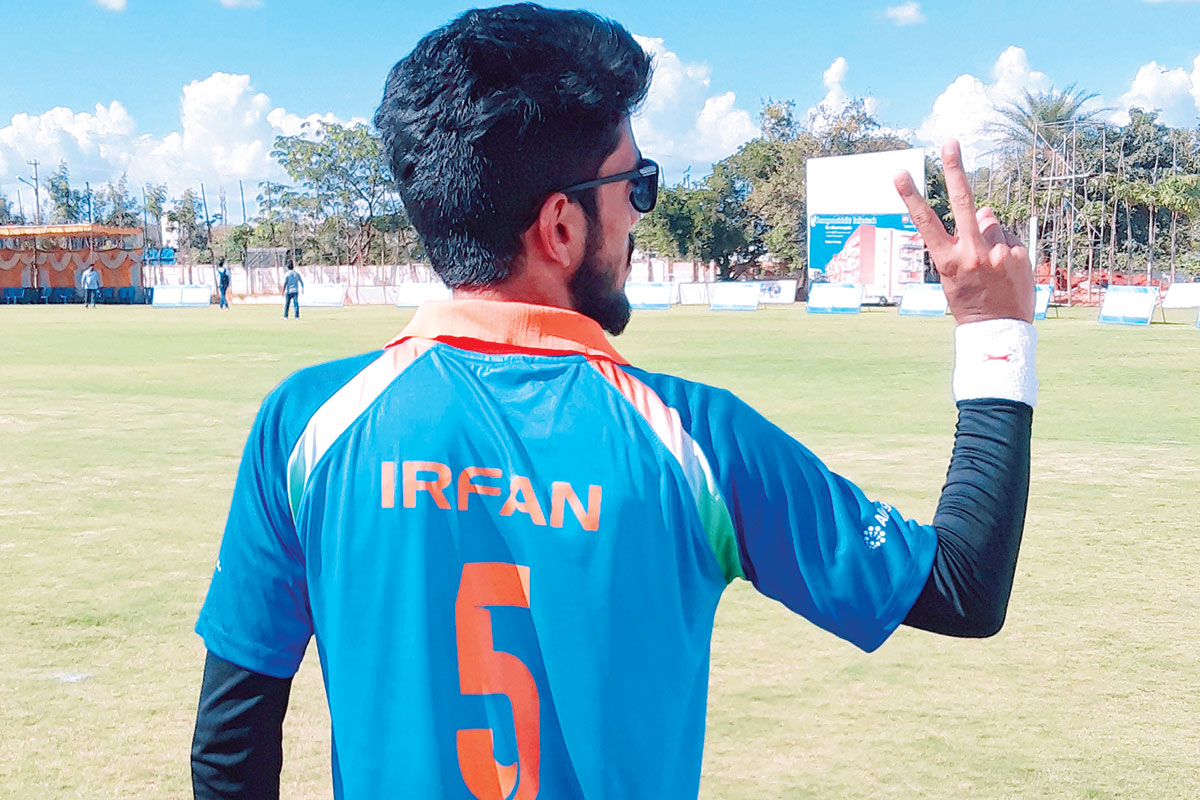
When he closed his eyes forever in the lap of his mother, barely six months after his birth, Irfan was brought up in a universe completely dark. He fought his disability and got the vision that eventually landed him in the international cricket of the specially-abled population, reports Shams Irfan

Irfan Ahmad Mir

The first solo journey, after losing his eyesight, literally in the lap of his mother that Irfan Ahmad Mir, now 21, took was between Dehradun in Himachal Pradesh and Kashmir. He lost his eyesight when he was barely six months old. Now he is an international cricketer.

The 18-hour road journey, during which Irfan changed two buses, and a cab, helped him feel liberated and independent. But, as Irfan sees it now, this first solo journey would have been impossible without undergoing a three-month-long Adjustment to the Blindness course at National Institute for Visually Handicapped (NIVH), Dehradun.

“After I joined NIVH in ending 2014, I could live a respectable and confident life,” said Irfan, with a smile on his face.

But more than the self-confidence, NIVH helped Irfan find purpose in life and realise his childhood dream of playing professional cricket. In October 2018, Irfan played two matches against England during Triangular Cricket Series for the Blind (India, Sri Lanka and England), at Bengaluru.

However, the journey from small Dussu village in saffron town Pampore, to the international cricket arena was not a cake walk for Irfan. He had to literally fight his way out of stigma, indifference and misconceptions attached to disability in Kashmir. “I hated when people behaved sympathetically. I wanted to tell them, I just cannot see, but don’t act like I am dumb too,” said Irfan.

Celebration and Sorrow

In 1997, Irfan was born to Abdul Sattar Mir and Saleema Bano, in small Dussu village, surrounded by picturesque saffron fields. He was the youngest among three brothers and two sisters. Sattar Mir, a farmer who owns orchards and a few kanals of saffron land, was elated to see him smile.

But their joy soon turned into sorrow when the six-month-old Irfan, all of a sudden closed his eyes. It left everyone in the family heartbroken and confused. “We rushed him to doctor in Srinagar who was equally confused,” recalls Abdul Sattar. Three months later, when Irfan once again opened his eyes, small drops of blood started coming out of them. “Nobody knew what was wrong with him as he was the first blind child in our village,” said Abdul Sattar.

When the local doctors couldn’t help, Abdul Sattar took Irfan to Amritsar for specialised treatment. “There doctors did a small surgery and took skin from his lips and pasted it under his eyes to stop bleeding,” said Abdul Sattar.

Then they told Sattar and his wife not to worry and bring him back when he would be ten years old. But as Irfan grew, so did the worries of Sattar and Saleema.

At the age of five-years, Irfan started visiting local government school with other village kids. “But he was not a regular student there,” said Sattar. “It was to keep him busy and engaged.”

A few years later, at the age of eight, Sattar approached a number of religious seminaries’ to get Irfan admitted there, but most of them refused to teach a blind. “Then Dar-ul-Uloom Bilal’iya took him for a few months and he memorized two chapter of Quran there,” said Abdul Sattar.

Later that year, Sattar learned about a team of doctors from Dehradun is visiting Srinagar’s JVC hospital. “When I went there, I realised that my son is not the only one who is born blind. There were much worse cases and I thanked Allah,” recalls Sattar. “I was happy that at least my son could eat himself or take care of his basic needs.”

That day onwards, no one in the family complained about Irfan’s disability. “He was always a smart kid,” said Abdul Sattar with a hint of pride in his voice.

Life is beautiful

In 2014, when Sattar first took Irfan to NIVH, Dehradun, both father and son were sceptical about what was in store for him. “But that proved to be the best decision of my life,” said Irfan with a smile.

Irfan vividly recalls his life in the village before he went to Dehradun. “Entire village map was pasted in my mind. I could move around like any other person. I even knew my orchards and different trees. But my life was limited to village boundaries,” said Irfan. “I used to pluck apples and all with my friends, but something was still missing.”

For moving outside the village, Irfan was dependent on his father or brothers. “But those three months in Dehradun changed my life completely. Now I can travel on my own anywhere in the world. I have that level of confidence,” said Irfan excitedly.

Once the confidence to be independent came, Irfan now started looking ways to nurture his childhood passion of playing cricket. “In early 2015, there were trials for the intra-zonal tournament in Dehradun and I participated,” recalls Irfan.

To Irfan’s surprise, he was selected to play at the national level, a big achievement for a newcomer like him. “I had played cricket with my friends or teachers in Kashmir but that was just for sake of fun,” said Irfan. “But now, I was playing with professional players.”

During the tournament, the captain of Uttar Pradesh (UP) team, Zeeshan Haider, approached Irfan and offered him a spot in his state’s team. “I eagerly took his offer and started playing for UP,” recalls Irfan.

With UP’s team, Irfan played five national level matches in places like Delhi, Mumbai, Gujarat, and Hyderabad. “It was a lifetime experience to travel with teammates,” said Irfan.

For Irfan, travelling is fun now as technology has made the life of a handicapped person like him easy. Irfan now uses Google map and other apps whenever he is travelling to avoid getting lost. “One has to first accept his disability to make things easy in life,” Irfan said. “Whenever I get stuck, I take help from people around me. It has made things easy for me.”

On cricket front, with each game, Irfan was more confident as a player and focused.

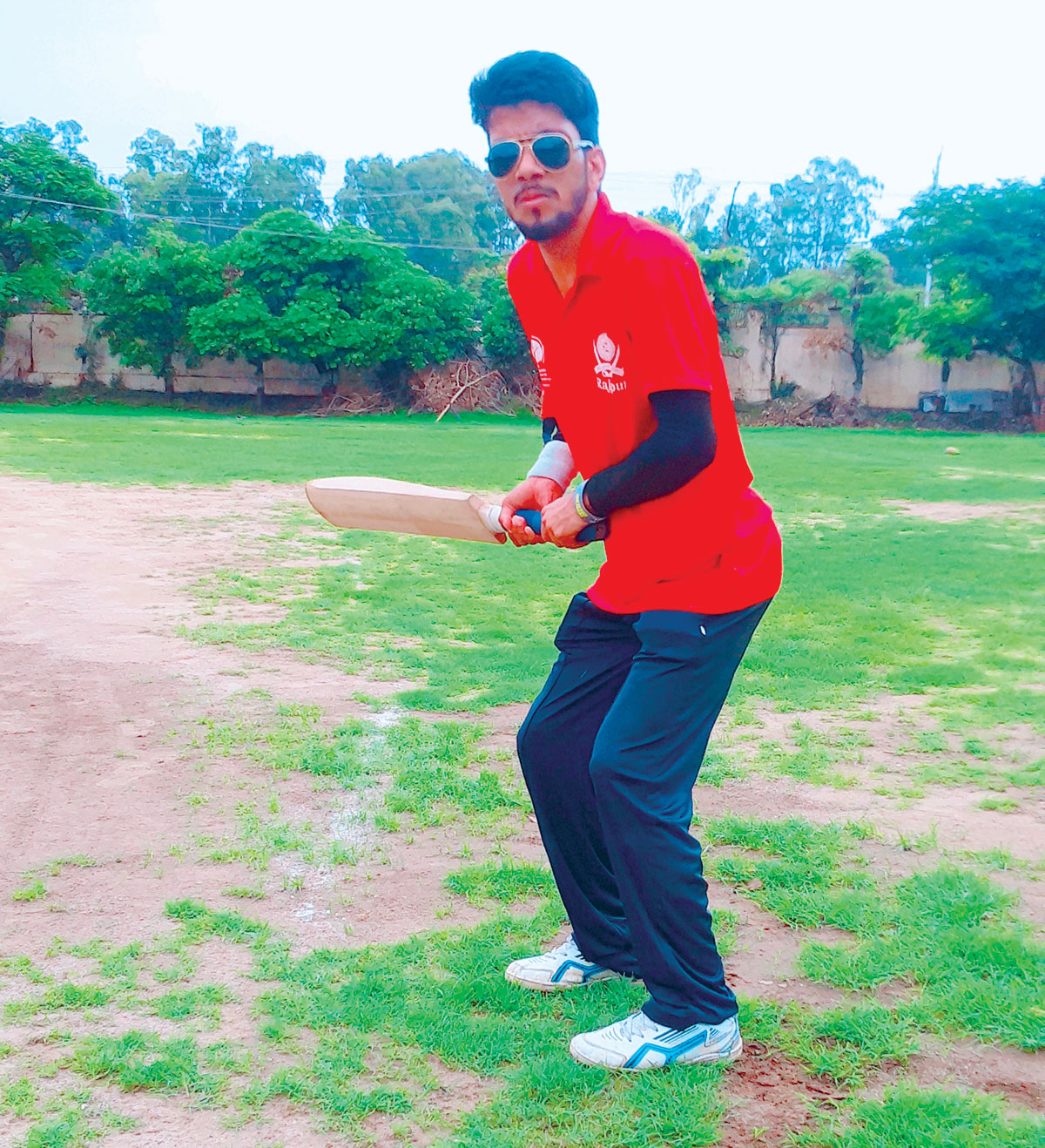
In early 2016, Irfan was approached by Ajay Thakur, a Jammu based blind cricketer, with an idea to form a Jammu and Kashmir blind cricket team. “Till then, our state had no team for blind cricketers,” said Irfan, an all-rounder, who is known for his batting and fielding. “The idea was appealing and I readily agreed to become part of J&K team.”

By the end of 2016, the J&K team had already played a few matches in Punjab. They also participated in a national level tournament in Dehradun, in which they reached to the semi-final level. “We were a new team, still we came forth among eight participants,” said Irfan.

The formation of J&K’s team gave Irfan and other blind players confidence, but no recognition. “There is no infrastructure in place for blind cricketers,” feels Irfan.

In November 2017, Cricket Association for Blind in India, which is affiliated with World Blind Cricket Association (WBCA), selected 50 players from across India for the upcoming international cricket series. It included Irfan.

“I was the only player from Kashmir to get selected among 50. There was also a guy named Rohit Sharma from Jammu in the list,” said Irfan.

Irfan Ahmad Mir

After trials in Pune, Irfan was selected for upcoming India-England series while Rohit was selected for India-Sri Lanka.

“I played two matches. But as our team was very strong, I couldn’t get chance to bat or bowl,” said Irfan. “But it was a great experience for me. Unlike others, I was in the playing eleven in all the matches.”

This series helped Irfan get recognised at the international level, something he had always dreamed about. Irfan is currently practising to get selected for Blind World Cup (2020). “I am hopeful that I will be selected,” said Irfan.

But in order to practice, which is not possible in Kashmir, given the lack of infrastructure, Irfan has taken admission in Japanese Medical Manual Therapy (JMMT) at NIVH, Dehradun. “I am doing this to stay in Dehradun where I can practice,” said Irfan.

Ironically, there is a vast playing field in Irfan’s village but it is under construction since last four years. “I don’t know when it will be completed,” said Irfan.

Also, Irfan is pursuing graduation through distance mode from Delhi University. “I cannot join regular college because I need breaks for playing cricket,” said Irfan.

Google Helps

Now Irfan travels to and fro between Dehradun and Kashmir frequently on his own. “After the first solo travel, I have done many travels where people get confused and think if I am really blind,” said Irfan. “Technology has helped a lot and made the life of people like us very easy. Now we don’t have to ask a person which place is this, google map tells you everything.”

During his travels, Irfan has met interesting people who ask all kind of questions, including weird ones like, how do you eat, or how do you differentiate between toothpaste and a face-wash. “We are blind but not fools,” said Irfan with a laugh.

Irfan recalls how at home while playing cricket with his friends, the biggest challenge used to be to guess where the ball is. “But, in Dehradun, I discovered that our cricket ball is different and it makes a sound when tossed around,” said Irfan. “That small discovery changed my entire life.”

Irfan accepts that playing international level cricket so early in his career was not on his mind. “But if you believe in Allah, and then in yourself, everything is possible,” said Irfan.

As of now, Irfan is content with his life and never complains about his disability. “We want same dignity, the same respect. That is all I crave for in life,” said Irfan. “I feel chosen by Allah. He took my eyes but gave me a vision.”


from Kashmir Life https://ift.tt/2OXYHnH
via IFTTThttps://kashmirlife.net

Panchayat Polls-2018: 1886 nominations filed for Sarpanch Halqas, 6763 for Panch Wards in Phase-I

Srinagar

For the Phase-I of Panchayat Polls, 1886 nominations have been filed for 547 Sarpanch Halqas and 6763 nominations for 4151 Panch wards across the State till the last date of filing of nominations on Tuesday. Voting and counting for Phase-I of Panchayat Polls-2018 is scheduled to be held on 17 November 2018.

According to a spokesman of the office of Chief Electoral Officer, J&K, in Kashmir division, 713 nominations have been filed for 259 Sarpanch Halqas and 2383 nominations for 2021 Panch wards while in Jammu division, 1173 nominations have been filed for 288 Sarpanch Halqas and 4380 nominations for 2130 Panch Wards going to polls in Phase-I.

He said the last date for filing of nominations has been extended by four days in Gurez Block of district Bandipora in Kashmir division in view of the fresh snowfall in the area.

The spokesman said for Phase-I in Kashmir division, 204 nominations have been filed for 64 Sarpanch Halqas and 1051 for 498 Panch Wards in four blocks of district Kupwara including, Keran, Ramhal, Tarathpora, Teetwal, and Tanghdar; 18 nominations have been filed for 20 Sarpanch Halqas and 88 for 148 Panch Wards in three blocks of district Bandipora including Gurez, Bakhtoor and Tulail; 223 for 72 Sarpanch Halqas and 767 for 584 Panch Wards in five blocks of district Baramulla including Kunzer, Uri, Parenpillan, Noorkhan and Kandi-Belt of Rafiabad; 15 nominations for 15 Sarpanch Halqas and 28 for 105 Panch Wards in Gund block of district Ganderbal; 8 nominations for 5 Sarpanch Halqas and 10 for 45 Panch Wards in Khanmoh block of district Srinagar; 38 nominations for 26 Sarpanch Halqas and 128 for 222 Panch Wards in Khansahab block of district Budgam; 133 nominations for 23 Sarpanch Halqas and 298 for 179 Panch Wards in six blocks of district Kargil including Durbuk, SingayLalok, Kharu, Nyoma, Rong and Rupsho and 74 nominations for 34 Sarpanch Halqas and 217 for 242 Panch Wards in six blocks of district Leh including Durbuk, SingayLalok, Kharu, Nyoma, Rong and Rupsho.

He said in Jammu division, 143 nominations have been filed for 50 Sarpanch Halqas and 592 for 358 Panch Wards in five blocks of district Kishtwar including Dachhan, Bunjawah, Marwah, Padder and Warwan; 229 nominations for 52 Sarpanch Halqas and 700 for 369 Panch Wards in five blocks of district Doda including Bhallessa, Changa,Jakhyas, Chilli and Pangal; 101 nominations for 27 Sarpanch Halqas and 355 for 195 Panch Wards in two blocks of district Ramban including Ramsoo and Khari;196 nominations for 42 Sarpanch Halqas and 869 for 332 Panch Wards in four block of district Udhampur including Dudu-Basantgarh,Latti-Marothi, Panchari and Moungri; 135 nominations for 29 Sarpanch Halqas and 505 for 209 Panch wards in two blocks of district Kathua including Bani and Duggan, 137 nominations for 35 Sarpanch Halqas and 532 for 273 Panch Wards in two blocks district Rajouri including Manjakote and Panjgrain and 232 nominations for 53 Sarpanch Halqas and 827 for 419 Panch Wards in two blocks of district Poonch including Bufliaz and Surankote.

He said the last date for withdrawal of nominations for Phase-I is, 2 November 2018 while polling and counting of votes for this phase will be held on 17 November 2018.


from Kashmir Life https://ift.tt/2DfOlt7
via IFTTThttps://kashmirlife.net

Power Push

Government’s effort to complete an electrification project ahead of schedule has helped a new group of entrepreneurs to get into the manufacture and value addition of items that state’s power distributors require, reports Masood Hussain

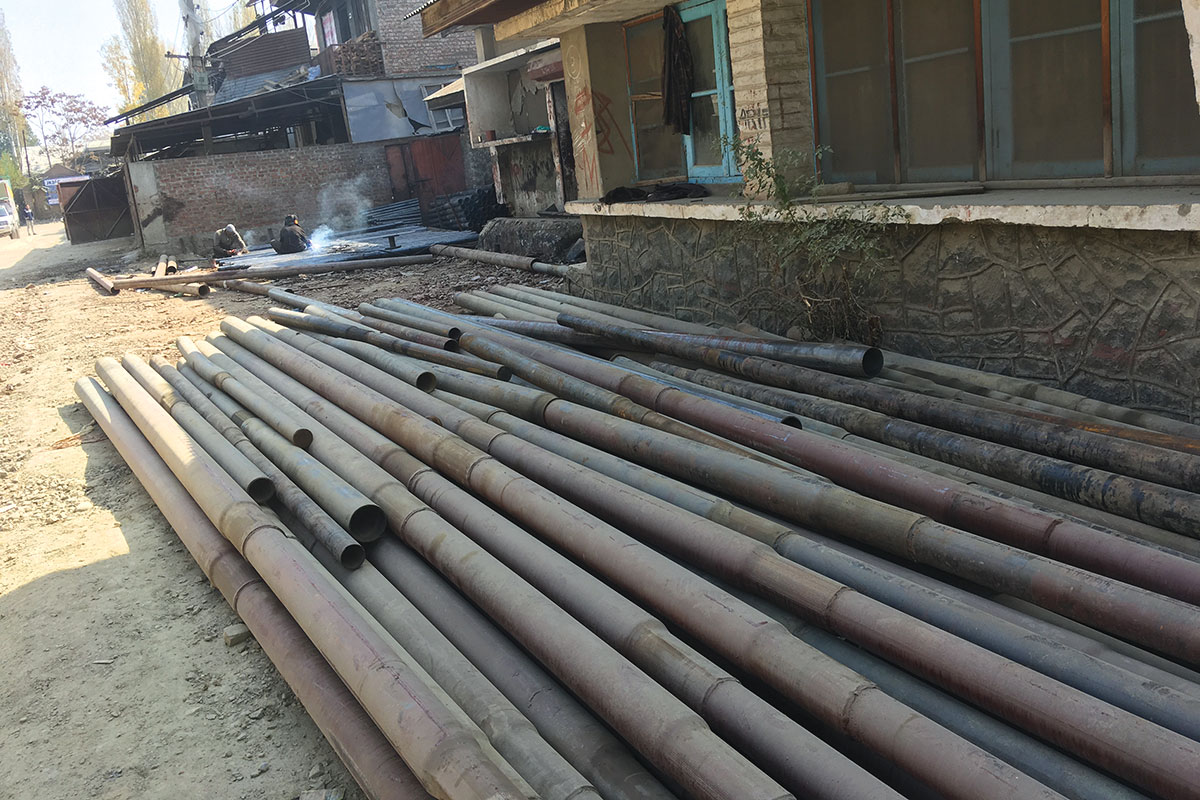
A stock piles of electric poles.

Generation and transmission apart, the state’s power distribution set-up is hugely dependent on the local industrial manufacture. Over the years, a number of entrepreneurs with sound financial and engineering backing have jumped into the manufacture of various products that keep the flickering hopes alive that Kashmir, one day might have all the solutions to all the energy problems.

“Across the state, there are almost 80 units manufacturing various items that the power development department (PDD) requires,” Mohammad Ashraf Mir, one of the entrepreneurs already in this sector, said. “The fact is that we may not have work for all the days of the year but the reality is that we are solely dependent on the power lines.”

Basically, a set of schemes, mostly the central sponsored, are fundamental to the flip that the power manufacturing sector is getting. Initially, it was the Accelerated Power Development and Reforms Programme (APDRP) that the central government launched in 2002. Aimed at reducing the Aggregate Technical and Commercial (AT&C) losses in the power sector, the plan envisaged strengthening and upgrading the sub-transmission and distribution system of high-density load centres like towns and industrial centres. Jammu and Kashmir had its own problems. Because of the security situation, not many major companies were willing to come to the state. Some work was done, but not much, and the funding pattern was assistance from the centre only.

The central government in 2008 restructured the APDRP and converted it into a central scheme, the R-APDRP. This scheme had two parts with the same objective of reducing the losses. The first part, which was more about mapping, came as 100 per cent central sponsored, and in the second part, Jammu and Kashmir as a special category state got 90 per cent. The interesting part of the scheme, according to planning officials in the government, was that if the states would hit the target, the funds would convert into a grant. In case, they failed, the funds spent under the scheme would become loans. Though a lot of transformation capacity was added and parts of distribution networks were improved, officials admit, “Net outcome was unimpressive”. The project had a sanctioned cost of Rs 1870 crore.

Prime Minister Narendra Modi announced Pradhan Mantri Sahaj Bijli Har Ghar Yojana (Saubhagya) In September 2017. The scheme is aimed at achieving universal household electrification. In the case of Jammu and Kashmir, funds come as a grant to the tune of 85 per cent. When the scheme was announced, Jammu and Kashmir had 1547332 of its 1915727 households un-electrified. The scheme will conclude by November 2018.

“We have to actually cover 3.82 lakh families and 2.50 lakh we have already done,” a senior state government official, privy of the developments, said. “We are right now trying to complete the project by October 31. If we do it, we will get an award of Rs 100 crore for completing the project before the deadline is over, and that is why we are so keen to achieve it.”

These three schemes and many others falling under the Prime Minister Development Fund (PMDP) have been the key factor is giving a flip to the industrial manufacture. The Saubhagya scheme actually requires taking the lines to the un-electrified areas for which the government is in the requirement of three things: the steel tubular poles, the conductors, transformers and other basic requirements for making the supply possible.

In order to achieve the target, the industries department managed the inclusion of a new group of entrepreneurs to get into the electric pole business. “We had a detailed meeting with the PDD and we assured them that the people already working in the sector have enough of capacity to deliver,” Industries Commissioner Shalinder Kumar said. “This was assured by the unit holders and the PDD agreed and this helped us introduce the new crop of entrepreneurs into the field, and we are hopeful that we will achieve the target.”

Since the requirement of the poles is of the order of 258408, the new set of entrepreneurs will supplement the efforts all others are doing. “We are 35 new players, and some of us have made the basic investments in getting the machine and are in the process of securing the raw material,” Merhrajuddin, one of the new entrants to the field, said. “Our steel fabrication units were not doing much this past year and the new assignment will hopefully help us sail through.”

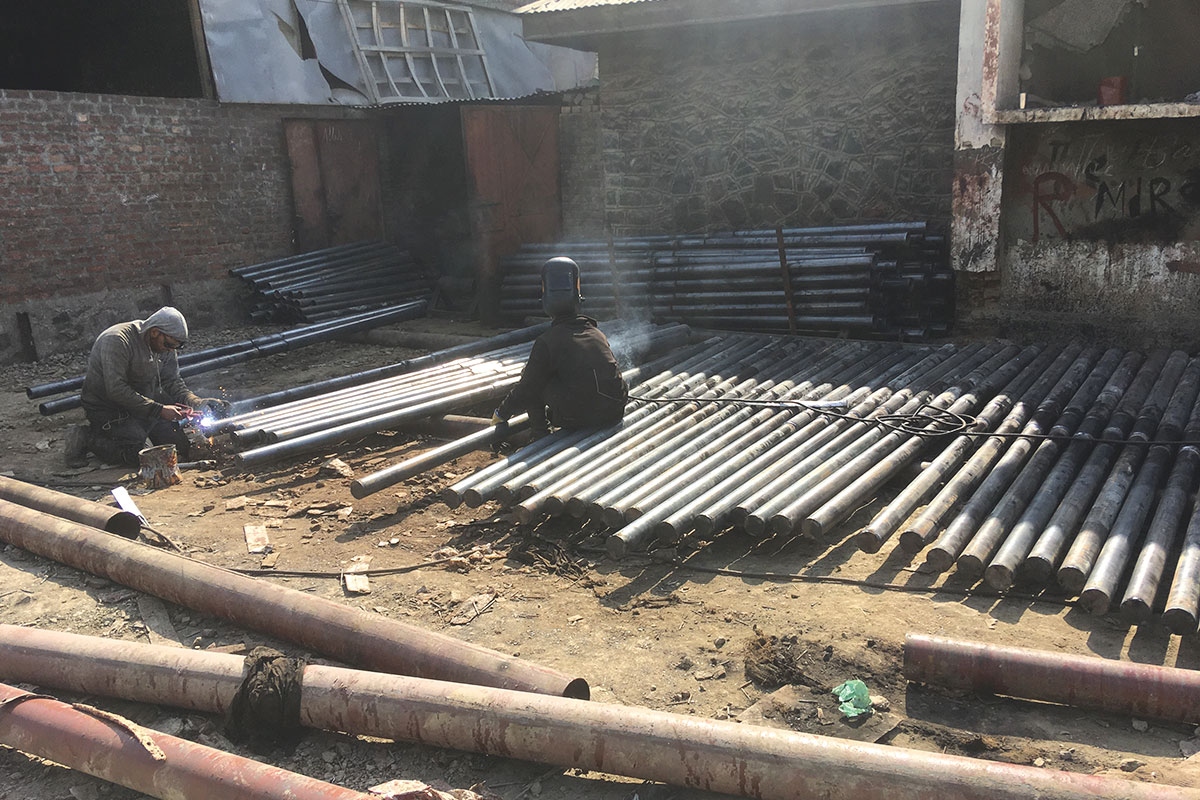
“It is highly capital intensive because you have to import the pipes and then join two or, in certain cases, three pieces to make a single pole,” Naeem Raja, who heads the electrical industrial units in Kashmir, said. “Margins are better to units who can store the raw material or purchase outside the bank loan. It also hugely depends on how quickly the end user releases the payment.”

The pole manufacturers busy in their work.

Raja said that most of the units work seasonally on one thing. “This is a fact that these days, tabular pole making is the priority, but once the project closes, we will get back to the other allied manufacturing activity, maybe transformers and other things,” he said.

Though there are a number of units having an investment in the power conductor manufacture the surging aluminium costs have prevented them from getting into it. “We have a unit in Jammu that has a huge capacity to store in advance and it helps him to hedge the cost risk,” Raja said. “This is a factor that we are unable to match.”

The introduction of the GST, local manufacturers said, has created a common market which has given a level playing field for all. “When some non-local major companies got major contracts under various schemes, we expected they would purchase part of the requirement from local units,” one insider, who spoke on the anonymity, said. “But because of GST, they got almost everything from outside. In certain cases, in which the toll and entry tax made some of their items expensive, they made local purchases.”

What worries some of the key players in the power manufacturing sector is that the increase in players will reduce the pie. “Some units were doing 3000 poles a year, and now they may get reduced numbers to deliver which can tell upon their viability,” one of the members said. “To hedge that risk, we are now getting into allied activities. If somebody was into transformers, he has added another unit that takes care of the poles and other fabrication works. That is how we will have to sustain in the long run.”

Raja said that the particular scheme will help the unit holders to go to the next level. “We already have one success story in Alba Power,” Raja said. “There are huge competition and not much of the work, but that is how we have survived and struggled for all these years.” He said the local industrial units which work with the power sector must be having a cumulative business of Rs 70 crore or maybe more, in a year.

The real flip, however, could have been if the power sector projects – transformation, HTL and other items, could be broken into smaller projects which would help the local players to get in. “All the major projects are bagged by major companies on basis of the huge balance sheet and they come with everything from own vendors,” Raja said. “That is why the major investment in Jammu and Kashmir is not helping the local economy to grow. Even under the central laws, the major project implementing agencies should essentially get almost thirty per cent of their requirements locally, which is usually being implemented in breach.”


from Kashmir Life https://ift.tt/2yH0SBW
via IFTTThttps://kashmirlife.net

Five lottery sellers arrested in Srinagar

Srinagar

Jammu and Kashmir police on Wednesday claimed to have arrested five lottery sellers in Lalchowk area of the Srinagar.

“A police party of Police Station Kothibagh apprehended 05 lottery ticket sellers who were identified as Mehraj din Dar son of Abdul Khaliq resident of Batwara, Hayat Ahanger son of Noor Mohammad resident of Tankipora, Nazir Ahmad son of Ghulam Ahmed resident of Barbarshah, Altaf Ahmed Waza son of Ghulam Hassan resident of Nawakadal and Farooq Ahmed Dar son of Mohammad Amin resident of Bemina,” said police spokesman in a statement.

“Relevant material including 06 mobile phones, lottery tickets were recovered from their possession, besides an Auto Rickshaw bearing registration number JK01AA/4145 was seized,” the spokesman said.

“In this connection, a case FIR number 70/2018 under relevant sections of law has been registered and the investigation has been taken up,” he said.

“People are requested to contact 9596770514, 9596770623 or Dial 100 in case of complaint of such nature,” said police spokesman in a statement.


from Kashmir Life https://ift.tt/2OfXCCr
via IFTTThttps://kashmirlife.net

Satya Pal Malik

Unlike his predecessor, Governor Satya Pal Malik, loves to remain in news. Last time, Malik made headlines when he predicted Srinagar’s mayor even before the final phase of ULB’s election was over. But this time Malik has landed in controversy by suggesting that local political parties in the state have no right to dictate when to hold talks with Pakistan.

Malik while inaugurating Sri Pratap Singh (SPS) Library said that “No one has right to dictate to us to hold dialogue with Pakistan; that is our prerogative.”

The first one to react to Malik’s remarks was senior Congress leader and former Union Finance minister P Chidambaram who took a dig at Governor Malik, saying the country’s governors are the new viceroys.

In a series of tweets, the former finance and home minister said: “J&K Governor says political parties have no right to talk about India-Pakistan talks. He is probably a votary of ‘partyless democracy’ or ‘no democracy’ at all. “

“We were told that the last viceroy was Lord Mountbatten. Wrong. Appointed Governors and Lieutenant Governors are the new Viceroys,” Chidambaram tweeted.

Earlier two main regional political parties, National Conference and Peoples Democratic party, also criticized the governor Malik over his comments.

The national conference rejected the assertion of Governor Malik wherein he had negated the role of local parties favouring peace process.

“People of Jammu and Kashmir are the primary stakeholders and that National Conference is the largest political dispensation will continue to highlight the issues that concern our people. We have been the advocates of dialogue, both internal and external, since long before Governor Malik assumed office and we will continue to advocate it after his tenure as well,” Chief spokesperson of the NC Aga Syed Ruhullah Mehdi said.

The PDP also criticised Malik’s remark. Party’s chief spokesperson Rafi Ahmad Mir said, “The party is not a feckless sycophant but the representative of peoples aspirations. PDP since its inception has been in the forefront pitching for dialogue and reconciliation between the two countries so that a new era of peace is ushered in the state of Jammu and Kashmir that has been witnessing mayhem and bloodshed for decades.”

He said, “The state Governor must bear this glaring reality in mind that it is the people of Kashmir who have been bearing the brunt of hostilities between India and Pakistan and due to such arch rivalry between the two countries, the state has been converted into a war zone where death has become a permanent headline.”

– Tahir Bhat


from Kashmir Life https://ift.tt/2qkNY7S
via IFTTThttps://kashmirlife.net