Thursday, 12 September 2019

Briefing

SRINAGAR

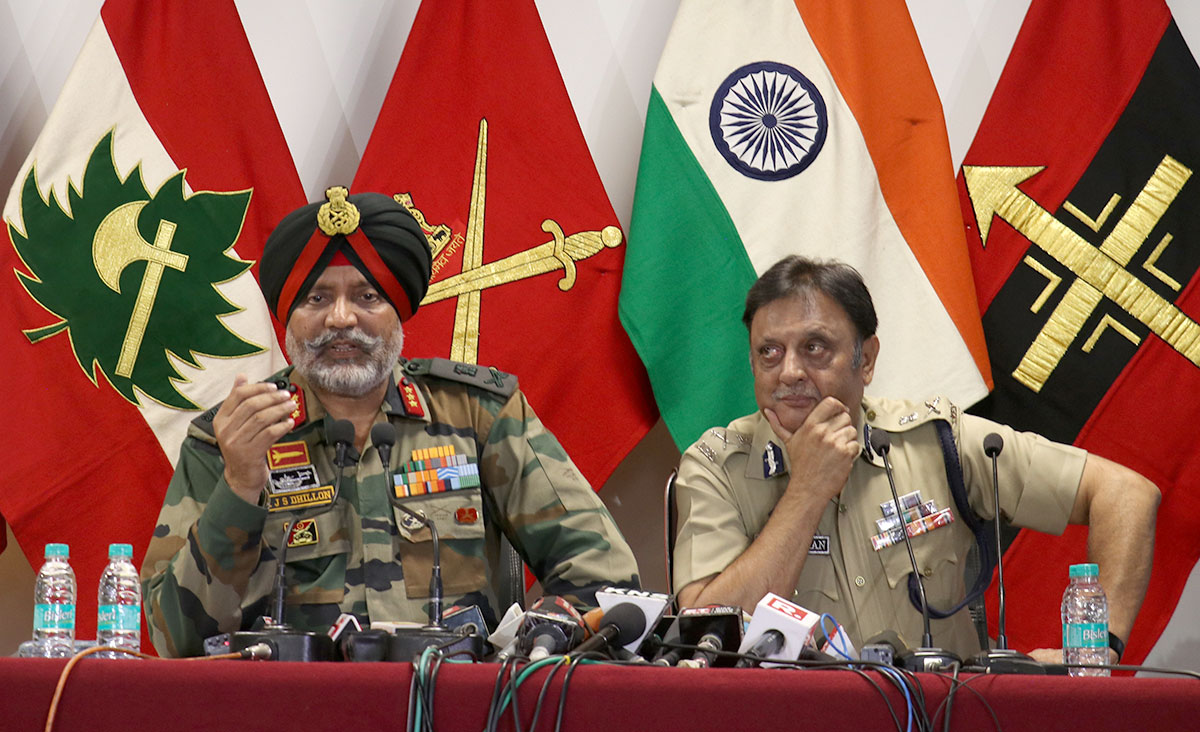
The Commander of Srinagar based 15-corpse Lt Gen K J S Dhillonrevealed the arrest of two Pakistani residents, belonging to Lashkar-e-Toiba. Identified as Mohammad Nazim and Mohammad Khalil, the commander played a video in which the two detained are confessing to be LeT recruits. He said Pakistan is desperately trying to infilitrate people into Jammu and Kashmir and the attempts are frustrated on daily basis at the Line of Control.

DHARMSALA

Part of the tourists who deserted Kashmir on the orders of the state government have shifted to Dharamsala, Tribune reported. “The famous restaurants and tea shops in Dharamkot are again buzzing with activity,” the newspaper reported. “Sanjeev Gandhi, a hotelier, said the number of Israelis coming here had increased since the situation in Kashmir turned worse. However, most of them are in a transit mode. Many are still trying to go to Leh via Manali, while others are planning to move back.”

DELHI

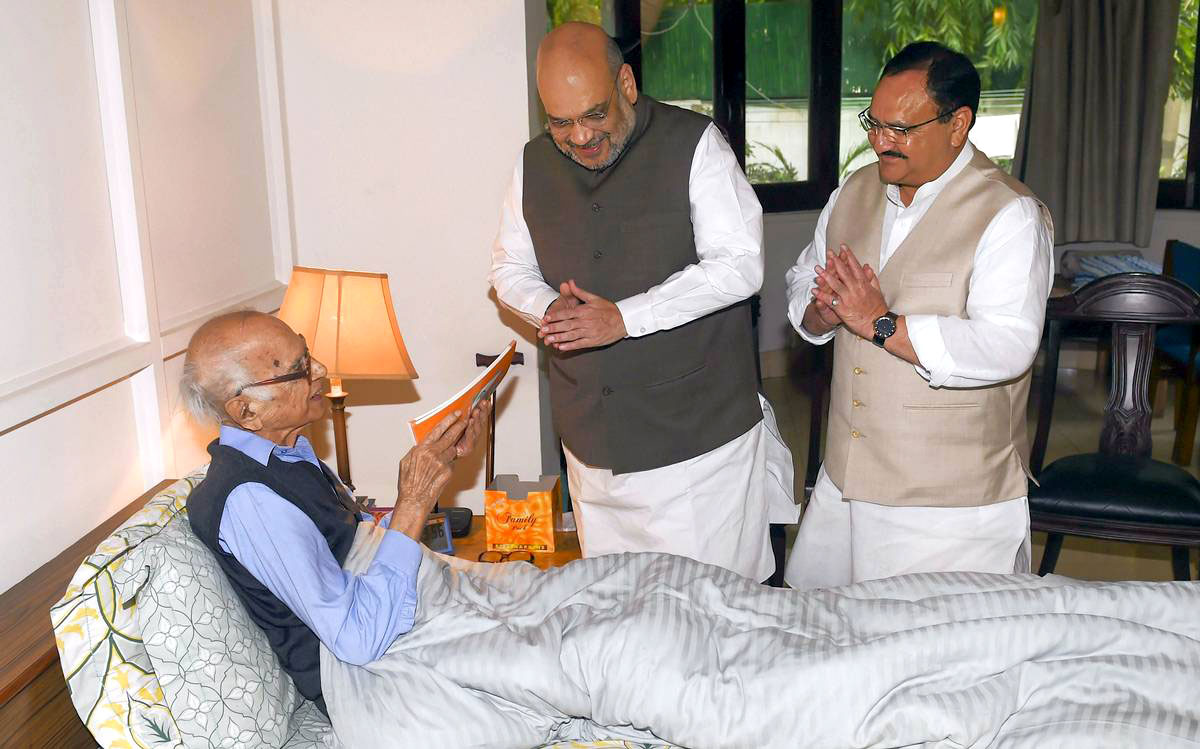
For a change, Jagmohan is back in news. Last week, Home Minister Amit Shah, J P Nadda and DharmendraPradhan visited the nonagenarian Jagmohan. The visit, reports suggest, was part of the BJP’s contact and public awareness programme to reach out to leading members of the society after the undoing of autonomy to Jammu and Kashmir. “Met ShriJagmohanMalhotraji, former Governor of Jammu & Kashmir as part of BJP’s nationwide Sampark and JanjagranAbhiyaan, to spread awareness about the benefits of abrogating Article 370 & 35A, a historic decision, by PM ShriNarendraModiji (sic),” tweeted Shah.

COLOMBO

Diplomats from India and Pakistan continue to create spectacle whenever and wherever they meet. First it was Maldives and then in Sri Lanka. Pakistani representatives raked up Kashmir during the South Asian Speakers’ Summit in the Maldives. Next, they met in Sri Lanka at the UNICEF South Asian Parliamentarian Conference on Children Rights Convention in Sri Lanka. These exchanges, though nothing new, will continue and the two countries offer their versions to Kashmir developments in UN General Assembly later this month. Premiers of both the countries are slated to grace the global audience.

KABUL

A former envoy who handled Northern Alliance warlord, Ahmad Shah Massoud, has claimed that he was supplied the arms that the counter-insurgent forces seized from Kashmiri militants. “Short of sending heavy equipment, India provided extensive assistance to the  – uniforms, ordnance, mortars, small armaments, refurbished Kalashnikovs seized in Kashmir, combat and winter clothes, packaged food, medicines, and funds through his brother in London, WaliMassoud,” Bharath Raj Muthu Kumar, the former ambassador, was quoted saying by the Hindu. Massoud, the erstwhile lion of the Panjsher valley, fought the Taliban and US forces till hisassassination in 2001. The diplomat has cautioned India against placing Indian troops on Afghan soil.

SOURA

Asrar Firdouse Khan, a resident of Srinagar, who was seriously injured in police action on August 6, has died of his injuries on September 4. His demise led to the re-imposition of restrictions in most of the old Srinagar city. Police maintains that Khan had no bullet injury and was hit by a blunt object. His medical records suggest that he was hit by pellets. Khan was 18, and was being treated in the SKIMS at Soura. His family insists Khan was studying in ninth standard.

LONDON

The Scotland Yard have made some arrests in connection with the protesters attack on the Indian embassy. Last week, a group of people protesting against the scrapping of the autonomy to Jammu and Kashmir turned violent and threw stones towards the embassy. They smashed windows and even broke a window pane of the building. London Mayor, Sidiq Khan condemned the “unacceptable behaviour”. Police have detained four protesters and claimed recovery of a 4-ft long dagger from one of them.

UK”s Boris Johnson government, already bust in a Braxit war, has asserted Kashmir is a matter for India and Pakistan to resolve but the erstwhile colonial power is has ‘serious’ concerns about the state of human rights. “It is important that internationally recognised human rights are fully respected,” Hindustan Times quoted Foreign secretary Dominic Raab saying. “The dispute between India and Pakistan in relation to Kashmir is for them fundamentally to resolve as recognised in UN Security Council resolutions and the Simla agreement.”

 MUMBAI

The restoration of the fixed line phones in Kashmir might have brought some solace to the people whose family members living outside the state. It might have also helped individuals to reconnect with their families back home. Actress Urmila Matondkar, whose was last seen in Blackmail, was in news last week for her husband’s failure to talk to his parents in Srinagar. The Congress politician who was also seen in Bewafa Beauty is married to model-businessman Mohsin Akhtar Mir, a resident of Sonawar locality in Srinagar. “The question is not only about abrogating Article 370. It was done in inhuman manner,” Urmila was quoted saying. “My father-in-law and mother-in-law are diabetic, and have high blood pressure. Today is the 22nd day, neither me nor my husband have been able to speak to them. We have no clue if they have medicines available at home.”

Most probably, it might have helped British resident, Adeel, 33, whose Kashmiri wife of 18 months, was not traceable to him from UK. He told a British media outlet that last time he talked to her was when her brother drove her for three hours to reach a place where a telephone worked. He had said he will have to go against his parent’s decision and fly to trace his wife. “All I want to do is start a family,” Adeel was quoted saying. “I am close to tears even speaking about it.” Now, he can talk, most probably. On cell phone, however, officials say, some more time is required.

RAMBAN

In a classroom, when students asked their teacher to explain the undoing of autonomy, the teacher had said the central government followed proper procedure in scrapping it. He had also spoken about the potential benefits of the move. A day later, when the school reopened, a group of students barged into his classroom and attacked him. Indian Express reported that the students, from the higher classes, beat him and when he attempted fleeing; they tried to thrown his down from first level of the building. The teacher was driven to the hospital and sent home. “As the incident led to tension between two communities in the area, Ramban Deputy Commissioner NazimZai Khan constituted an inquiry committee headed by Additional Deputy Commissioner and Additional SP,” the newspaper reported.

PARIMPORA

Three gunmen, believed to be militants killed a shopkeeper in Parimpora, apparently for opening his shop. Identified as Ghulam Mohammad Mir, his family said they had pleaded before the assailants that the shop will never be opened but they did not listen and shot Mir dead. The killing apparently was aimed at enforcing a strike in Kashmir that people have been observing voluntarily without anybody’s call.

SRINAGAR

At least two of more than 40 political activists currently being held in detention in the 5-star Centaur Lake View Hotel have been bitten by rats, Telegraph reported. It identified the two rat victims as PDP’s NizamuddinBhat and NC’s MukhtarBandh. The latter is being administrated anti-rabies vaccine. Bhat a former journalist has been member of the now downgraded legislative assembly. Bandh whose father Mohammad Khalid migrated to NC days ahead of their arrest, belongs from Pulwama. The newspaper said the relatives of the two detainees revealed the rat-bite details.


from Kashmir Life https://ift.tt/2LINNO6
via IFTTThttps://kashmirlife.net

Losing Connections

A section of the society having the luxury of functional fixed-line phone tried making good money, reports Shams Irfan

A small worn-out bench inside a stationery shop in Srinagar’s uptown Jawahar Nagar area has never hosted as my visitors in last two decades, as it has in last two weeks.

The reason for this unprecedented footfall was a working landline phone; a luxury in Kashmir after the Governor’s administration snapped entire communication including phone connectivity and internet on August 5.

Inside the dimly lit shop, a bearded man in his early fifties keeps close watch on his landline phone’s small two-liner screen. He notes down exact call durations down to the seconds. For a five minutes call he charges Rs 50. There is no room for bargaining.

“This is what I charge, take it or leave it,” he tells a customer straightforwardly.

But he is not alone. Almost every other PCO owner is milking people’s miseries in Srinagar and other small towns, where fixed-line phones have started working recently. A one minute call outside Kashmir is charged between Rs 5 and Rs 15. There are no fixed rates.

“They know people are helpless and will pay any amount to reach to their loves ones,” said a local journalist who made a six minutes call from a Jawahar Nagar PCO on September 4, a day prior to the restoration of all the registered landlines across Kashmir. “The shop-owner shamelessly charged me Rs 60, when I know BSNL landline offers almost free calling service to any number in India,” said the journalist who refused to be named.

The only other option available to journalists like him is the Media Facilitation Centre (MFC) in Sarovar Hotel at Gupkar, Srinagar, which the Information Department runs. Even it has problems. “First MFC is over-crowded. For over 200 local and non-local journalists there is just one phone. Second, they don’t allow you to talk beyond a few minutes,” said the journalist. “One has to register before making a call.”

But that option too is restricted to journalists only. For common masses, these PCO’s and private landline phones are only means of connectivity.

So, with limited means of communication available, people are forced to wait endlessly outside these PCO’s.

“You should see how these PCO owners behave now. As if we will be always without phones and they will always have the luxury to loot us,” said an angry customer who was asked to try some other PCO by a shop-owner in Ikhrajpora, Srinagar.

“Just because he has a working landline phone right now doesn’t mean he can treat people like slaves,” he said before boarding his car angrily to find another working landline phone. However, everybody is not giving vent to his anger over the systems that have evolved post-ban. A majority of people simply wait outside half-shuttered shops or even closed ones hoping to connect with their loved ones.

“My son is studying in Bangladesh. He left on August 17, and I have no idea if he has reached safely or not,” said Hamid, 55, a resident of Pulwama who has been waiting outside a PCO in Srinagar since last three hours. “I will call my friends in Delhi and try to connect to my son via a conference call if possible.”

Before August 5, Hamid used to talk to his son on video call almost daily. “I am not the only parent who has no information about his son’s whereabouts. There are thousands of parents like me in Kashmir right now,” said Hamid.

But Hamid is pained by the way PCO owners are behaving with helpless parents like him. “They should at least understand our pain and be compassionate towards us,” he said with a hint of disappointment in his voice. “We should learn to help each other in such testing times.”

Aftab, 45, a trader from Shopian travelled all the way to Srinagar to coordinate with his business partner in Delhi about an incoming cargo. “I have three phones and one landline but none is working. I felt helpless while waiting outside a PCO in Rajbagh,” he said in a low tone. “I cannot afford to visit Srinagar every single day to talk to my business partners. One single phone-call consumed my entire day,” he said sadly. “One cannot even imagine that this is for real. I still feel like this is some horrible nightmare and I will wake up happy again.”

In Sonwar area, a PCO owner tells an old lady with an expressionless face that she has to pay Rs 5 per minute.

“I offered free phone calls for first three days but then people started making long calls,” he said trying to justify his rates. “They would cry and create emotional scenes inside the shop, so I had to put a price to maintain order.”

As connectivity is still a luxury in large parts of Kashmir, these PCO’s are the only source for people to stay in touch with their loves ones who are outside Kashmir.

“I was ready to pay anything to hear my ailing brother’s voice who has gone for treatment to Delhi,” said Hajra, a 50-year-old lady from Srinagar’s downtown. Hajra has managed to reach Sonwar by crisscrossing half-a-dozen barricades.

“But not everybody can afford to pay especially in such bad times. These PCO owners should have empathy towards their fellow citizens and not take advantage of their miseries like this,” Hajra said talking to her brother successfully.

Rohit Kansal, Principal Secretary Planning, who is also the spokesman for the government said all the telephone exchanges are functional in Kashmir. The landline network was restored on September 4, night.

“The situation is being monitored on daily basis and soon the mobile telephones would be considered area wise,” Kansal said. “Situation is improving so are the services.”

However, not everyone is behaving insane and trying to turn people’s helplessness into profit. A number of private landline phone owners in Srinagar and other small towns are offering free calls to whosoever is in need. “If we cannot help each other in such times then humanity is already dead,” said a local resident whose phone is used by over 100 people every day.

Even though the landlines are restored, the crisis is that cell phone revolution had encouraged people to close down the archaic communication system. Jammu and Kashmir that has more cell phones than the people living here, has fewer landlines. So the tensions on communication front still exit. This is despite the fact that at a few places some sections of the security grid have also started their free call facility as part of their post-370 outreach.

By December 2018, Jammu and Kashmir had mobile penetration of more than 10237929 GSM cell phones. For every 100 people, Telecom Regulatory Authority of India (TRAI) statistics suggest, there are 109.19 phones. There are 13.84 million phone subscribers in Jammu and Kashmir which means it has crossed the number of people living in the state, according to TRAI that has numbers to suggest that Jammu and Kashmir hold 1.14 percent share in India’s total subscriber base. With so huge reliance on the cell phone, the restoration of the landline is unable to make a big difference. But, for the time being, it is helpful.


from Kashmir Life https://ift.tt/34FAPcE
via IFTTThttps://kashmirlife.net

Land Appetite

As investment emerges as the new buzz word post August 6, Corporate India and various state governments are keen to acquire land in Jammu and Kashmir.

Coincidently, the day Governor Satya Pal Malik’s first advertisement about the benefits of Article 370 scrapping adorned the newspaper front-pages in Srinagar, there were multiple reports appearing in non-local media indicating an appetite for land in Jammu and Kashmir. Corporate India apart, the requirement for land was felt by some states also.

“In scrapping of Article 370 and Article 35A, we saw an opportunity and accordingly the idea of opening up resorts in Ladakh and Kashmir was discussed at the MTDC (Maharashtra Tourism Development Corporation) meeting,” Indian Express quoted Maharashtra tourism minister JaykumarRawal, saying. “He also stated that the issue was also briefly mentioned during the state cabinet meeting on Tuesday. The detailed proposal is yet to be put up before the cabinet.”

Details revealed that MTDC board, in its August 28 meeting, decided to allot Rs1 crore each for setting up the resorts in Srinagar and Ladakh. MTDC plans to buy land in Pahalgam and Leh. “It was decided in the meeting that we should buy two parcels of land – one in Ladakh near Leh, where we would have a resort-cum-mountaineering institute, and the other in Jammu and Kashmir, the location for which is not yet decided, but would preferably be near the airport and the railway station,” Moneycontrol quoted Rawal saying. “There was a suggestion by some experts that Pahalgam Road in Srinagar could be one location, but no decision has been taken on this.”

The minister revealed further: “We are in a hurry to finalise before October 31. Once the board decided on August 28, the executives have to implement and they have started implementing it. We are expecting a letter from the (Maharashtra) Chief Minister at the earliest. I have already written to the chief minister. If we can get some government property also, we can consider that. It is a matter of time, the money is there, we find the place and buy. It can happen as soon as possible. I have given them (the team) a maximum of two weeks to go and visit the place. The team is planning to visit (Jammu and Kashmir) in six or seven days. We want to finalise the parcels preferably before October 31.”

Explaining the options, the minister said that the government is looking at several options for the deal: government properties where it pays the ready-reckoner value and buys the land, properties held by the Jammu and Kashmir Tourism Development Corporation, or even land that belongs to private parties. The idea is to set up a resort having a mix of Kashmiri and Maharashtrain cuisine and culture. The MTDC wants to hire local consultants. “We will be hiring locals as guides,” Rawal was quoted saying.

Insisting that the resorts “will be a great opportunity to generate employment in for the Kashmiri youths”, according to Rawal, The Wire said the BJP government sees the move as one of its “biggest achievements”.

Almost on the same day, the Karnataka government also made its plans public. The state government said that it intends to build a hotel and tourism centre in Jammu and Kashmir. “Karnataka would seek land from the J&K government for this purpose,” Indian Express quoted Karnataka Minister of Tourism C T Ravi saying.

Maharashtra government’s keenness could be an outcome of the efforts that BJP leader and former Deputy Chief Minister Kavinder Gupta made during his stay in Mumbai. The Jammu politician had interacted with the Maharashtra Chief Minister,DevendraFadnavis, besides the state ministers for finance and tourism. According to Hindustan Times, Gupta was in the tinsel town since August 31, as part of BJPs month long nationwide contact programme to highlight the significance of centre’s decision to scrap the Article 370.

“The region needs investment from the leading business players in every sector to generate employment for the local youth besides restoring its glory with modern amenities and infrastructure,” Gupta was quoted telling his hosts in Maharashtra.

At the same time, some business groups have also flagged their requirements.

Bhupendra Kumar Modi, the founder-chairman of Smart Group, has announced the setting up of Overseas Citizen of India Investment Fund (OCI) with a fund size of $100 billion to carry out his plan of bringing together industrialists from across the world to boost investments in Jammu and Kashmir.

“OCI will start investments in Kashmir region by developing 100 global wellness hotels followed by investments in real estate,” Modi was quoted saying. “Other key sectors of investment will include healthcare, real estate and education.”

The reports said that BK Modi would take his OCI members to meet the Prime Minister and discuss the investment.

There are various projects under different stages of formulation that would require land. Greater Kashmir reported the plans of a major project aimed at creating a ‘mother city’ involving nine districts and 312 villages. It will be spread over almost half a million kanals of land. Such a mega project would require lot of land for creating diverse facilities.

Interacting with a group of Sarpanchs, whom Divisional Commissioner Kashmir Baseer Ahmad Khan accompanied to Delhi on September 3, Home Minister Amit Shah said that “only government land would be used to establish industries, hospitals and educational institutions”.He told the delegation that “nobody’s land would be taken away”.

Meanwhile, in Srinagar, S Sikandan, adviser to governor, has convened a meeting on September 9, to discuss the issues related with the state land and the custodian land in the state. The entire land resource available with the state government is facing encroachment and most possibly this might be the main emphasis of the meeting, according to sources.


from Kashmir Life https://ift.tt/2LOCzaG
via IFTTThttps://kashmirlife.net

The Forbidden Fruit

With orchards as deserts as Srinagar streets, Kashmir’s apple cart may upset the economy, reports Umar Mukhtar

Every morning, Ali Mohammad, an apple grower in a Pulawmavillage goes to his orchard, almost at 10 minutes walkfrom his home. Routinely, he picks up the fallen apples (giraan)and keeps them in a heap. Usually, he collects 15 baskets of fallen apple a day. Unlike last year, there are not buyers for the giraan around, this fall.

In comparison to 2018, the difference is stark on streets as well as the orchards. In September last year, the labourers would be seen harvesting the apple, grading and packing them as load carriers would be waiting anywhere in south and north Kashmir. But this spectacle is yet to be seen this year. The rollback of autonomy and downgrade of Jammu and Kashmir statehas not only hit the political turf hard but the commerce as well. Kashmir’s Rs8000 crore plus apple economy is directly hit by the circumstances.

JavaidAhamd (name changed) is a fruit trader, operating from Pulawma. Till July, he was busy in his routine. He usually rents a big chunk of land, where he erects tents and makes it the base of his operations. His purchase moves from orchards to this centre where, after grading, the fruit is packed and driven to the market. This year, a bumper crop led him to make the preparations early.

Late last month, Javaid hired workers who erected many tents. The apple growers were also happy that even if they are not able to make it to the mundi, there is somebody who can purchase the crop.

But, next day when people went to the spot, they fund everything missing. Nobody knows why. People believe that Javaid is unlikely to have his routine this year.

But Javaid is not the only trader who decided against apple purchase. There are many such people who do not want to get into the harvest business. This is expected to hit the apple cart.

Right now, giraanis a major problem. This fruit would usually move to the market but its continued presence in the orchards is attracting rodents. “They are a potential threat to the trees,” said Hilal Ahmad an apple grower.

The apple growers lack any idea about what they should do to it. In case they would not get buyers, they would drive it to the local mandi.

South Kashmir has three major mandi’soperating from Kulgam, Shopian and Pachhaar.

Last year, Shopianmandialone witnessed around Rs1000 crore plus business. This year, the gates of the mandi’s are locked and the usually crowded market wears a deserted look. A visit to any of these mandis would lead to a group of boys playing cricket.Stray dogs are visible from a distance.

“There are various people associated with these markets,” Irshad Ahmad, a tea seller near Pachhaarsaid. Itis not all about the buyer and seller. People who sell tea, transporters, and labourersare associated with it.”

Normally, the traders from the outside stateswould flock to these markets early August and start making arrangements for their purchase. The presence of the local and non-local buyers had its own benefits. The presence was encouraging competition and the sellers would get the best price. This year, no non-local buyer has actually reported to none of the three south Kashmir mandis, so far, trade insiders said.

In such a situation, trade insiders said, an immediate alternative was to store in controlled atmosphere storage. But, there are two limitations. “It is not possible for the small growers to bear the costs and we do not have much of the infrastructure available where we could store the entire crop,” said Hilal Ahmad.  Kashmir’s cold storage facility is slightly more than one lakh metric tonnes. Even using this facility would require communication facility.

Most of the apple trade is dependent on the cell phone. Traders are used to sending photographs and videos of their crops directly from the orchards. For more than a month now, the cell phone network is jammed. Growers and the commission agents would be constantly in touch with the Azadpurmandi to understand the mood of the market, the rates and the freight. Now it is not possible.

“The silence of the government tells the story of a looming crisis,” insist a grower Shiraz. “The only information is that comes from the Radio Kashmir and that is too little and nobody can vouch for its credibility.”

Hilal Ahmad who expects almost a 2000 box crop from his own orchards is in a fix. “I do not know of the rate and I have no information about the freight,” Hilal said. “I am literally on tenterhooks because the crop is days ahead of harvest.” In absence of formal communication channels and media, people are scared by the rumour mongering.

In case of the failure of the crop, the losers will not be the growers alone. Banks and other businesses will suffer more than the growers.


from Kashmir Life https://ift.tt/34ANgqh
via IFTTThttps://kashmirlife.net

A Jinxed Palace?

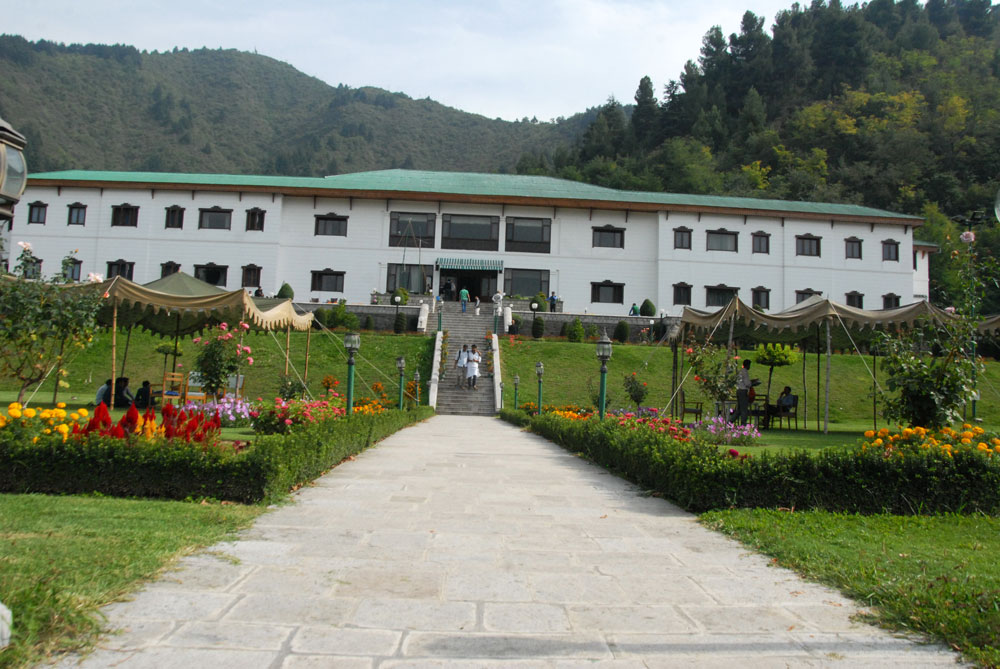
Overlooking the Dal Lake, a gothic monster has proven to be inauspicious for everyone — from its builders to those interested in it post-partition. After seven decades of abandonment by its owners, the Palace is now a special jail holding a single prisoner for over a month now, reports Masood Hussain
KL Image: Bilal Bahadur

Kashmir’s only Sadr-e-Reyasat, Dr Karan Singh, has been talking quite a bit about his family’s most prized possession (read Kashmir) after the central government decided to strip Jammu and Kashmir of its autonomy. Days ahead of the decision, Dr Singh spent most of his time at Taleh Manzil, the family’s mini-palace, relaxing and meeting people.

History is strange, Dr Singh later remarked in an interview. “The palace wherefrom Sheikh Abdullah made my grandfather leave Kashmir is now where his grandson is being held.”

Dr Singh was referring to Omar Abdullah, NC Vice President and former Chief Minister of Jammu and Kashmir, who was detained as part of the crackdown on Kashmir’s political class in anticipation of bifurcation of Jammu and Kashmir into two Union Territories and stripping its autonomy. Initially placed in home detention, Abdullah was later driven to Hari Niwas, a palace with chequered history.

Hari Niwas was raised by Dogra autocrats after they purchased Kashmir from the East India Company for a price of Rs 75 lakh. Part of the Great Games, the sale involved slicing Kashmir from the Punjab Durbar and selling it to Gulab Singh, the mountain warlord, to create a buffer from Czarist Russia.

“Initially, Dogra rulers would utilise Kashmir’s prevailing infrastructure to operate from. Gulab Singh and many of his successors controlled Kashmir from the Sherghari Palace,” M Saleem Beg, the head of INTACH Kashmir said. “It was only during the early twentieth century when the Dogras started constructing palaces that the Zabarwan Hills on the Gupkar emerged as an ideal location.”

Gupkar’s Vineyards

A virgin stretch connected by thick forests between Sonawar and Nishat and a mesmerising sight of the Dal Lake, this spot offered a better view of the city. Even then, Gupkar, the trek connecting these two spots, had a more than ordinary history. One of the bloodiest battles between the Chaks and the Mughals, according to Baharistan-e-Shahi was fought over this trek in 1531.

Then, Mughal chieftain Muahram Beg had quietly infiltrated 3000 fighters into Kashmir giving almost no time for Kashmiri nobles to assemble and react on the mountain passes. They finally clashed in Athwajan. “The Mughal faced reverses and, withdrawing from Nowshehr, turned towards the western quarter of the city where they had set up their headquarters,” writes the Baharistan-e-Shahi author, whose anonymity has been quite an enigma to Kashmir history. “Kashmiri troops appeared on the heights of Koh-i-Suleyman and came down slowly towards the east of the city to establish their camp.There was sporadic fighting with the Mughals for some time. At last, Mahram Beg got sick of this and entered into negotiations with Kashmiri chiefs and made firm promises of peace and conciliation to them.”

Many centuries later when Maharaja Ranbir Singh started paying much-needed attention to the deteriorating grape cultivation, it was the Gupkar vineyard that every traveller praised for centuries to come. Despite an elaborate history of wine-making, modern breweries were introduced in Kashmir when Maharaja Ranbir Singh installed a distillery in Gupkar in 1880 with the help of France. He imported vines from Bordeaux and planted them in what was called Bagh-i-Shirazi at Gupkar. According to the State Administrative Report (1882-83), wines then prepared were exhibited at the Calcutta Exhibition in 1883.

The vineyard, which started with a production of 163 kharwars (one kharwar is 80 kg) in 1882, saw the initial amount double to 340 kharwars in 1884, the report adds. In 1887, the distillery produced 216000 and 18230 bottles of red and white wine respectively, which seems huge compared to the meagre 1894 bottles produced in 1883. According to Sukhdev Singh Charak, author of The Life and Times of Maharaja Ranbir Singh (1830-1885), the Maharaja had dug a 20 kilometre long canal for the distillery to ensure better manufacture.

In his A Guide For Visitors to Kashmir, 1989, John Collet states: “A most enjoyable ride can be obtained over a nice road from Munshi Bagh to Gupkar distillery and thence to Chi(sh)ma Shahi and further on to Nishat Bagh through the village of Bren.”

It was the industrious Gupkar that would lead to the Zabarwan hills where a few hamlets existed. These villages – mostly scattered between the Botanical Garden, City Forests (now the Royal Springs Golf Course) and the Tulip Garden, were evicted from the spot and re-located far away in Dachigam (it is the corrupt form of Dah Chee Gham – these are ten villages) at the current location outside the National Park where they are at perpetual war with the wildlife.

A Palace Chain

After depopulating the belt (the only village that survived was Kralsangri), the Dogras began constructing palaces. “The first one was a small palace which is now the Raj Bhawan,” Beg recalls. Adjacent to this palace was the Nehru Guest House which was to later host the first group of officials from the UN after the first war on Kashmir broke during the fall of 1947. “During the second stage, the Gulab Bhawan came up, adjacent to which the Hari Niwas was set up. On the hill facing it came up the Taleh Manzil.”

The Gulab Bhawan witnessed house warming in 1910, during which time, it was one of the most sophisticated and modern buildings in Srinagar. It still retains the tunnel the the Maharani and her maids used to access the Dal Lake to bathe in. Its main hall, or the durbar hall, holds the subcontinent’s first earthquake-proof systems of the twentieth century. It is adorned by 2000 sq ft of carpet woven by Iranian craftsmen imprisoned in Kashmir, which is so fresh that it looks like it was just unhooked from the loom. In Heir Apparent, his autobiography, Dr Singh mentions a separate section housing Viceroy and Vicereine Suites which were put into use when Viceroys from Delhi would decide to pay a visit.

Maharaja Hari Singh was in the same Durbar Hall when the lights went off in wake of the takeover of the Mohra Power Station by tribals later in October 1947.  He fled Kashmir the same night. The palace, his seat of power, was converted into a five-star hotel by his family and called the Grand Palace. It was afterwards leased to the Oberoi Group, becoming the Oberoi Palace before being sold to the Lalit Suri in January 1998, in one of the trickiest deals during Dr Farooq Abdullah’s government.

Maharani’s Palace 

After taking over as the last Dogra ruler of Jammu and Kashmir in 1925, Hari Singh decided to construct a separate palace for Tara Devi, his wife. According to historian Yousuf Taing, that decision was taken after Hari Singh (nicknamed Mr A due to involvement in a London sex racket) returned from Europe, impressed by the Gothic architecture. He began building the palace in 1925-26. One report lacking any evidence suggests that he purchased this land from the villagers.

There is no evidence, however, that Hari Singh actually stayed in this palace. Tara Niwas was instead used by his court singer, Malika Pokhraj, who claimed to live in the palace for longer than the Maharaja. After the partition, the singer migrated to Pakistan.

After Dr Karan Singh was appointed Reagent, he avoided living in either of the two palaces his forefathers had built, and preferred to reside in Taleh Manzil, where Hari Singh used to live as well, before Delhi literally pushed him to migrate to Mumbai where he would die. Recently, the family has sold the sprawling orchard and the Almond Villa but retains the mini-palace, trade insiders said.

After the partition, the Hari Niwas remained in disuse. Official sources say that it was purchased by Kashmir Hotel Limited for 43 lakh in the 1980s with the plan of converting it into a hotel. That, however, never happened and the building was bought by the Government and given to the State Police Intelligence after 1995.

A 1990s Jail

After it was bought by the Government, the Palace became a jail overseen by the Jammu and Kashmir Police. Hundreds of people were detained, interrogated, and tortured for years, with a substantial number of deaths. It conversion to jail was the outcome of a new situation that emerged in Kashmir in 1990s. This Palace was part of the Papa-II ‘empire’.

“It is a miracle that I am alive,” journalist Maqbool Sahil told his colleagues, after 15 days of detention at the Hari Niwas interrogation centre, during his long incarceration. “If you tell them [interrogators]that you are innocent, they will torture you so ruthlessly that you will break down and confess to anything.” Sahil died of a heart attack in 2017.

Post-1996, during Dr Abdullah’s government, the situation changed after the Government added to its prison capacity and stopped using the palace as a jail for political prisoners or those involved in militancy.

The undoing began with the government retrieving the Fairview Guest House, the now official residence of the Muftis, and allotted it to Dr Farooq Abdullah’s powerful Chief Secretary, Ashok Jaitely. After it was renovated and repaired, the top IAS officer got a gathering of Muslim pirs to exorcise the building from spirits of terror and torture. This guest house was the medulla of the Papa-II.

The police retained the Hari Niwas as its intelligence headquarters till they readied their own outside the Srinagar Arts Emporium, after which the palace was once again in disuse.

7-Star Address

With Mufti Sayeed now ruling the state, it was decided in 2003 that the SPS Museum would be shifted to the palace to dedicate the building to the cultural history of Kashmir. The decision was reversed within days after Ghulam Nabi Azad succeeded in latter 2005. As the central government supported the state government’s decision to create a new building for the Museum, Azad government decided that the palace should be converted into a permanent residence for the Chief Minister. Till then, all Chief Ministers (except Bakhshi Ghulam Mohammad, Ghulam Mohammad Sadiq, Mir Qasim and Ghulam Mohammad Shah) constructed separate official residences in Srinagar, unlike Jammu.

While the palace was being repaired and refurbished, Azad operated from the Zeethyar’s official residence of the J&K Bank Chairman, which he still retains.

In order to restore the palace, the government sanctioned Rs 11 crore. Keen in reviving this heritage, Azad would usually get involved in the palace landscaping, personally.

Spread over 70 kanals of land, the property has three presidential suites, a VVIP guesthouse, four master bedrooms, 62 seven star rooms, and an office for the Chief Minister’s secretariat. It also included formal and informal drawing rooms, a dining hall, a lobby and a cabinet room. The authorities ensured that the palace’s heritage value wasn’t compromised with by retaining the twentieth century style and using antique taps to maintain royal aura.

Spooky Spot

As the palace was getting ready for house-warming, reports started appearing in the media stating that the palace was jinxed. The story was simple: the Maharaja, keen to set up the palace, lost his throne before he could set foot in it. It was also rumoured that priests had forewarned Maharaja and suggested against constructing the palace as it was the abode of a Hindu deity.

“His (Maharaja’s) trouble started in the same year when he completed his palace at that cursed site in 1931,” historian Fida Mohammad Husnain writes in Historic Kashmir. “His end also came from this very site when he was forced by circumstances to run away to Jammu in 1947.”

Even the association of the parents of disappeared persons (APDP) reacted by accusing the government of destroying “material evidence of custodial torture by facilitating the renovation”.

“The government has been using the erstwhile palace as a torture chamber since 1985. Thousands of souls have been tortured in it. Many of them died or have been subjected to enforced disappearance,” the APDP statement said. “Hundreds of bodies must have been buried in the nearby forest. Vital evidence has already been lost as the government renovated the palace recently. And, if you choose to stay in this torture chamber, it will amount to rubbing salt into our wounds.”

But Azad, just as stubborn as the Maharaja, followed through with his initial plan of living in the palace. Within days of the decision, Kashmir witnessed the land row involving the reported transfer of land to the Amarnath Shrine Broad. Azad’s government collapsed. The loss was no different from Maharaja’s.

Hari Niwas was transferred to the state’s Hospitality and Protocol department.

In 2008 elections when Omar Abdullah became the Chief Minister, he was also advised against shifting his residence to the Palace. “I have a small family,” Omar said when asked why he was not shifting to the Palace residence. “My two children would be lost in that huge mansion. In fact, I don’t need a huge mansion to live in.”

In his six-year rule, he demolished three structures and annexed the land to create his own residence on Gupkar, which is considered to be one of the most modern residences in Kashmir. However, high profile meetings would continue in the Palace hall.

When Mufti returned as head of the BJPDP government in early 2015, the government decided that the property should be outsourced to a private party for better commercial use, like high end tourism or a wedding destination.

The H&P Department, according to an official order, was asked to work out a revenue model for managing the complex and charging differential tariff to provide accommodation to the distinguished guests keeping in view its location, ambience and facilities. It even said the complex can also be preferred for registration with the Ministry of External Affairs, Government of India, for providing accommodation to Ambassadors and selected foreign dignitaries on payment basis. The order issued by the General Administration Department did suggest that the government retains the option of reusing the Palace for Chief Ministerial residence in future, if required.

The bidding process started for the permanent residents of the state. The government wanted a licence fee of Rs 6 crore for five years but there were only two bidders. Lamenting over the failure, an official had famously said that the “notorious history” of the palace was “haunting its present, and shall haunt its future too.”

Later, the Palace was converted into a VVIP State Guest House and was also used to hold high level selective banquets, receptions and conferences.

An Inquiry

In the fall of 2011, the Palace became the office of a Commission of Enquiry. Presided over by Justice H S Bedi, a retired Judge of the Supreme Court, the Commission was set up to probe the death in custody of NC worker Syed Mohammad Yusuf Shah alias Haji Yousuf in State Police Crime Branch custody. He had been allegedly detained from Omar Abdullah’s residence on September 28, 2011, a day before his death. A series of proceedings eventually led to the exoneration of Omar.

But Omar had a brief stint in the Palace as the Chief Minister. In wake of September 2014 floods, Omar shifted to the Palace as people coming ashore from the neighbouring localities wanted some shelter and attempted getting into the homes on the high street of power. Police felt a threat and the Chief Minister was moved to the Palace where he along with his close aides – Chief Secretary Iqbal Khanday and Principal Secretary, B B Vyas, would oversee survey and relief works.

“Fortified, the Palace has two possessions which give it a war-room like looks: a chopper on one end and numerous military wireless towers around,” a reporter recorded those grim days in the Palace. “It looked more of a World War II’s retreating detachment that had fled the battleground but was still trying to stay in touch.”

Five years later, Omar is the only person in the palace — for a month now — this time as a prisoner. He was arrested by the governor’s administration and shifted to the palace. Initially he had a neighbour, Mehbooba Mufti, his arch rival, but the latter was shifted to a hut that is routinely being used as a special jail for many years now.

“It took them a while to recognise Mr Abdullah, who was sporting an untrimmed white beard,” Hindu quoted a family source saying about the meeting of Safiya Khan – Omar’s sister, with him. “Mr Abdullah is allowed to run for an hour in the morning and has access to his personal DVDs from the first week. However, he stays put inside all day and rarely comes out.”

The palace continues to be jinxed.


from Kashmir Life https://ift.tt/2LOCtjk
via IFTTThttps://kashmirlife.net
Tuesday, 3 September 2019

Briefing

DELHI

Comrade SitaramYechury was arrested at the airport and sent back along with his colleague when he flew to Srinagar to enquire about the welfare of his state leader YousufTariamni, who is unwell and house arrest. This led the comrade to approach the Supreme Court (on August 19) seeking direction to produce the former MLA before it and have the ailing politician admitted to the All India Institute of Medical Science in Delhi. Finally the Court permitted him to fly to Srinagar on August 29. He has been directed to move to Tarigami’s home, meet him and fly back and report to the Supreme Court. Mohammad AleemSayed, a law student in Delhi had also moved a similar petition fearing about his parents currently in detention. He was also permitted to meet his family.

MUMBAI

As Kashmir’s entire political class was in jail in the aftermath of the removal, two Bollywood production houses came with a surprise announcement – a film on Kota Rani, the last Hindu queen whose reign witnessed the transfer of power from Hindus to Muslims. The thirteen century queen had married a relative of her slain husband and finally tied her nuptial knots with Shah Mir ruler and died in custody in mysterious circumstances. “It’s a matter of great surprise that as Indians we don’t know enough or at all about a personality like Kota Rani,” Producer MadhuMantena was quoted saying. “It would be no exaggeration to compare her to Cleopatra and a lot of things that we are witnessing today are directly related to her story. Her life was extremely dramatic and she is perhaps one of the most able woman rulers India has produced till now. It would be a shame not to know about her.”

DELHI

On August 24, Congress leader Rahul Gandhi and many other opposition leaders were stopped at Srinagar airport and flown back home, they met a Kashmir women. The lady talked to Rahul and briefed him about the situation and the video of it went viral across India. Days after, another version of it came suggesting the lady told Rahul not to come to Kashmir as Prime Minister Modi has taken a good decision. It led India Today to investigate the two versions and certify that the first one was genuine and the second one fake.

KERALA

KannanGopinathan, IAS, quit on August 21, alleging denial of “fundamental rights” to lakhs of people in J&K in wake of scrapping of Article 370 by the parliament. The 33-year-old Indian Administrative Service (IAS) officer, was from 2012 batch IAS officer from Kottayam district in Kerala. He was posted in Dadra and Nagar Haveli as Power and Non-Conventional Energy Secretary. After his resignation, he was served a show-cause notice but he responded to every single point. He told reporters that his decision to quit was not on account of the MHA memorandum but his decision to standby fundamental rights of Kashmir. Since his resignation is yet to be accepted, the local UT government has asked him to resume his duties till his papers are accepted.

DELHI

As Kashmir remained in a protracted lockdown, a delegation of panchayat members reached Delhi to ‘bust’ government claims of normalcy. Led by TalibHussain, a panchayat member from Anantnag, the delegation comprised Gujjar and BakerwalPanchs, mostly from Congress. They met media in Delhi insisting the normal basic rights have been ceased and there is no room for dissent, they alleged. They gave the firsthand account of their lives in the lockdown and asserted even the hospitals are under-performing because of the movement and communication lockdown.

RAJOURI

Jammu and Kashmir Police have booked five people belonging in PirPanchal Valley for allegedly writing sensitive posts on Facebook. They all live abroad. The case has been registered under Sections 153A (promoting enmity between groups) of the Indian Penal Code and Section 66B of the Information Technology Act. The accused were identified as ZaheerChowdhary Kala and Imran Qazir from Rajouri, and Zakir Shah Bukhari, NaziqHussain, and Sardar Tariq Khan from Poonch district. The police is approaching the External Affairs Ministry to get their passports cancelled.

SRINAGAR

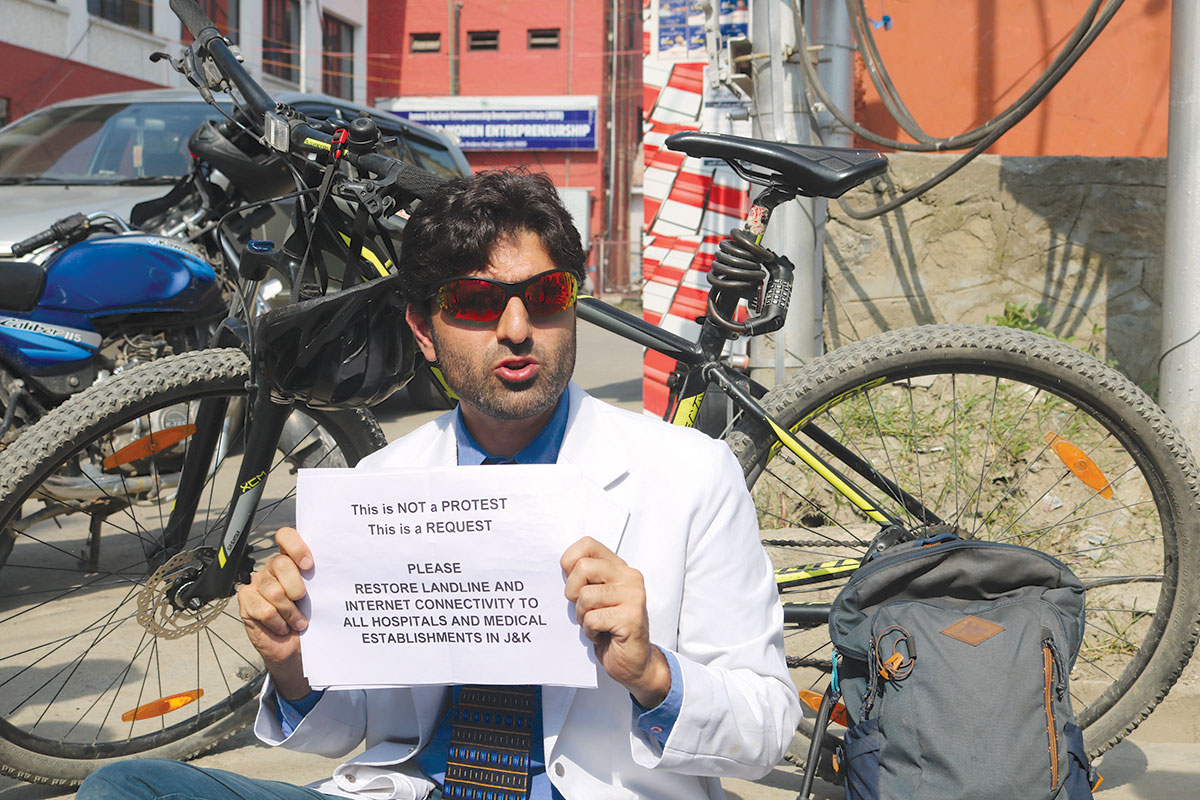
A young doctor who protested against the problems faced by the patients in Kashmir was whisked away by police minutes after he spoke out. Identified as Omar Salim, a urologist at the Government Medical College, he appeared in Srinagar’s press colony wearing a doctor’s apron and carrying a placard suggesting he was making a “request and not a protest”. Information blockade, Omar said, was endangering the lives of patients, particularly those who needed dialysis or chemotherapy. “I have a patient who required chemotherapy on August 6. He came to us on August 24 but could not obtain the chemotherapy medicine,” Omar said. “Another patient whose chemotherapy drug has to be obtained from Delhi was unable to place an order for the drug. His chemotherapy has been postponed indefinitely.”

Rs 4000 Crore is the possible loss to Kashmir because of frequent internet shutdowns in last six years, according to International Council for Research on International Economic Relations (ICRIER).


from Kashmir Life https://ift.tt/2HLtcaC
via IFTTThttps://kashmirlife.net
MANKIND’S KASHMIR ARRIVAL

 Kashmir is one of the few locations across South Asia that still retains tell-tale details of the pre-historic settlements starting from the Neolithic age, writes archaeologist Dr R S Bisht

On the present showing, the first settlers of Kashmir valley were the Neolithic people who were unfamiliar with the use and manufacture of pottery. The first site that was subjected to extensive excavations was Burzahom situated on a high karewatable land now surrounded by fertile paddy fields and orchards under the shadow of the towering Mahadeo. The location should have been ideal for primitive farming and stock-razing besides hunting and fishing. Excavations at Burzahom were conducted from 1960-1971 by TN Khazanchi of the Archaeological Survey of India.

The cultural deposit is divided into four periods out of which the first two belong to the Neolithic culture, the third to the Megalithic and the last one being the Early Historical. According to Khazanchi, period-I was marked by it dwelling of two types: (I) the large circular pits which are broad at the base and narrow at the top like a truncated cone. (The largest pit is 2.74 m at the top 4.57 m at the base and 3.95 m in depth. In a few cases a hearth on the bottom floor and in most cases walls have been found plastered with clay. Above ground along the margin of the mouth of such pits are found postholes suggesting the existence of a wooden superstructure supporting a roof of perishable materials. In one case two adjacent dwelling pits were connected by an opening for intercommunication).

(11) The dwellings were square or rectangular chambers cut into the loess to the depth of 50 to 1 m. Such partially underground structures seem to have been surrounded by mud-walls some of which indicate timber reinforcement also. (There have been observed successive floorings and hearths containing household goods such as saddle-querns, grinders and a description of tools and refuse. Amongst the tools there are harpoons; arrow heads spear-heads, needles, awls, digging tools, scrapers of bone and antlers and polished axes, adzes, borers, scrapers, chisels, polishers etc. of stone).

The Neolithic folk of this period used a crude and handmade pottery which often bore the impression of a mat on the bottom. Significantly RK Pant (1980) an associated with the excavation asserted that period-I of Burzahomis without pottery. In 1981, Pant’s view found to be correct.

The subsequent excavation at Gufkral in Pulwama conducted by A K Sharma has revealed the similar evidence. This excavation has added new information regarding flora and fauna, both wild and domesticated, whereas such information was sadly lacking at Burzahom.

During the period-I1 at Burzahom, (Khazanchiie) lithic and bone tools and the pottery of the proceeding period remained in use but pit dwellings were replaced by mud wall structures. Human as well as animal burials made their appearances. Significantly, early levels of this period yielded a few wheel made pots of red ware of pre-Harappan tradition in addition to the exotic copper tools and carnelian beads. But this context seems to be short lived.

However, there is reason to believe that the beginning of this period is heralded by the sudden appearance of the pre-Harappan pottery, although in very small quantity, in association with the copper tools and carnelian beads and further that the handmade pottery of coarse grey ware of poor technical skill follows the appearance of the pre-Harappan items. Most of shapes found in the Neolithic were poor and a bad imitation of some of the diagnostic shapes of pre-Harappan tradition. It is not unlikely that the Neolithic people of Burzahom learnt the art of pottery making from their pre-Harappan contemporaries with whom they are in contact; may be for a short duration but could not master the technique.

Scholars have tried to connect some of the bone: and stone tools and also the practice of pit dwelling with the Neolithic culture of China and elsewhere. But, this remain a debatable point, as there are no connecting links, at present, in the vast intervening area that separate the two cultural zones. Secondly, no Mangoloid trait is observed in the skeletons from Burzahom. Conversely, the anthropological studies indicate that the Burzahom people were nearer to the Harappan as well as the living population of the Punjab plains. Besides, in the recent years, there have been located and excavated, a few sites in the neighbouring Pakistan where there has been established a long succession of both aceramic and ceramic Neolithic containing a variety of bone and stone tools. This may throw welcome light on the point.

The period-III continuous with the preceding one in respect of pottery and most of the items of common use, is represented by rubble structures and huge menhirs.

The period IV is represented by the existence of the early historical potteries and mic brick structures. The recent findings from Gufkral has largely supplement the result of Burzahom but surely have thrown much more light on the pre-pottery, pottery stages of the Neolithic culture of Burzahom.

With regard to the stratographical position and use of the so called deep circular dwelling pits, Pant opines that these belong to the period-I1 and not to period-I; and further that those were not possibly meant for dwelling at all. No such large pits have been found in the central zone of the settlement whether at Burzahom or at Gufkral. At Burzahom, these pits occupy the margins of the settlement and might have been dug up largely for storage purposes. While no longer in use those were filled with the refuse. Archaeological Survey has located about two and half dozen sites. Nearly two dozen sites were studied by Pant and Nautijal who prepared site wise distribution of the different Neolithic fabrics and made an attempt to establish of stages of the Neolithic expansion in the valley.

Neolithic levels of Burzahom have produced seven (2-14 dates based on half life value of 5730 years. We feel that the first six are fairly consistent and cover a span of about 600 years (2400 to 1800 BC) for deposit of slightly less than 3.50m containing both the aceramic and ceramic levels. Another 200 years may be assigned to the Megalithic phase and thus bringing down the terminal date of the Neolithic tradition to 1600 B.C.

The lower age aceramic period has been further pushed back at Gufkral were the top level of the aceramic has given a date of 2470 BC and thereby suggesting still older date for the beginning. In this chronological framework the appearance of pre-Harappan objects in the beginning of the ceramic phase fits in well. Furthermore, Sharrna has suggested Harappan contact as well in the late phase of the Neolithic at Gufkral.

It is further observed that all the Neolithic settlements so far brought to light in the valley are situated on the high karewa tops or the elevated grounds and none so far on the valley floor.

There followed a long Dark Age of 14 to 15 centuries till the appearance of the Kushanas in the latter half of the 1st century of the Christen era. Two to three centuries before them the Indo-Greek and Indo-Parthian princes ruled over the greater part of the northwest India. Their coins have been reported from Kashmir too, but they remained by and large shadowy personages in the absence of their material culture till the Semthan excavation conclusively proved their debut in Kashmir. Similarly, the association of the Mauryan emperor, Ashoka, with Kashmir is notable though earlier held debatable.

However, with the deposit of NBP ware period at Semthan, the later phase of that period coincides with the Mauryan rule. Still significant contribution of Semthan is in the discovery of a new culture, the material of which underlies the NBP deposit and rests on the natural soil.

The most diagnostic and significant item of this period, the ceramics, deserve special attention. Being largely unrelated to the assemblage of the Neolithic Burzahom, the pottery of this period, curiously enough, bears close resemblance in fabric potting. Surface-dressing and certain forms to the Bara and other cognate wares of Punjab and Haryana forms to where it might probably look for ancestry; yet need not be over emphasised (at this) point of time as there might be a chronological hiatus between the two.

Palaeobotanical investigation of GM Butt has established that the people of this period were conversant with the use and cultivation of wheat, barley and rice. In addition to the weeds usually associated with the cultivation of wheat and barley. The blue pine is also recorded.

(With respect to two cultures of Semthan, it is largely established that the NBP flourished from 500 BC to 200 BC although in recent years B BLal has tried to prove that its lower limit could be pushed to 700 BC. On the upper side too, the date might to come 1st century BC).

On most conservative estimates the NBP was flourishing here during the reign of Ashoka. Further in view of the thickness of the deposit and close proximity of Kashmir with Taxila both geographically and historically the beginning of NBP at Semthan could be around 500 BC at which time it was in use at the former.

Naturally, the antecedent culture should be pre-500 BC. In the light of thickness of the available deposit of period-I it is not possible to give it a longer duration than 50 years. Still there remains a gap of about one millennium between the terminal phase of the menhir Neolithic at Burzahom and the early Iron Age of Semthan. Therefore, there still exists a yawning gap that needs further bridging by archaeology.

In retrospect, the beginning of human activities in the valley starts with a long-lived aceramic of Neolithic culture, (if however we dismiss the solitary find of a doubtful Palaeolithic tool that was collected by DrSankalia from the Liddar valley in Pahalgam.)

Pre-pottery Neolithic culture towards its close came in contact with a feeble wave of the pre-Harappan influence, which otherwise, in the neolithic folk who then on started to manufacture the native ceramics. In the terminal stage one finds the erection of menhirs at Burzahom and at many other places such as Haripargom, Waztal, Gufkral, Brah.

Then follows a long dark age till the early Iron Age followed successively by NBP and, the Indo-Greeks at Semthan.

It should not be out of place to mention here that the Nilmatpurana, perhaps the oldest surviving literary work of Kashmir, written sometime in the 8th century, claims that the valley remained uninhabited by man for six manvataras because there was a large sheet of water called Satisara. It was only in the last and seventh manvatara that mountains near Bararnulla broke open to let of the water and make the valley inhabitable for men.

Tradition has it that earlier it was peopled by the Nagaswho perhaps for sometime came under the sway of the Daitays as the story of Samgraha tells. Further, it is said that Samgraha was killed by Indra, the Aryan warlord. In revenge the former’s son Jalodbhava devastated the neighbouringcountries. It was only subsequent to the drying up of the Satisar that the tyrant was killed and the man of the race of Manu came to settle in the valley. The story further tells that for a long period the people of Manu and the Nagas remained hostile to each other, but the Nagas subdued by the Manus with the help of the nomadic pishachas whose home is said to have been vast desert of a far-off land.

Tradition further says that in the beginning the Aryans of the Manu race used to live here for six months of summer in order to produce food and then moved out for winter months during which the Pishachas would come down to the valley. The influence of the Pishachas could be eliminated only when the Manus and the Nagas came closer and reconciled to live in peace.

Thus there were the Nagas, the Daityas, the Manus and the Pishachas. In mythology the three tribes excepting that of Manus, that is the Aryans, were reduced to satanic forces perhaps for various reasons. The Pishachas were brutes and the others gave continuous resistances to the Aryan expansion and life style. There are copious examples in literature and in history that those were human tribes with whom the Aryans often established relations also.

Similarly the Nilmatpurana depicts the Pishachas as people of ferocious looks, living in the forest without houses, wearing animal hides for clothes and eating raw flush. Their original home is said to be in a distant desert. We do not know precisely whether it was TakalaMakan in China or the desert of Karakum in Russia or some other place. Significantly, one of the dialects of the Prakrita language is called Pishaclii which was spoken in a large part of northwest India during the medieval times.

Likewise Daityas were also a tribe with whom the early

Aryans worshiping Indra had fought bitterly over centuries.

It is, of course, difficult to build up a reliable story of the past on the basis of mythological tradition. There seems little harm to make an attempt for identification of these tribes which are said to have played a historical role in remote past of Kashmir.

The Nagas of old Kashmiri tradition have been closely related to the water. Thus all the springs, lakes and ponds in Kashmir are held sacred to one of the legendary Nagas. The water in the valley must have been more abundant 4 to 5 thousand years ago; and the draining out of water and progressive desiccation would have been a very low process and a large area of Kashmir must have been covered by a series of lakes and the large area of the remaining land must have been marshy; therefore, not fit for habitation and large scale cultivation. It is why almost all Neolithic settlements are found on higher ground. No wonder, if the Nagas were the first settlers of the valley who after a long time came in contact with the advanced Daityas whose remains perhaps we find in the form of pre-Harappan items at Burzahom. They greatly influenced and changed material life of the Neolithic people although the contact did not last long. After a long gap we come across at Semthan with the early Iron Age pottery of foreign lineage. It must be mentioned here that the earliest people of Semthan were not surely those who came into contact and fought with the Nagas. These people might be the late successors of the conquerors whose settlements and objects are yet to be found. Only when the curtain is lifted from the Dark Age we would be able to identify the successors of the Neolithic and predecessors of the early Iron Age people and thus be in a position to solve the riddle of the Naga-Manu conflict if it ever occurred. And then only probably the Pishachas may appear as an archaeological reality.

(Dr R S Bisht has served the Archaeological Survey of India. This copy is based on his talk that he delivered at a symposium “Central Asia and Western Himalaya – a Forgotten Link” held in the University of Kashmir in 1983.)


from Kashmir Life https://ift.tt/32o8VQv
via IFTTThttps://kashmirlife.net