Tuesday, 3 September 2019

Briefing

DELHI

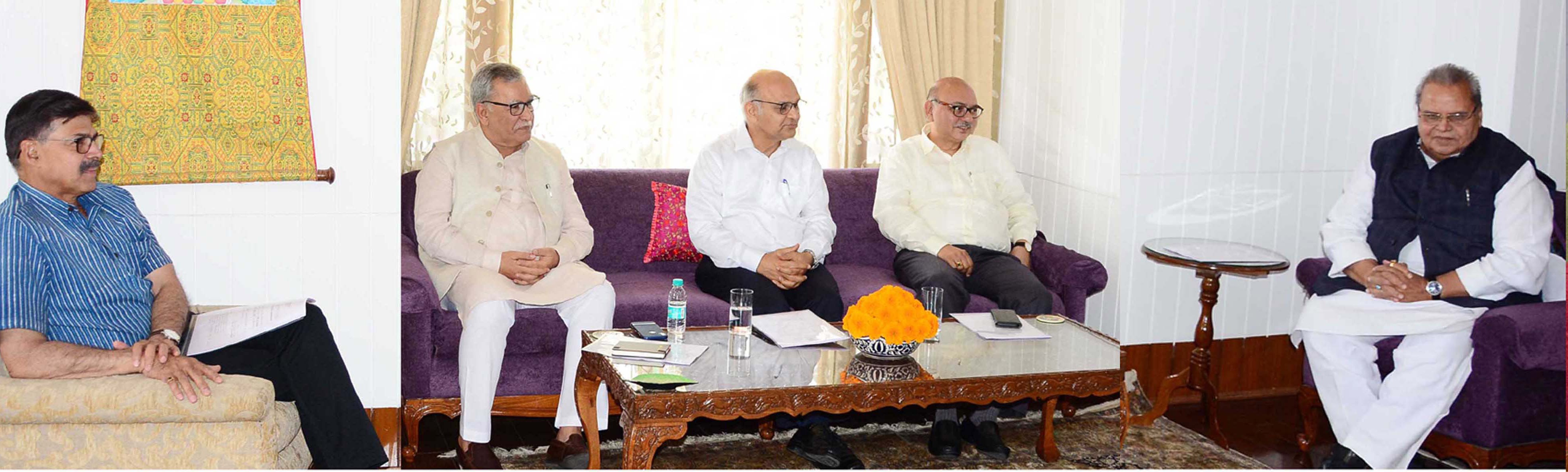
Comrade SitaramYechury was arrested at the airport and sent back along with his colleague when he flew to Srinagar to enquire about the welfare of his state leader YousufTariamni, who is unwell and house arrest. This led the comrade to approach the Supreme Court (on August 19) seeking direction to produce the former MLA before it and have the ailing politician admitted to the All India Institute of Medical Science in Delhi. Finally the Court permitted him to fly to Srinagar on August 29. He has been directed to move to Tarigami’s home, meet him and fly back and report to the Supreme Court. Mohammad AleemSayed, a law student in Delhi had also moved a similar petition fearing about his parents currently in detention. He was also permitted to meet his family.

MUMBAI

As Kashmir’s entire political class was in jail in the aftermath of the removal, two Bollywood production houses came with a surprise announcement – a film on Kota Rani, the last Hindu queen whose reign witnessed the transfer of power from Hindus to Muslims. The thirteen century queen had married a relative of her slain husband and finally tied her nuptial knots with Shah Mir ruler and died in custody in mysterious circumstances. “It’s a matter of great surprise that as Indians we don’t know enough or at all about a personality like Kota Rani,” Producer MadhuMantena was quoted saying. “It would be no exaggeration to compare her to Cleopatra and a lot of things that we are witnessing today are directly related to her story. Her life was extremely dramatic and she is perhaps one of the most able woman rulers India has produced till now. It would be a shame not to know about her.”

DELHI

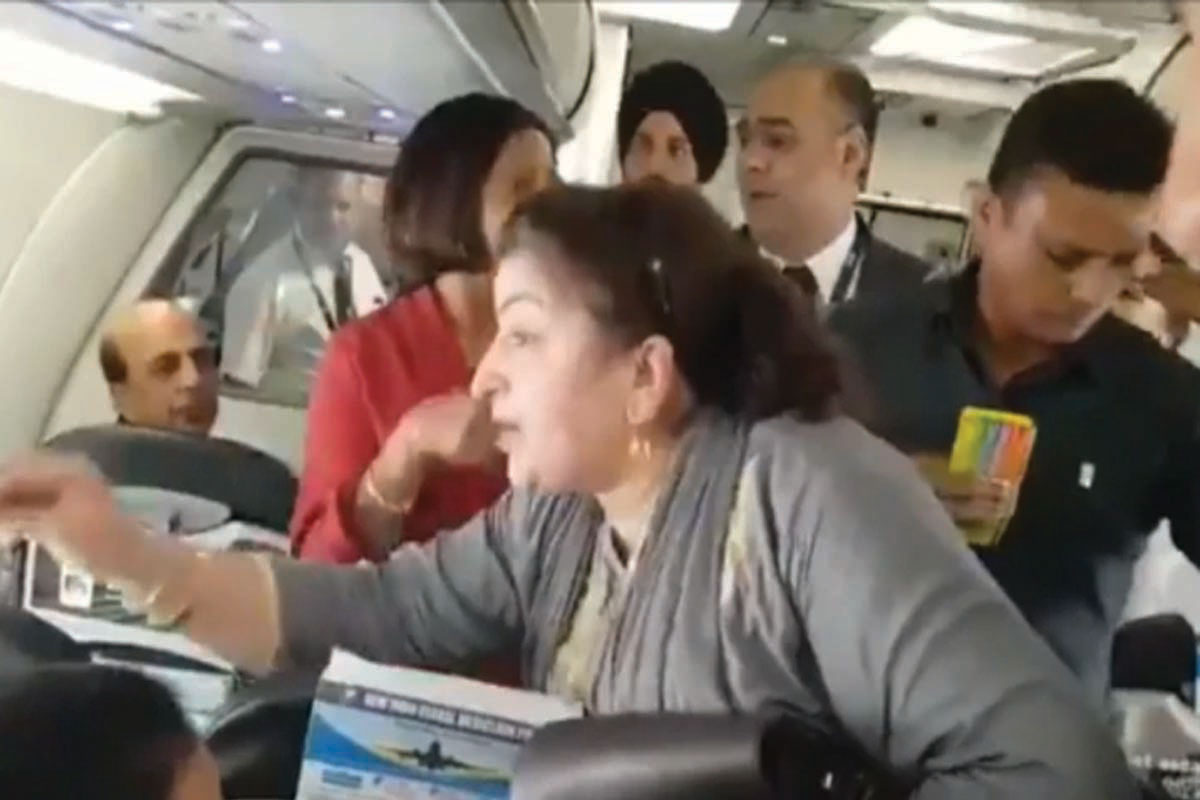
On August 24, Congress leader Rahul Gandhi and many other opposition leaders were stopped at Srinagar airport and flown back home, they met a Kashmir women. The lady talked to Rahul and briefed him about the situation and the video of it went viral across India. Days after, another version of it came suggesting the lady told Rahul not to come to Kashmir as Prime Minister Modi has taken a good decision. It led India Today to investigate the two versions and certify that the first one was genuine and the second one fake.

KERALA

KannanGopinathan, IAS, quit on August 21, alleging denial of “fundamental rights” to lakhs of people in J&K in wake of scrapping of Article 370 by the parliament. The 33-year-old Indian Administrative Service (IAS) officer, was from 2012 batch IAS officer from Kottayam district in Kerala. He was posted in Dadra and Nagar Haveli as Power and Non-Conventional Energy Secretary. After his resignation, he was served a show-cause notice but he responded to every single point. He told reporters that his decision to quit was not on account of the MHA memorandum but his decision to standby fundamental rights of Kashmir. Since his resignation is yet to be accepted, the local UT government has asked him to resume his duties till his papers are accepted.

DELHI

As Kashmir remained in a protracted lockdown, a delegation of panchayat members reached Delhi to ‘bust’ government claims of normalcy. Led by TalibHussain, a panchayat member from Anantnag, the delegation comprised Gujjar and BakerwalPanchs, mostly from Congress. They met media in Delhi insisting the normal basic rights have been ceased and there is no room for dissent, they alleged. They gave the firsthand account of their lives in the lockdown and asserted even the hospitals are under-performing because of the movement and communication lockdown.

RAJOURI

Jammu and Kashmir Police have booked five people belonging in PirPanchal Valley for allegedly writing sensitive posts on Facebook. They all live abroad. The case has been registered under Sections 153A (promoting enmity between groups) of the Indian Penal Code and Section 66B of the Information Technology Act. The accused were identified as ZaheerChowdhary Kala and Imran Qazir from Rajouri, and Zakir Shah Bukhari, NaziqHussain, and Sardar Tariq Khan from Poonch district. The police is approaching the External Affairs Ministry to get their passports cancelled.

SRINAGAR

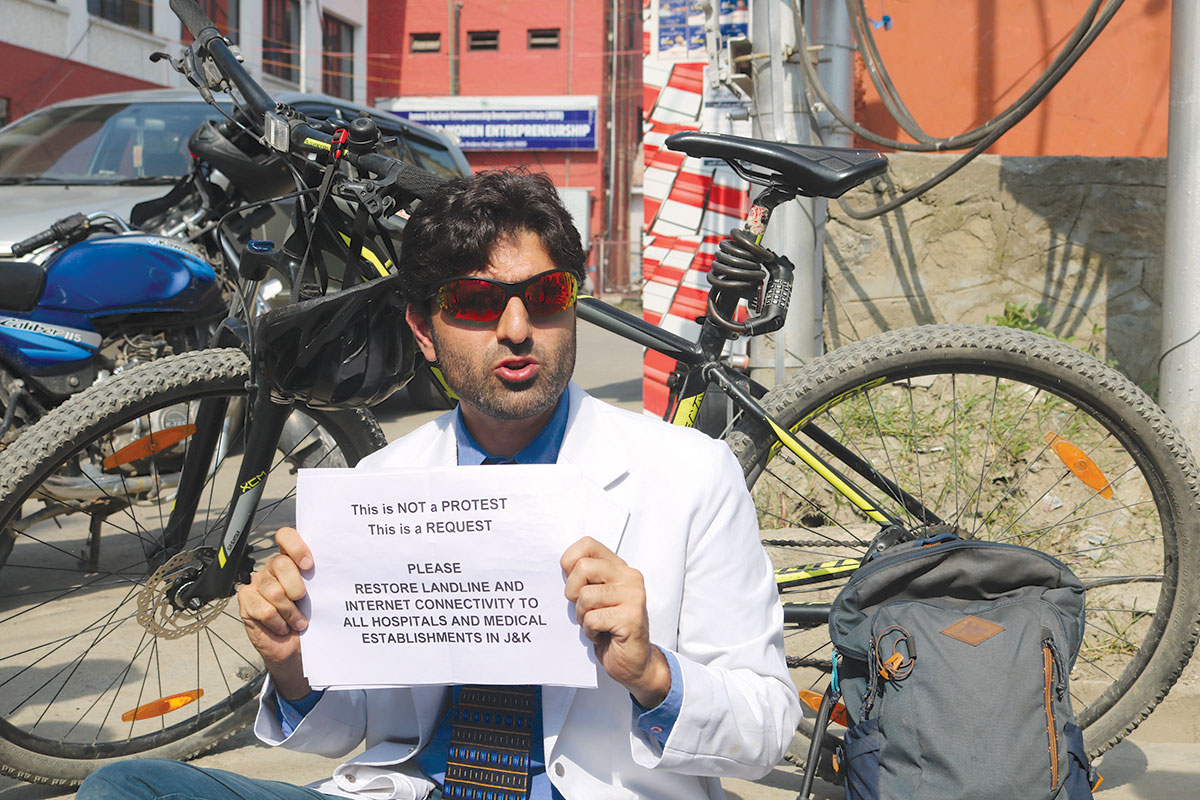
A young doctor who protested against the problems faced by the patients in Kashmir was whisked away by police minutes after he spoke out. Identified as Omar Salim, a urologist at the Government Medical College, he appeared in Srinagar’s press colony wearing a doctor’s apron and carrying a placard suggesting he was making a “request and not a protest”. Information blockade, Omar said, was endangering the lives of patients, particularly those who needed dialysis or chemotherapy. “I have a patient who required chemotherapy on August 6. He came to us on August 24 but could not obtain the chemotherapy medicine,” Omar said. “Another patient whose chemotherapy drug has to be obtained from Delhi was unable to place an order for the drug. His chemotherapy has been postponed indefinitely.”

Rs 4000 Crore is the possible loss to Kashmir because of frequent internet shutdowns in last six years, according to International Council for Research on International Economic Relations (ICRIER).


from Kashmir Life https://ift.tt/2HLtcaC
via IFTTThttps://kashmirlife.net

MANKIND’S KASHMIR ARRIVAL

 Kashmir is one of the few locations across South Asia that still retains tell-tale details of the pre-historic settlements starting from the Neolithic age, writes archaeologist Dr R S Bisht

On the present showing, the first settlers of Kashmir valley were the Neolithic people who were unfamiliar with the use and manufacture of pottery. The first site that was subjected to extensive excavations was Burzahom situated on a high karewatable land now surrounded by fertile paddy fields and orchards under the shadow of the towering Mahadeo. The location should have been ideal for primitive farming and stock-razing besides hunting and fishing. Excavations at Burzahom were conducted from 1960-1971 by TN Khazanchi of the Archaeological Survey of India.

The cultural deposit is divided into four periods out of which the first two belong to the Neolithic culture, the third to the Megalithic and the last one being the Early Historical. According to Khazanchi, period-I was marked by it dwelling of two types: (I) the large circular pits which are broad at the base and narrow at the top like a truncated cone. (The largest pit is 2.74 m at the top 4.57 m at the base and 3.95 m in depth. In a few cases a hearth on the bottom floor and in most cases walls have been found plastered with clay. Above ground along the margin of the mouth of such pits are found postholes suggesting the existence of a wooden superstructure supporting a roof of perishable materials. In one case two adjacent dwelling pits were connected by an opening for intercommunication).

(11) The dwellings were square or rectangular chambers cut into the loess to the depth of 50 to 1 m. Such partially underground structures seem to have been surrounded by mud-walls some of which indicate timber reinforcement also. (There have been observed successive floorings and hearths containing household goods such as saddle-querns, grinders and a description of tools and refuse. Amongst the tools there are harpoons; arrow heads spear-heads, needles, awls, digging tools, scrapers of bone and antlers and polished axes, adzes, borers, scrapers, chisels, polishers etc. of stone).

The Neolithic folk of this period used a crude and handmade pottery which often bore the impression of a mat on the bottom. Significantly RK Pant (1980) an associated with the excavation asserted that period-I of Burzahomis without pottery. In 1981, Pant’s view found to be correct.

The subsequent excavation at Gufkral in Pulwama conducted by A K Sharma has revealed the similar evidence. This excavation has added new information regarding flora and fauna, both wild and domesticated, whereas such information was sadly lacking at Burzahom.

During the period-I1 at Burzahom, (Khazanchiie) lithic and bone tools and the pottery of the proceeding period remained in use but pit dwellings were replaced by mud wall structures. Human as well as animal burials made their appearances. Significantly, early levels of this period yielded a few wheel made pots of red ware of pre-Harappan tradition in addition to the exotic copper tools and carnelian beads. But this context seems to be short lived.

However, there is reason to believe that the beginning of this period is heralded by the sudden appearance of the pre-Harappan pottery, although in very small quantity, in association with the copper tools and carnelian beads and further that the handmade pottery of coarse grey ware of poor technical skill follows the appearance of the pre-Harappan items. Most of shapes found in the Neolithic were poor and a bad imitation of some of the diagnostic shapes of pre-Harappan tradition. It is not unlikely that the Neolithic people of Burzahom learnt the art of pottery making from their pre-Harappan contemporaries with whom they are in contact; may be for a short duration but could not master the technique.

Scholars have tried to connect some of the bone: and stone tools and also the practice of pit dwelling with the Neolithic culture of China and elsewhere. But, this remain a debatable point, as there are no connecting links, at present, in the vast intervening area that separate the two cultural zones. Secondly, no Mangoloid trait is observed in the skeletons from Burzahom. Conversely, the anthropological studies indicate that the Burzahom people were nearer to the Harappan as well as the living population of the Punjab plains. Besides, in the recent years, there have been located and excavated, a few sites in the neighbouring Pakistan where there has been established a long succession of both aceramic and ceramic Neolithic containing a variety of bone and stone tools. This may throw welcome light on the point.

The period-III continuous with the preceding one in respect of pottery and most of the items of common use, is represented by rubble structures and huge menhirs.

The period IV is represented by the existence of the early historical potteries and mic brick structures. The recent findings from Gufkral has largely supplement the result of Burzahom but surely have thrown much more light on the pre-pottery, pottery stages of the Neolithic culture of Burzahom.

With regard to the stratographical position and use of the so called deep circular dwelling pits, Pant opines that these belong to the period-I1 and not to period-I; and further that those were not possibly meant for dwelling at all. No such large pits have been found in the central zone of the settlement whether at Burzahom or at Gufkral. At Burzahom, these pits occupy the margins of the settlement and might have been dug up largely for storage purposes. While no longer in use those were filled with the refuse. Archaeological Survey has located about two and half dozen sites. Nearly two dozen sites were studied by Pant and Nautijal who prepared site wise distribution of the different Neolithic fabrics and made an attempt to establish of stages of the Neolithic expansion in the valley.

Neolithic levels of Burzahom have produced seven (2-14 dates based on half life value of 5730 years. We feel that the first six are fairly consistent and cover a span of about 600 years (2400 to 1800 BC) for deposit of slightly less than 3.50m containing both the aceramic and ceramic levels. Another 200 years may be assigned to the Megalithic phase and thus bringing down the terminal date of the Neolithic tradition to 1600 B.C.

The lower age aceramic period has been further pushed back at Gufkral were the top level of the aceramic has given a date of 2470 BC and thereby suggesting still older date for the beginning. In this chronological framework the appearance of pre-Harappan objects in the beginning of the ceramic phase fits in well. Furthermore, Sharrna has suggested Harappan contact as well in the late phase of the Neolithic at Gufkral.

It is further observed that all the Neolithic settlements so far brought to light in the valley are situated on the high karewa tops or the elevated grounds and none so far on the valley floor.

There followed a long Dark Age of 14 to 15 centuries till the appearance of the Kushanas in the latter half of the 1st century of the Christen era. Two to three centuries before them the Indo-Greek and Indo-Parthian princes ruled over the greater part of the northwest India. Their coins have been reported from Kashmir too, but they remained by and large shadowy personages in the absence of their material culture till the Semthan excavation conclusively proved their debut in Kashmir. Similarly, the association of the Mauryan emperor, Ashoka, with Kashmir is notable though earlier held debatable.

However, with the deposit of NBP ware period at Semthan, the later phase of that period coincides with the Mauryan rule. Still significant contribution of Semthan is in the discovery of a new culture, the material of which underlies the NBP deposit and rests on the natural soil.

The most diagnostic and significant item of this period, the ceramics, deserve special attention. Being largely unrelated to the assemblage of the Neolithic Burzahom, the pottery of this period, curiously enough, bears close resemblance in fabric potting. Surface-dressing and certain forms to the Bara and other cognate wares of Punjab and Haryana forms to where it might probably look for ancestry; yet need not be over emphasised (at this) point of time as there might be a chronological hiatus between the two.

Palaeobotanical investigation of GM Butt has established that the people of this period were conversant with the use and cultivation of wheat, barley and rice. In addition to the weeds usually associated with the cultivation of wheat and barley. The blue pine is also recorded.

(With respect to two cultures of Semthan, it is largely established that the NBP flourished from 500 BC to 200 BC although in recent years B BLal has tried to prove that its lower limit could be pushed to 700 BC. On the upper side too, the date might to come 1st century BC).

On most conservative estimates the NBP was flourishing here during the reign of Ashoka. Further in view of the thickness of the deposit and close proximity of Kashmir with Taxila both geographically and historically the beginning of NBP at Semthan could be around 500 BC at which time it was in use at the former.

Naturally, the antecedent culture should be pre-500 BC. In the light of thickness of the available deposit of period-I it is not possible to give it a longer duration than 50 years. Still there remains a gap of about one millennium between the terminal phase of the menhir Neolithic at Burzahom and the early Iron Age of Semthan. Therefore, there still exists a yawning gap that needs further bridging by archaeology.

In retrospect, the beginning of human activities in the valley starts with a long-lived aceramic of Neolithic culture, (if however we dismiss the solitary find of a doubtful Palaeolithic tool that was collected by DrSankalia from the Liddar valley in Pahalgam.)

Pre-pottery Neolithic culture towards its close came in contact with a feeble wave of the pre-Harappan influence, which otherwise, in the neolithic folk who then on started to manufacture the native ceramics. In the terminal stage one finds the erection of menhirs at Burzahom and at many other places such as Haripargom, Waztal, Gufkral, Brah.

Then follows a long dark age till the early Iron Age followed successively by NBP and, the Indo-Greeks at Semthan.

It should not be out of place to mention here that the Nilmatpurana, perhaps the oldest surviving literary work of Kashmir, written sometime in the 8th century, claims that the valley remained uninhabited by man for six manvataras because there was a large sheet of water called Satisara. It was only in the last and seventh manvatara that mountains near Bararnulla broke open to let of the water and make the valley inhabitable for men.

Tradition has it that earlier it was peopled by the Nagaswho perhaps for sometime came under the sway of the Daitays as the story of Samgraha tells. Further, it is said that Samgraha was killed by Indra, the Aryan warlord. In revenge the former’s son Jalodbhava devastated the neighbouringcountries. It was only subsequent to the drying up of the Satisar that the tyrant was killed and the man of the race of Manu came to settle in the valley. The story further tells that for a long period the people of Manu and the Nagas remained hostile to each other, but the Nagas subdued by the Manus with the help of the nomadic pishachas whose home is said to have been vast desert of a far-off land.

Tradition further says that in the beginning the Aryans of the Manu race used to live here for six months of summer in order to produce food and then moved out for winter months during which the Pishachas would come down to the valley. The influence of the Pishachas could be eliminated only when the Manus and the Nagas came closer and reconciled to live in peace.

Thus there were the Nagas, the Daityas, the Manus and the Pishachas. In mythology the three tribes excepting that of Manus, that is the Aryans, were reduced to satanic forces perhaps for various reasons. The Pishachas were brutes and the others gave continuous resistances to the Aryan expansion and life style. There are copious examples in literature and in history that those were human tribes with whom the Aryans often established relations also.

Similarly the Nilmatpurana depicts the Pishachas as people of ferocious looks, living in the forest without houses, wearing animal hides for clothes and eating raw flush. Their original home is said to be in a distant desert. We do not know precisely whether it was TakalaMakan in China or the desert of Karakum in Russia or some other place. Significantly, one of the dialects of the Prakrita language is called Pishaclii which was spoken in a large part of northwest India during the medieval times.

Likewise Daityas were also a tribe with whom the early

Aryans worshiping Indra had fought bitterly over centuries.

It is, of course, difficult to build up a reliable story of the past on the basis of mythological tradition. There seems little harm to make an attempt for identification of these tribes which are said to have played a historical role in remote past of Kashmir.

The Nagas of old Kashmiri tradition have been closely related to the water. Thus all the springs, lakes and ponds in Kashmir are held sacred to one of the legendary Nagas. The water in the valley must have been more abundant 4 to 5 thousand years ago; and the draining out of water and progressive desiccation would have been a very low process and a large area of Kashmir must have been covered by a series of lakes and the large area of the remaining land must have been marshy; therefore, not fit for habitation and large scale cultivation. It is why almost all Neolithic settlements are found on higher ground. No wonder, if the Nagas were the first settlers of the valley who after a long time came in contact with the advanced Daityas whose remains perhaps we find in the form of pre-Harappan items at Burzahom. They greatly influenced and changed material life of the Neolithic people although the contact did not last long. After a long gap we come across at Semthan with the early Iron Age pottery of foreign lineage. It must be mentioned here that the earliest people of Semthan were not surely those who came into contact and fought with the Nagas. These people might be the late successors of the conquerors whose settlements and objects are yet to be found. Only when the curtain is lifted from the Dark Age we would be able to identify the successors of the Neolithic and predecessors of the early Iron Age people and thus be in a position to solve the riddle of the Naga-Manu conflict if it ever occurred. And then only probably the Pishachas may appear as an archaeological reality.

(Dr R S Bisht has served the Archaeological Survey of India. This copy is based on his talk that he delivered at a symposium “Central Asia and Western Himalaya – a Forgotten Link” held in the University of Kashmir in 1983.)


from Kashmir Life https://ift.tt/32o8VQv
via IFTTThttps://kashmirlife.net

REVIVED LETTERS

 After years of huge reliance on the modern tools of communications, Kashmir is gradually returning back to the age-old tradition of letter writing, reports Muhammad AR

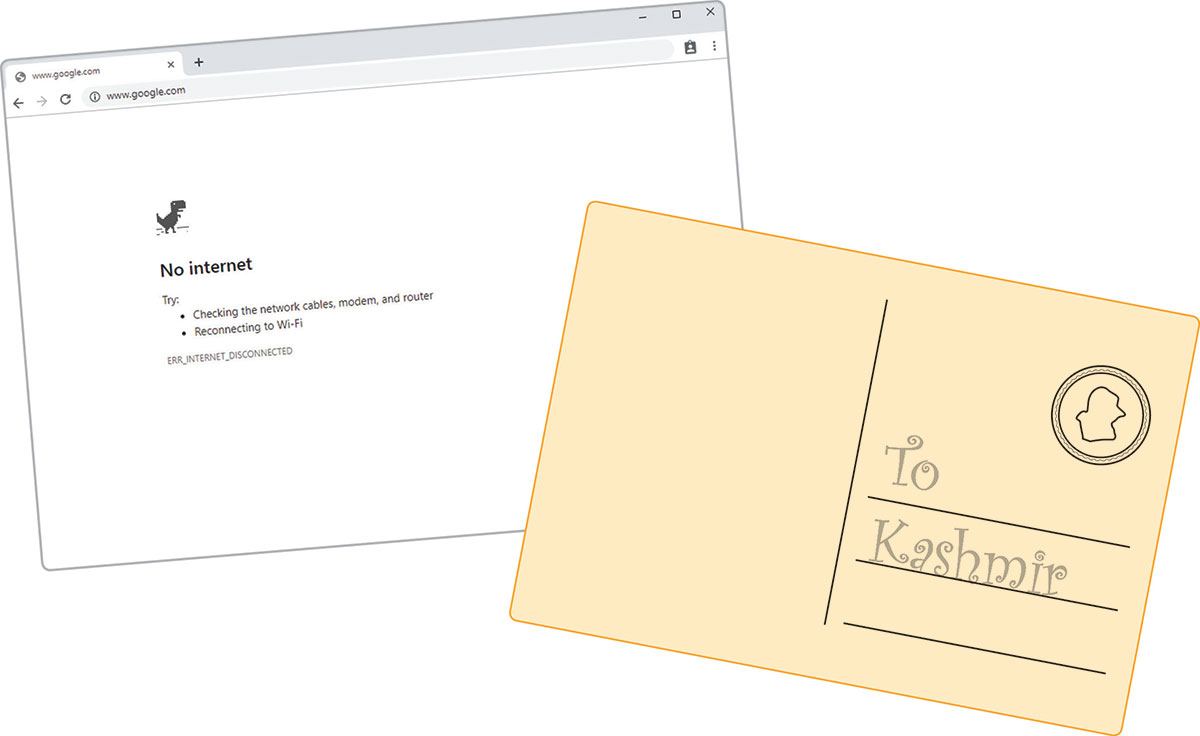
The unprecedented telecommunications blockade in Kashmir since August 5, has left almost a million families in the restive region disconnected. This has led people to adopt the pre-telecom and internet modes of communication by sending letters and deploying messengers with a “word of mouth”.

Although these modes of communicating are time consuming and considered pretty dull, but that is where it is left to, for now. Kashmir is literally reviving and rediscovering the past.

During the second week of the now-a-month old lockdown, a Srinagar suburban family was desperate to communicate with the in-laws of their daughter who was supposed to get married on August 20. The families live just seven kilometres apart.

GhulamMohiuddin, the family head said that due to the emerging situation, then, the family wanted to convey to their daughters’ in-laws about some changes in the marriage schedule. “After making several unsuccessful attempts to reach out to the family, I wrote a long letter addressed to them beginning with the apologies for failing to come myself,” he said. Mohiuddin handed over the letter to the driver of a Srinagar Municipality vehicle who was in the locality on a cleaning drive. “The driver took the letter and got a response as well, the next day.”

For the first two weeks the restrictions remained very intense blocking the public movement. Although the restrictions were eased afterwards, however, the residents said that communicating with their relatives in different districts was still very difficult.

On August 23, a Srinagar resident Nasreena, said that she developed some complicacies. Nasreena is 15 weeks pregnant.

“I wanted my sister on my side for a few days,” Nasreena said. “But the problem was that it was nearly impossible to reach to her as she lives in a south Kashmir district.”

Nasreena’s husband, Abdul Hameed said that she wrote a letter to her sister and he, then, handed it over to his neighbour, a journalist. “I had heard that only journalists are allowed to move during the restrictions.” The journalist not only delivered the letter but brought her sister along with also.

The communication blockade has added to the miseries of the people to such an extent that many families came to know about the demise of their relatives many days later.

A Kashmiri family was putting up in a rented accommodation in Zakir Nagar (Delhi). The building, housing their flat, caught up a massive fire in the second week of August.

A day later, a group of Kashmiri students came to know that a Kashmiri family admitted in Holy Family Hospital in Delhi was in need of assistance. “We rushed to the hospital and found the head of the family dead, his daughter badly wounded while his wife had received minor injuries,” one of the students said. Their family in Kashmir were unaware about the tragedy.

The students made several attempts to reach out to their family in Kashmir but failed. Finally, they sent one of their colleagues to Kashmir with the message.

In another incident, the students said that a Kashmir doctor in Saudi Arabia was travelling home on Eid and had booked a hotel for a night in Delhi. “He died in the hotel room of heart attack and his family in Srinagar came to know about his death four days later.”

On August 10,Ubaid-ur-Rehman, a resident drove to the Srinagar airport to drop his brother for a flight to Delhi. As Rehman was turning his car back, he heard two airport officials talking about a working internet connection in a residential colony, just outside the security gate of the airport.

Without wasting time, Rehman rushed to the colony, knocked several gates and finally landed in the house where a broadband connection was available. The house inmates, he said, let him in to access the internet following an exchange of apprehensions and a slew of enquiries.

As soon he accessed the internet, Rehman received texts from a South Kashmir friend, Syed Muzammil, studying in Europe, on the mobile messaging app, WhatsApp.

After exchanging pleasantries, Muzammil sent hm a Whats App voice note for his family living around 20 Kilometres south of Srinagar. “After spending some 15 minutes at the house exchanging texts with friends and other relatives living outside the state, I drove to the residence of the friend.” Rehman asked the family if he could come back with a message for his friend, to which they replied in affirmative with a “pleasing smile”.

“I manoeuvred through the Kashmir highway taking different lanes and by-lanes, avoiding the police and paramilitary barricades and reached the house. I was lucky that the authorities had relaxed the restrictions for some time on Saturday,” Rehman said. Muzammil’s mother, after listening to the voice note turned emotional and started kissing the phone. “She was overwhelmed and sought blessings for me.”

“She then recorded a voice note full of prayers and blessings for her son and ended with: YettiChukhTattiChukh, KhudahThaewnaeySalamat (Wherever you are, may Allah keep you well.” Again, Rehman drove back to the house and sent the mothers voice note to Muzammil.

The story of Rehman did not end here. Since that day, Rehman has been able to connect at least four families.The complete communication blackout has left the families of the students and employees working outside the valley distressed.

By the time Rehman drove back to deliver the message of Muzammil’s mother to him, he (Muzammil) had spoken to another friend, Zubair Khan, working in a Western European country.

As Rehman sent the voice note, and was readying to leave, he received another voice note addressed to the sender’s mother. “It was Zubair Khan.” Khan lives in the outskirts of Srinagar in Zakoora area. After promising Zubair that his message would be delivered to his parents, Rehman left for home.

Early next morning, Rehman drove to the residence of Zubair. Immediately after Rehman was let in, the family could not even think about what Rehman narrated.

“The whole family was ecstatic. Brothers and sisters of Zubair assembled around me to know what the message was,” Rehman said.

Zubair’s family like Muzammil’s turned emotional and recorded a voice note for their son. Rehman said that by the time he decided to drive to the house near airport to access the internet, the authorities had snapped the internet connections to the locality.

Kashmiris travelling from Delhi said they receive scores of letters from students, businessmen and other professionals for their home.

“I met over a dozen Kashmris at the airport who handed over letters for their families in different parts of the valley,” Asrar Rashid a medical doctor who travelled to Kashmir recently said. Rashid said that he has been able to deliver just six letters so far that were for families in central and north Kashmir.

Like Rashid, tens of other Kashmiris have carried letters of Kashmiris from mainland India to their relatives in Kashmir. In absence of any telecommunication system, the inhabitants mostly prefer to visit their relatives in person and enquire about their well being. Families say the absence of the internet has resumed formal communication within the family. “After a long time, our members are not busy with their cell phone in the corners,” Fayaz Ahmad, a Srinagar resident, said. “Now we talk to each other, more often.”

Since the phone and internet had literally replaced all other communication systems, it added to the crisis. Department of Posts hardly is able to deliver if it is not a speed post. Even the Couriers Services are not functioning.

A Kashmiri doctor in Kuwait  would manage the life saving medicines of his mother from Bangalore on-line. In days ahead of Eid, he could notice that the supply reached Srinagar but could not be delivered. He left his pregnant wife and a minor kid in Kuwait and flew to Bangalore, got the necessary medicines and then reached Srinagar. After spending a night with his mother, he took early next morning.


from Kashmir Life https://ift.tt/2HKVDWf
via IFTTThttps://kashmirlife.net

WHAT NEXT

Post Article-370 scrapping, the Central Government is busy planning big interventions as the Jammu and Kashmir is gradually moving towards becoming the Union Territory (UT)

Ahead of the removal of the Jammu and Kashmir flag from the Civil Secretariat in Srinagar, the governor’s administration had sent two teams of officers to study the working and systems of the Union Territories (UT). A team each is visiting Pondicherry and Delhi. They will submit their reports at the earliest.

Officials’ privy of the developments, however, insisted that there has been an exercise already done detailing how the systems would work under the Jammu and Kashmir Reorganisation Bill of 2019 that Parliament passed on August 6. The bill divided Jammu and Kashmir into two UTs: Ladakh and Jammu and Kashmir. The two UTs will be operational from October 31, 2019, to coincide with the birth anniversary of SardarValabbhai Patel, India first post-partition Home Minister. Unlike Jammu and Kashmir, Ladakh will have no assembly and will be directly ruled by a Lieutenant Governor.

The parliament was enabled to redraw the boundaries of Jammu and Kashmir after the President invoked his rights under Article 370 and issued the Constitution (Application to Jammu and Kashmir) Order of 2019 on August 5 that scrapped The Constitution (Application to Jammu and Kashmir) Order of May 14, 1954. The 1954 Order that was considered the mother of the special status envisaged a proviso to Article 3 of the Constitution of India suggesting that “no Bill providing for increasing or diminishing the area of the State of Jammu and Kashmir or altering the name or boundary of that State shall be introduced in Parliament without the consent of the Legislature of that State”. As the Order was junked the LokSabha was empowered to redraw the borders under the Jammu and Kashmir Reorganisation Bill of 2019.

The law gives a year for a Central committee to divide the assets and liabilities between the two UTs. The employees would continue in their posts for another year until their allocations are determined. The Central government will be controlling the police and the law and order of the state. Matters related to land; rights over land tenures, transfer and alienation of agricultural land, land improvement and agricultural loans will be under the domain of the elected UT government. Both the UTs, however, will have a common High Court.

The bill has implemented 106 central laws with or without amendments to the UT of Jammu and Kashmir. It has retained seven state laws on the statute book with amendments. As many as 153 state laws and 11 acts promulgated by the governor were repealed by the new bill of the parliament.  Besides, the bill provides for retaining as many as 166 state laws, which were in vogue at the time of reorganisation. Though there is no clear indication, a senior IAS officer said the UT will be born debt-free as the MHA will take over the entire liabilities of the state.

Ministry of Home Affairs (MHA) that will literally be the direct ruler of the Jammu and Kashmir has already sent a detailed communication to the state government seeking identification of issues, if any, that would require any intervention in the roll out of the UT.

India Today quoted official sources saying: “Central ministers will visit Jammu and Kashmir one by one to assess the situation, expedite the development programmes and possibly interact with people in coming days.” Right now, the Cabinet Secretary is monitoring the situation. So far, Defence Minister Rajnath Singh and Tribal Affairs Minister ArjunMunda have visited the state last week. “All central ministries and departments have been asked to come up with Kashmir Action Plan to look into various development programmes and their implementation.”

In anticipation of the UT roll out, Satya Pal Malik, Jammu and Kashmir governor told a August 28, news conference, arranged exclusive for the TV medium, that while the Article 370 has gone forever, there will be, however, no effort to dilute the “identity, culture and heritage” of the UT of Jammu and Kashmir. He, however, did not offer any details. He said he is saying this on behalf of the Prime Minister NarendraModi.

Malik’s assertions on protecting the identity of the erstwhile state might have been the outcome of the demands that were raised by BJP in Jammu and in Leh seeking protection against non locals to acquire land.

DrNirmal Singh, former Deputy Chief Minister, had sought safeguards like a “domicile” certificate, so as to “protect the interests of locals in respect to land and state jobs”. After supporting the abrogation of the special status, the Indian Express reported that “the BJP too seems to have sensed that this might gain traction in Jammu after the waning of the initial euphoria.”

Breaking away from the traditions, Jammu did not celebrate the abrogation of special status as many expected. There were some functions by the BJP, migrant Kashmiri Pandits and non-local workers but the residents remained indifferent. Almost a similar sentiment is report from Ladakh, mostly from Leh where the Buddhist population does not want any kind of ethnic or demographic dilution or any shareholding in the opportunities. Kargil that will also be part of the UT of Ladakh, however, continues to be on a protest strike against the decision. This is, despite the fact, that a section of politics in Kargil – mostly from the PDP, has switched sides and joined the BJP.

In anticipation of the rollout of the UT system, the Prime Minister NarendraModi is expected to announce a major developmental package for the UT.  It will cater to the requirements across sectors of state economy and the state’s bureaucracy is currently working on it. Nobody has any idea of the size of the package but indicates suggest it will be around rupees one lakh crore. There is a possibility of setting up of a Railway Coach Factory, somewhere near Kathua, in addition to a rail loading facility in Jammu and somewhere in Pulwama. This is pre-requiting to the cargo movement once the railway line between Baramulla and Jammu is fully operational. Though the line was supposed to be ready by 2025, the Modi government is working to make it operational by 2023.

“This is important because the entire emphasis of the reorganisation has been on the development deficit of Jammu and Kashmir,” one official said. “The possibility of its announcement is anytime before September.”

The second important development that is in the pipeline is the investors’ summit. This is expected to take place somewhere in November and the efforts are underway to ensure that every corporate has some kind of involvement, sources said. Home Minister Amit Shah is reportedly personally involved in roping in businesses to get into Jammu and Kashmir.

Though it is too early to get even an idea about what is being planned, the sources suggest that top groups including TATA, Ambanis, ITC and many others are committed to invest. Officials are talking about one major investment in horticulture sector in which a group is keen to set up a pulp juice facility in Jammu that would require almost one lakh tons of apple a month. The group is seeking certain concessions to make its operations viable, sources added. Officials say it will reduce the non-A category fruit from getting into the market and thus improve the rates. It will, they expect, trigger major investments in the post-harvest infrastructure. The controlled atmosphere storage (CAS) that is already an emphasis area in Kashmir is getting additional concessions under the new package that the Prime Minister is announcing, the officials believe. State’s industries department is working to revive the marble mining that has been facing problems for the last 30 years.

Even the governor, interestingly, said his government is working with various central agencies to put together a scheme to provide a minimum support price for apple. “NAFED was willing to commit over Rs 5000 crore for procuring over 50 percent of apple production in the state,” an official spokesman quoting Satya Pal Malik said. “This would benefit over 7 lakh apple farmers.” Malik also announced recruitment of 50,000 youth in the state government for which, he said; his administration has already started the process. This, he insisted, is the biggest recruitment drive in Jammu and Kashmir’s history.

Within days after the reorganisation bill was passed by the parliament MukeshAmbani had committed to make certain investments. Officials said the group is exploring the options for investment. Carnival Cinemas, a multiplex chain, is planning to set up 30 screens across Jammu and Kashmir and five in Ladakh.

Sources indicated that Modi government may revive the deal with UAE under which Ameer’s wholly owned Dubai Ports (DP) may set up a dry ports in JamIts CEO had visited Jammu; days ahead of the fall of the Mehbooba Mufti led BJPDP government, and visited the site that the erstwhile state government had identified for the facility. The dry port is one of the key demands of the industry in Kashmir and Jammu.

However, there is no word about the elections. The last assembly was dissolved by Governor Satyapal Malik in the 2018 fall. Since then Jammu and Kashmir is being directly ruled by the central government through governor Malik. The abrogation of the special status and the reorganisation of the state also took place during this period.

The new assembly, that of the UT, will be a truncated version of the state assemblies across India and literally powerless. Its Chief Minister will be a subordinate in decision-making to the Lieutenant Governor. The government is non-committal over holding of the elections in near future. Indications suggest that the elections would be held only after a new delimitation would take place across Jammu and Kashmir. The BJP has been insisting that Jammu region is lacking adequate representation in the state assembly because it has pockets where the population is more but the seats are quite less. It is also talking in terms of hard areas and difficult geography that the earlier delimitation processes have not taken care of.

Though the delimitation can be announced any time, it may, eventually like to wait for the outcome of the 2021 census. That essentially means that the recommendations of the Commission may not be available by 2023. There are strong voices in Delhi suggesting that the 2021 census should be done with utmost strictness so that every individual is accounting for. There is possibility of even linking a number to an Aadhar card issued by the system already.

“The number of seats in the Legislative Assembly of the Union Territory of Jammu and Kashmir shall be increased from 107 to 114, and delimitation of the constituencies may be determined by the Election Commission in the manner hereinafter provided,” the Reorganisation Bill, 2019 reads.

But the election debate seems too early as the entire political class is still in custody. It is still not known, how this class will react to the Himalayan changes that took place since they were restricted to their homes or the specially designated jails? There were some reports about some officials from the central government meeting them but these were rubbished by the government.

However, the governor’s administration is working quite fast towards holding the Block Development Board elections across the state in September. This, officials say, is essential for creating the mandatory second tire of the development system within the Panchayat Raj framework. Panchayat and local body elections were held last fall in which NC and PDP avoided participation, a decision they regretted later. Though most of the Panchayat’s, mostly in Kashmir, are yet to notified for one of the other reason, the governor’s administration is moving ahead for the BDB polls.

Interestingly, the BJP is working overtime to have its candidates ready for the BDB and if held, for the assembly elections as well. Even outside Jammu and Kashmir, the BJP has planned a spectacle across India over the scrapping of Article 370. The “mass contact programme” will involve 35 big towns and 370 tier 1 and 2 cities, Hindustan Times reported.

“The party feels that Kashmir is one such issue when the entire country needs to speak in one voice and the decision to strip the state of its special status received support from across political and ideological divide,” the newspaper reported. “This is the second such outreach by the BJP on Kashmir issue.”

The newspaper said the programme is aimed at achieving five key benefits: to prolong the memory of the scrapping of Article 370 in peoples’ minds for political benefit; to counter the alternative narrative that was outcome of negative international media coverage; make the scrapping part of party’s ‘nation-first’ discourse; to re-engage cadres during non-election season; and to improve its tally in the elections of three key states going to polls between October and December.

Meanwhile the Supreme Court has set up a five judge bench to hear the petitions challenging the parliament’s scrapping of Article 370 decision. The hearing would start in October.  There are as many as 14 petitions before the Supreme Court linked to Kashmir including 10 challenging the special status of Jammu and Kashmir. These pleas were filed by a variety of persons, including lawyers, artists, bureaucrats and politicians. The prominent petitions include former Home Ministry-appointed interlocutor for Kashmir, Radha Kumar, retired air vice Marshal KapilKak, MP Akbar Lone, former IAS officer Dr Shah Feasal, and lawyer SoayibQureshi. Cautioning the court against taking any steps on these petitions, the Attorney General KK Venugopal while terming the Kashmir situation “sensitive” had pleaded: “Any move in this issue is being projected in other parts of the world as something else. Enemy countries are taking advantage.” But the Court issued notices to the government and listed the case for October.

By then, however, the major headlines about Kashmir would be over because the leaders from South Asia will speak to the UN General assembly in New York in September only. Pakistan Prime Minister Imran Khan is slated to speak to the UNGA on September 27. Prime Minister Modi will also be flying personally to make the speech, reports appearing in the media suggest.

With diplomacy busy in its own war, far away from Srinagar, the focus on ground continues to be on law and order. There have been not more than four militancy related incidents since August 5. Apart from two gun-battles, militancy killed two nomads in Tral forests and a merchant in a Srinagar locality. However, tensions on the Line of Control (LoC) are unabated. Reports in the media suggested some tensions in Gulmarg belt where there has been BAT action and retaliation. No details are, however, known. Meanwhile, the Army Chief, General BipanRawat flew to Srinagar on Friday. He will be reviewing the overall security situation.


from Kashmir Life https://ift.tt/32o8VzZ
via IFTTThttps://kashmirlife.net
JAIL PLACID

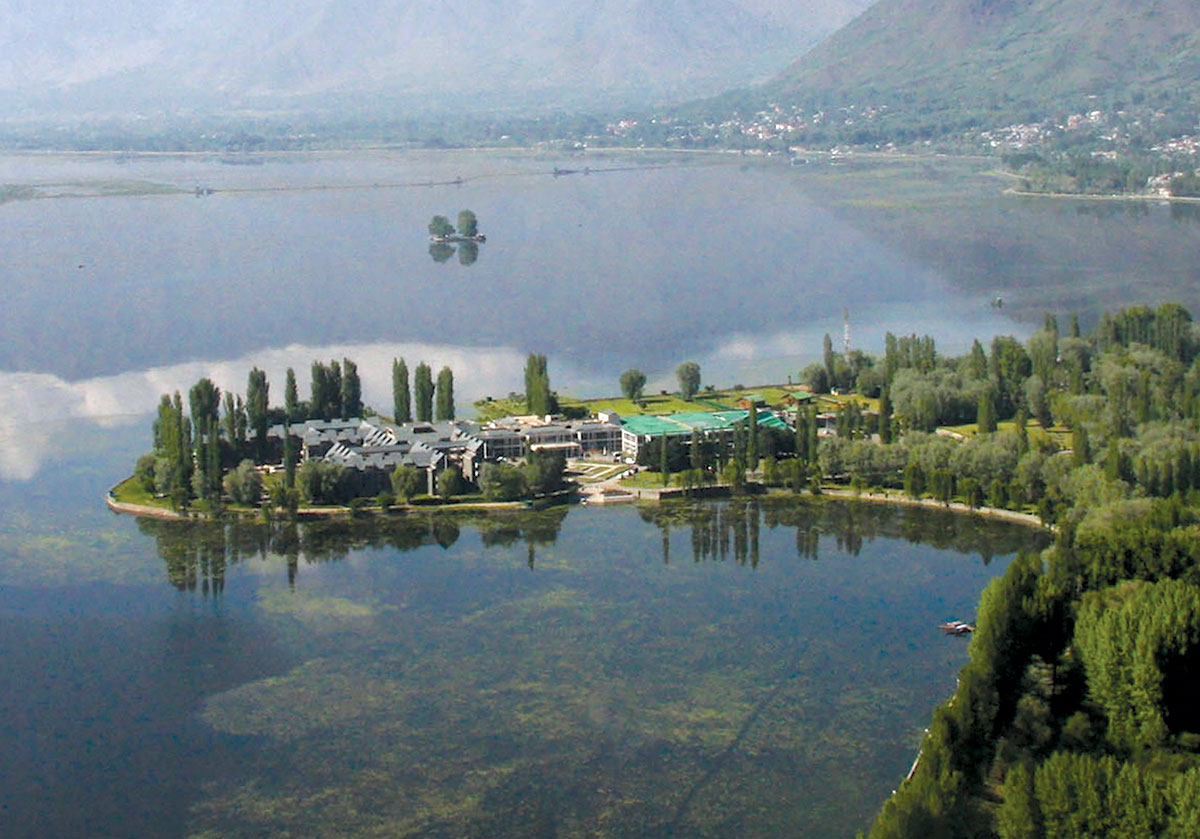
Authorities set up six special jails in anticipation of the August 5 decesion. One of them is the Centaur Lakeview Hotel on the Srinagar’s famous Boulevard where most of the political class is being held for more than three weeks now, reports Shams Irfan after spending many hours outside the jail interacting with the relatives of the special detainees 

Every morning a long line of luxury vehicles park outside Sher-e-Kashmir International Conventional Centre (SKICC), in Srinagar, overlooking picturesque Dal Lake. These vehicles chauffer relatives of politicians detained inside. 

Since August 5, the Centaur Lakeview Hotel, adjacent to the SKICC, is designated as a sub-jail where over 50 politicians, ex-lawmakers and ministers are held in preventive detention. Their detention orders are signed and renewed after every ten days by their local Magistrates, relatives of the detainees said.

SKICC has two parts; one is Convention Centre and other Centaur Lakeview Hotel, where politicians are detained. SKICC is a state property and Centaur Lake View Hotel is a property of the Hotel Corporation of India.

For last few days they are allowed to meet their families, relatives and in some special cases’ their political workers too.

But situation was completely different in the first fortnight when entry was restricted to close relatives only.

In one of the cars YawarNabiBhat, 28, is waiting impatiently for last one hour for his mother to come out.

This is his fifth visit since his father DrGhulamNabiBhat, 62, a former National Conference (NC) lawmaker from Tral was detained during a nocturnal raid from his Sanat Nagar residence. “Two days before abrogation of Article 370 my father’s Personal Security Officers (PSOs) were withdrawn,” said Yawar, a businessman. “They were asked to report back to Tral Police Station.”

On August 6, the same SPO’s along with DySpTral knocked at their house and told Bhat to get ready as they have orders for his detention. “They told him to pack his bag quickly,” said Yawar.

Bhat’s family was told that he would be taken to a guesthouse at Jammu and Kashmir Entrepreneurship Development Institute (EDI), Pampore.

The next morning, despite restrictions, Yawar and his mother visited EDI but Bhat was not there. “Then someone told us to try SKICC where a number of politicians were held,” said Yawar.

On August 8, Yawar and his mother visited SKICC, where they were told that Bhat is detained inside. “However we were not allowed to meet him. We could only send a few pairs of clothes to him through a security officer,” said Yawar. 

For next three days Yawar and his mother DrRehanaRafiq would visit SKICC hoping to meet Bhat, without success.

Finally on August 11, Yawar’s mother was allowed to meet her husband for thirty minutes inside lobby area under the watchful eyes of officials. Bhat told his wife that he was driven to Tral first where he spent the night inside Police Station.

“I don’t understand why my father was picked. He was an MLA some 12 years back,” said Yawar.

The same confusion brings three recently elected Corporators of the Srinagar Municipal Corporation (SMC) to SKICC gates.

They carry an application addressed to Dy SP jail, SKICC, Srinagar seeking his permission to visit Deputy Mayor of Srinagar city, Sheikh Imran who is detained since August 8. Elected independently, Imran joined Peoples Conference days ahead of the August 5.

“We don’t understand why Deputy Mayor is detained?” asks NighatGul, 36, who is Ward in-charge for Imran. “Why he is being singled out?”

As they wait for their turn to enter the SKICC, Imran’s wife walks towards the front gate. “Till yesterday we were hailed as basic blocks of democracy. Now see how they treat us,” said Inayat Mir, 47, a Corporator from Nawabazar area of Srinagar.

Before entering SKICC premises visitors are asked to keep their belongings including cell-phones, watches, wallets, pens outside. “They don’t allow us to take anything inside,” said Mir.

A political worker of former NC lawmaker from Khanyar, Ali Mohammad Sagar, came out after meeting him. He was happy to see Sagar and his son Salman Sagar in good shape.

“Since last one week they are allowed to take their meals together with other detainees,” he said refusing to reveal his name. “Before that they were served in their rooms. None of them was allowed to move beyond their designated floors.”

He saw Sagar, his son Salman and Sajjad Lone sitting together in the lobby area. “They are allowed to sit together but under the watchful eyes of a police officer. They can talk about anything except current situation and politics,” he said. “Sagar was allowed to go home three days back but he refused to leave unless everyone is released,” said his party worker.

The latest addition to the SKICC sub-jail was Shah Feasal who was detained in Delhi and flown back to Srinagar. Their personal belongings were taken at the time of entry.

A number of workers have also come from south Kashmir to meet political leaders detained here. “I have come to meet Dr Bashir Ahmad Veeri,” said a political worker who refused to give his name. “He was shifted from Khanabal to SKICC recently after there was no space left.”

These political workers came along with DrVeeri’s wife who came from Jammu to meet her husband. “They are well but depressed by isolation and detention,” said one political worker who refused to reveal his name.

Apart from DrVeeri, Mehbooba Mufti’s uncle SartajMadni, Congress’ Hilal Shah, former lawmaker from PahalgamAltafKaloo were also shifted to the Centaur Lakeview Hotel from Anantnag.

Corporators with application to meet Deputy Mayor Srinagar.

But the busiest former lawmaker at SKICC is Shia cleric Imran Reza Ansari. At least two delegations of four workers each met him to seek his suggestion for finalization of Moharam related preparations. “We don’t know how we will manage without him,” said Haji Ali Mohammad Bahar, 52, a resident of Khushipora, HMT in Srinagar. “Without his advice or consent we have never observed Moharam. He is not just a politician but our spiritual leader too,” said Bahar emotionally.

Ansari joined Sajjad Lone led Peoples Conference (PC) last year after he quit PDP.

“Ansari Sahab is not feeling well. They should let him out at least for Moharam,” said Ahmad Ali Ganie, 26, a volunteer during Moharam processions.

Despite restriction SKICC has helped politicians to cool their heels and get connected with God. “Most of them pray regularly now,” said a NC worker. “Prayers are led by Sagar, Zahoor Ahmad Mir and NayeemAkhtar alternatively. Isn’t it strange,” he asks with a smile on his face.

But as relatives wait under the scorching August sun to meet their loves ones, they have become centre of jokes for passer-bys. “These people have always remained on the other side of the barricades. Now things are reversed. I hope they understand what a Kashmiri has suffered under them,” said a biker who had stopped to ask why so many people are waiting outside SKICC gates. 

“We are as helpless as any other ordinary Kashmiri is right now,” said Yawar as he waits impatiently.

Governor Satyapal Malik also talked about these “prisoners” in his recent news conference on August 28. He said the arrested leaders will have a brighter future in politics when they are released if “they have some brains”.

“I have gone to jail 30 times, whoever goes to jail will come out shining as a future leader,” Malik said. “They can take political benefit of detentions in future. Don’t you want new political leaders to emerge in Kashmir?”

Malik said the Kashmir leaders are detained closer to their homes. “I was lodged in a jail far away from my home. If those detained have brains, they will reap the political benefit of the detention. I am wishing them well.”

Malik insisted: “Those who go to jail become political leaders. The longer they stay the more they will brag in elections. So, if you sympathise with their political careers, don’t question the detention.”


from Kashmir Life https://ift.tt/2HXCZe7
via IFTTThttps://kashmirlife.net

Sunday, 4 August 2019

Union Govt constitutes JK Environment Impact Assessment Authority

SRINAGAR: The Union Government on Sunday constituted State Level Environment Impact Assessment Authority, Jammu and Kashmir and in consultation with the State Government formulated the State Level Expert Appraisal Committee to assist the Authority.

Governor chairs SAC meeting

According to a notification issued by the Union Ministry of Housing and Urban Affairs, the Environment Impact Assessment Authority shall be headed by Lal Chand resident of Village Khearian, Gole Gujral, Jammu.

The Authority comprises Nazir Ahmed—house number 12, Jeelanabad, Lane 1, Batpora, Srinagar —  as its member and Director, Ecology, Environment and Remote Sensing, J&K its Member Secretary.

“The Chairman and members of the Authority shall hold office for a term of three years, “the notification reads.

Further to assist the Authority,  the Government of India in consultation with the Government of Jammu and Kashmir constituted State Level Expert Appraisal Committee, which shall be headed by Subhash Chandra Sharma resident of 331 Shastri Nagar, Jammu.

The members of the Committee are M. A. Tak resident of 124 Mominabad (near JAKFED), Anantnag,  Braj Bhushan Sharma of 278, Sector 2, Channi Himmat, Jammu, Abdul Rashid Makroo of house number  9, Lane number. 11, Sector C, Gulshan Nagar, Nowgam Bypass, Srinagar, Professor Arvind Jasrotia of 33-D, Sainik Colony, Jammu, Dr. Ghulam Muhammad Dar (Associate Professor) JK IMPA and Rural Development, Main Campus, M.A. Road, Srinagar.

Moreover, Irfan Yasin (Vice Chairman, Retired) of Bagh I Hyder Hyderpora Bypass, Srinagar, Professor M. A. Khan of General Post Office Box 726, Srinagar, Professor Falendra Kumar Sudan of Department of Economics, University of Jammu, Professor Anil K. Raina of Department of Environmental Sciences, University of Jammu, and Professor Shakil Ahmad Romshoo of Department of Earth Sciences, University of Kashmir, Srinagar are its members.

While as, Scientist, In-charge Remote Sensing and Geographic Information System Lab is Secretary of the Committee.

The Chairman and members of the State Level Expert Appraisal Committee, Jammu and Kashmir shall hold office for a term of three years, the notification reads.

It further said that the State Level Expert Appraisal Committee shall function on the principle of collective responsibility and the Chairman shall endeavour to reach a consensus in each case, and if consensus cannot be reached, the views of the majority shall prevail.

The Govt of J&K has notified Directorate of Environment & Ecology in Forest Department as Secretariat for the Authority. The Directorate shall provide all financial and logistic support including accommodation, transportation and such other facilities in respect of all the statutory functions of the Authority

Anyone who wants to apply for environmental clearances should apply to Director, Environment & Ecology, Forest Department, Govt of J&K immediately.


from Kashmir Life https://ift.tt/2GLWZj5
via IFTTThttps://kashmirlife.net

JK Police to get Dress, Kit Maintenance Allowance in cash

SRINAGAR: The State Administrative Council which met on Sunday under the Chairmanship of Governor Satya Pal Malik decided that the entire police personnel of Jammu and Kashmir will be given the Dress and Kit Maintenance Allowance directly in cash at significantly increased rates.

The allowance will also be given to Special Police Officers (SPOs) in the form of an honorarium, the spokesman said.

The annual allowance being given to police personnel as Kit Maintenance Allowance was Rs.40 per month to Non-gazetted employees and Rs.150 per month to Gazetted Officers.

According to the SAC decision, SSPs, SPs and DySPs of Jammu and Kashmir Police will now get Rs 10000 per annum as Dress and Kit Maintenance Allowance in cash, while as the police personnel from the rank of Inspector to ASI will get Rs 7000 per annum.

Similarly, Dress and Kit Maintenance Allowance to police personnel from the rank of Head Constable to Followers will now be Rs.6000 per annum and SPOs shall be paid an honorarium of Rs.3000 per annum for their uniform.


from Kashmir Life https://ift.tt/2yOpEQl
via IFTTThttps://kashmirlife.net