Wednesday, 31 October 2018

Briefing

QAZIGUND

Last week, a 7.42 minutes video clip was widely shared on social networking sites showing a person being beaten ruthlessly and then tied with a rope by his family. Some of their neighbours assembled to intervene, but they were not allowed to enter the gate of their house. Finally they managed to barge in by jumping over the wall. It was an inhumane act. Later, the local police in Qazigund informed that the person, being beaten was mentally unsound, and was trying to set afire his own house. His siblings caught him and then beat him up. An FIR has already been filed in the station.

BANIHAL

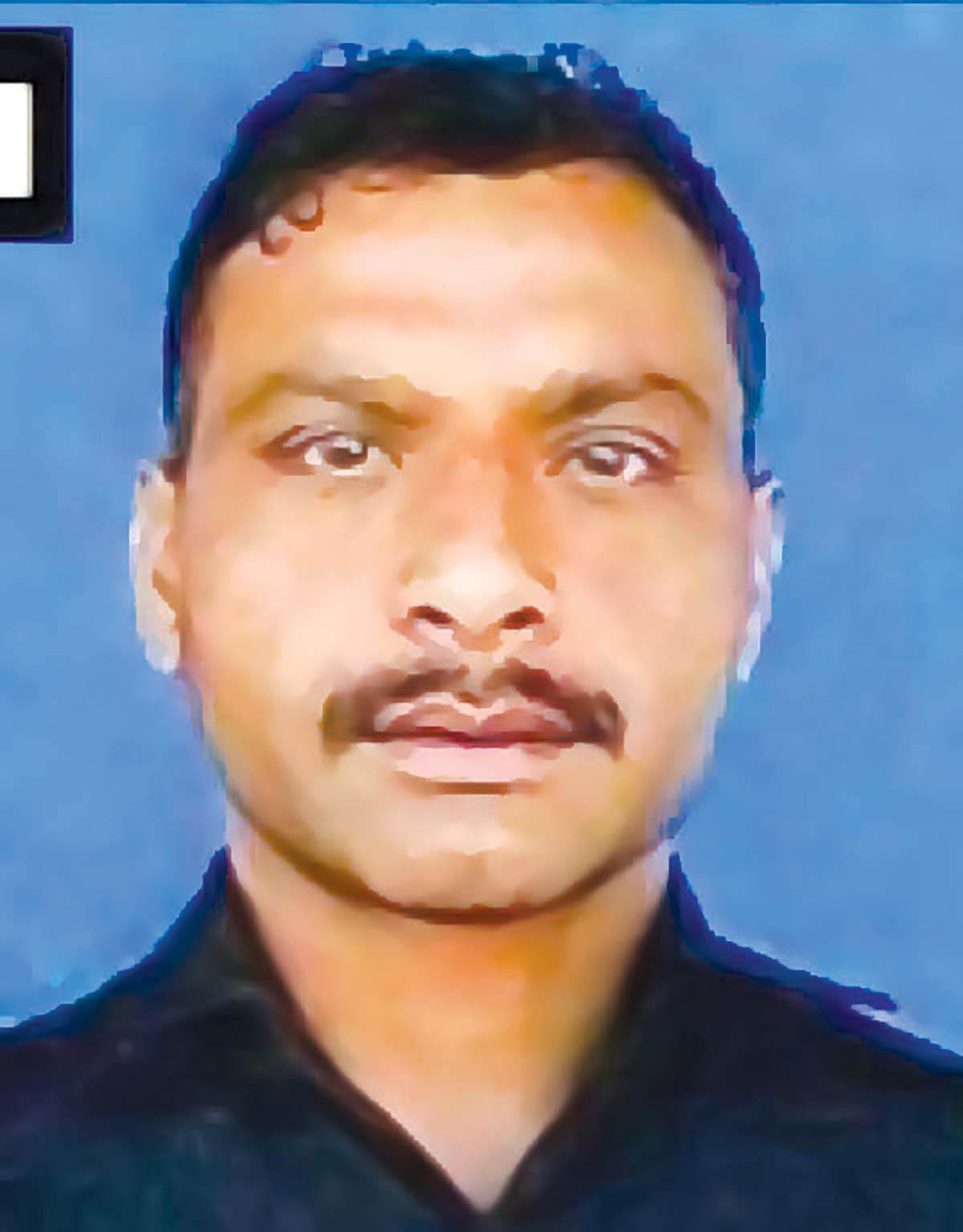
They waited for a decade to have their first child, but when finally the day came, Lance Naik Ranjeet Singh was dead before their baby girl was born. Singh was among the Jammu and Kashmir Light Infantry personnel killed allegedly by Pakistani intruders along the Line of Control (LoC) in Sunderbani sector of Rajouri district on Sunday. Two infiltrators, believed to be members of the border action team, were also killed in the gunfight. As the body of Singh reached his home, his new born baby girl, who had just opened her eyes and his wife, were taken to the cremation ground directly from the hospital.

KASHMIR

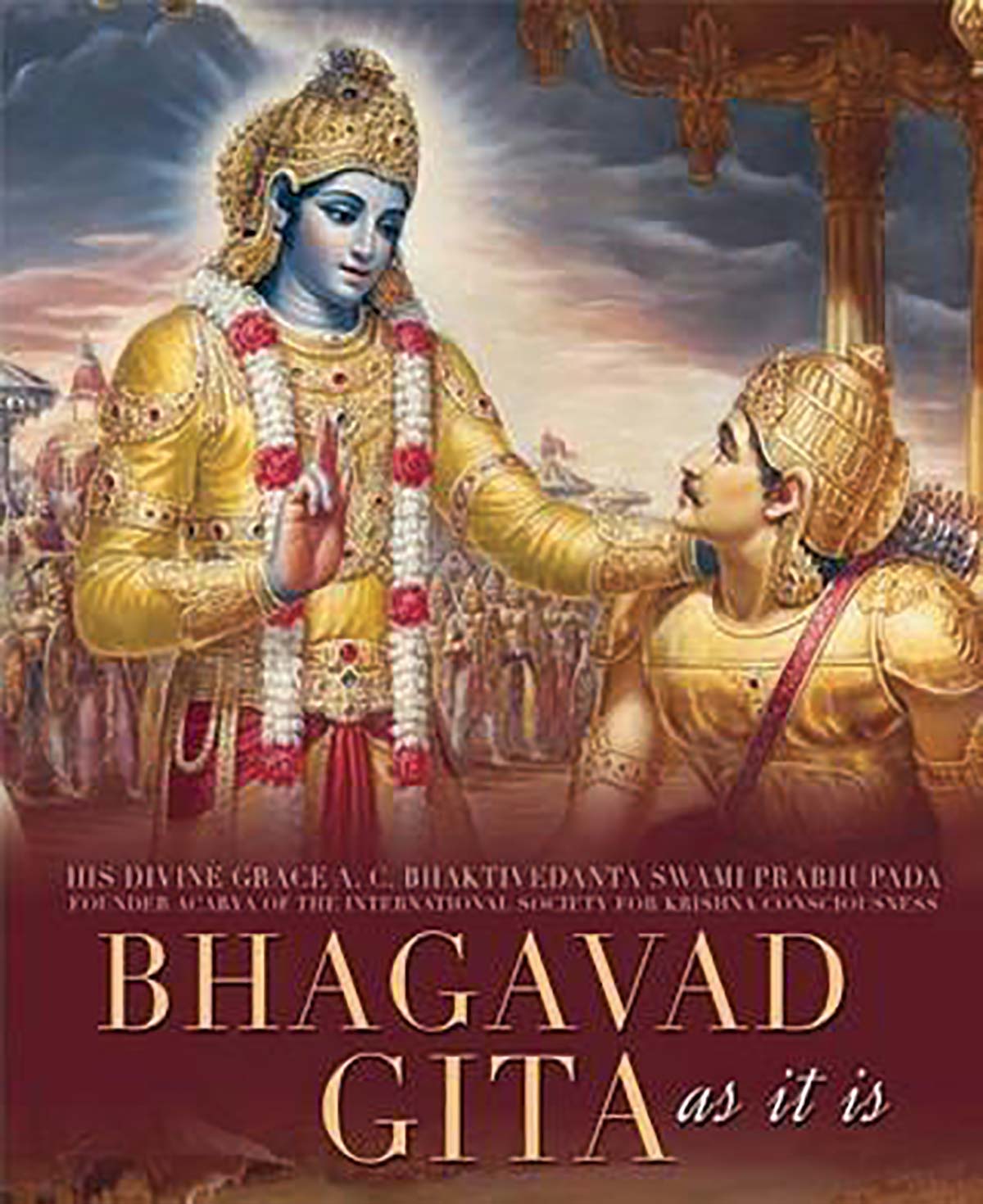
In the highly volatile Kashmir valley where any news has a direct impact on its streets, an order by the Governor-run- government was withdrawn within 24 hours that asked the educational institutions of the state to purchase copies of the Bhagavad Gita and Ramayana for their libraries. The order was issued by the state Chief Secretary in Srinagar. The order led to widespread criticism and there were speculations that it could lead to the ‘situation like 2008 unrest.’

GANDERBAL

Almost six days after Urban Local Bodies election results were announced and they were declared losers, Neelofar Begum and her daughter Gousia Islam, mother and sister of BJP District President Bandipora Sheikh Waseem Bari, met an accident with a truck while travelling in an Alto Maruti car from Manasbal to Ganderbal. The mother of Bari died on spot and sister was critically wounded. She is undergoing treatment in SKIMS Soura.

KUPWARA

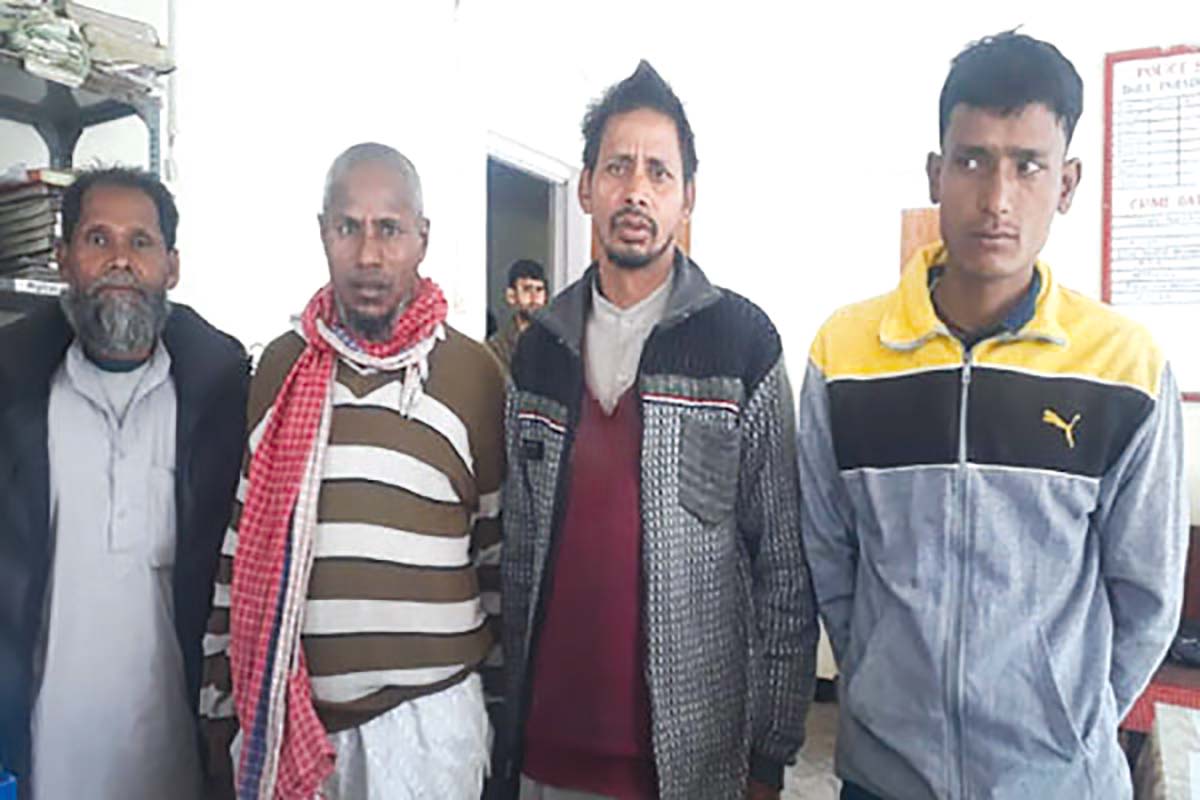
This week, the local police in Kupwara used social media to reunite a specially challenged person with his family in Bihar. It was, at least, eighteen years after being lost in Kashmir, a deaf and dumb man was reunited with his family by local police in Kupwara.

PULWAMA

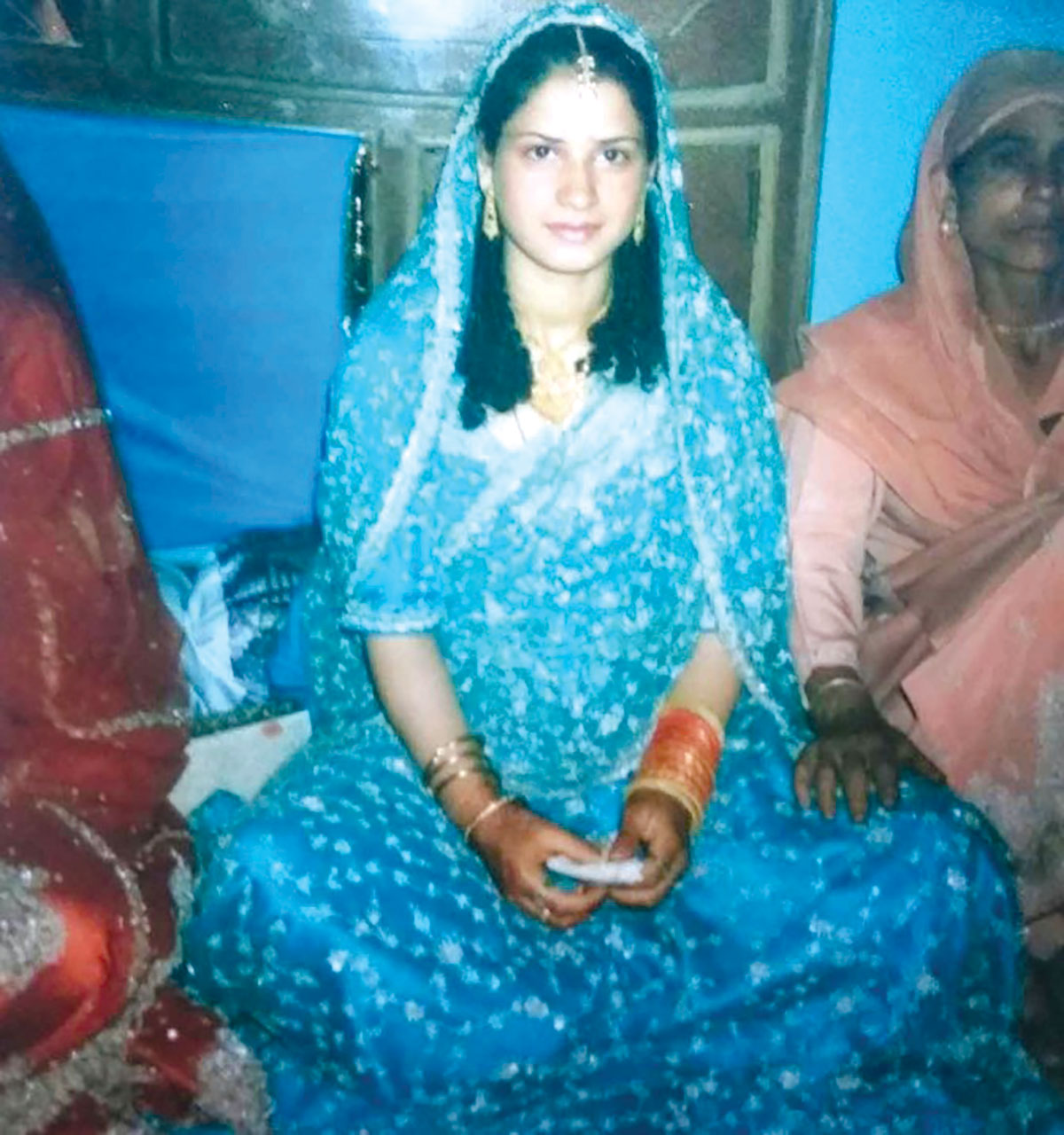
Last week, a pregnant lady, Firdousa, became the victim of cross-fire between the government forces and the militants in Shadimarg area of Pulwama district. She received a bullet on her neck when she was washing some utensils in her lawn. She later succumbed to her injuries at district hospital. She was expecting her third child. Her husband, Khursheed Ahmad Sheikh, a salesman in a garment shop, their two kids and sister-in-law were watching the incident from the window of their house, and thus are witness to her death. The couple was married in 2007. Their kids, son Tawqeer is studying in 3rd standard and daughter Aalima in LKG.

KARGIL

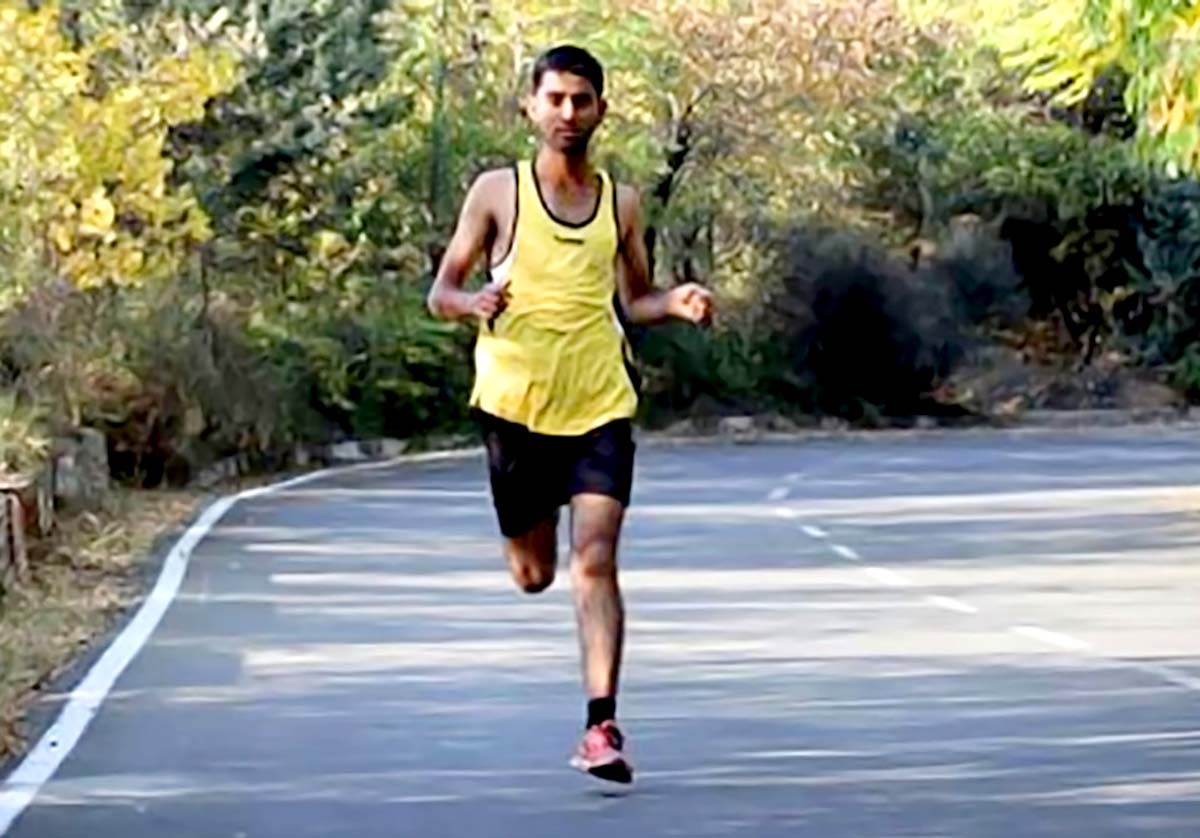
In a first of its adventure run, Valley’s one of the top athletes Hamid Aziz, 24, ran 200km in two days from Kargil to Srinagar – the feat that is being said has never been achieved or attempted by any athlete from J&K or India. Hamid, a resident of Hawal area of downtown in Srinagar, started his run at 11 am on October 21 from Kargil and reached Drass in the evening covering a distance of over 60kms under sub-zero temperatures. Next day, he again started at 6:30am, when the temperature was minus 6 degree at Drass. The athlete ran over an altitude of 11,578 feet above sea level at Zojila to reach Kashmir from Ladakh region and complete his ultra-run. He reached Srinagar late night same day. Last year, Hamid ran 110km from Srinagar to Baltal in 10 hours which is also a record in JK.


from Kashmir Life https://ift.tt/2ziGAOE
via IFTTThttps://kashmirlife.net

Hurriyat leaders pay tributes to slain militants killed in Tral

Srinagar

Paying rich tributes to the militants killed in Tral, Hurriyat (G)Conference chairman, Syed Ali Geelani said that death and destruction all around the valley is only because of rulers, who very cunningly are still in denial mode.

In a statement, strongly condemning the use of military power against the civilian people by the government forces in Zaloora, Hurriyat Chairman said that on the pretext of search and cordon operations common people are deliberately targeted and victimized by the men in uniform. In this grim situation, the life of common people has become miserable and vulnerable at the hands of occupational forces.

Terming the repressive measures of vandalizing the property of the common people and intimidating them on the basis of revulsion and detestation as highly cowardice and deplorable, the Hurriyat leader affirmed that none of the International laws pertaining to war does permit any such military action against unarmed civilians.

Meanwhile, Chairman Tehreek-e-Hurriyat (TeH), Mohammad Ashraf Sehraie paying glorious tributes to the duo,  Showkat Ahmad Khan and Abu Usman said that those serving their nation sacrificing precious lives are beacon lights of our cherished movement.

He said that the nation will never budge from its stand and will carry their mission till its logical end. The sacrifices rendered by these brave hearts are praiseworthy and exemplary. These militants deserve our salute and we are indebted to their revered sacrifices and these sacrifices are valuable assets for our movement.

The prevailing political uncertainty and instability in Jammu and Kashmir is taking heavy tool over the precious human lives for which India is responsible as it is using military power to suppress the ongoing struggle by its force.

Sehraie said vandalizing properties, killing, maiming and brutalizing people with bullets and pallets all these suppressive measures won’t force to our submission and break our resolve.


from Kashmir Life https://ift.tt/2DhyvOo
via IFTTThttps://kashmirlife.net

Seven Mournings

Whether or not the post-encounter explosion at Laroo was a violation of the 2012 SOP is a matter of investigation. But Farzana Nissar visited the seven families in and around the dusky village to know who the slain youth were and how the destiny took them to the smouldering house with lethal residue scattered around
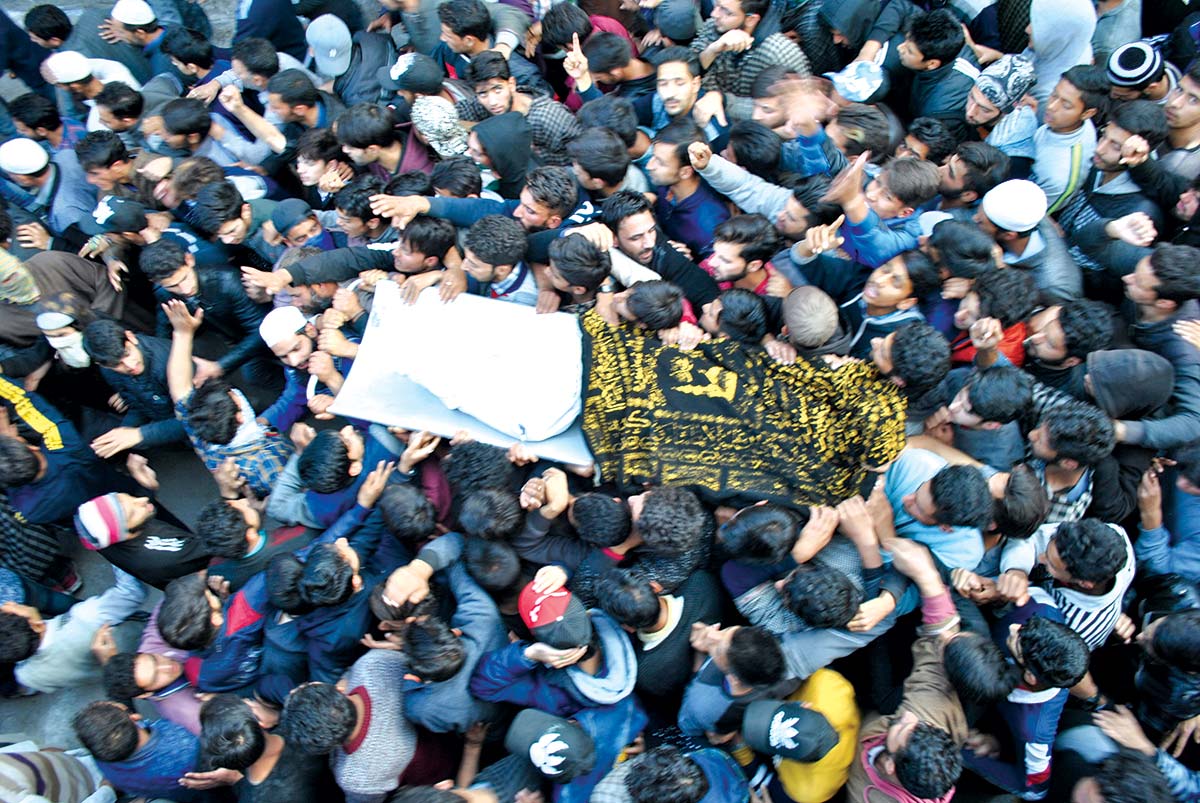
People carrying the dead body of Javaid Ahmad.

On October 21, 2018, at around 10:30 am, after the killing of three local militants by a mixed contingent of police, CRPF and the army during wee hours, anguished people from Laroo and adjoining villages of Kulgam rushed towards the encounter site. It happened moments after the army and firefighters left the area.

Apparently desperate to see the spot, the people passed through a narrow street with mud-brick houses and crossed a small stream to reach the site in Laroo’s Bounpora. Surcharged and raising pro-freedom slogans, few young boys entered the smouldering house of Sheeraz Ahmad Bhat. Quite a few though stayed outside the premises. Within a few minutes, an ear-splitting bang and a sweeping cloud of thick black smoke engulfed everything. It eventually ended with the killing of seven youth which pushed the entire belt into mass mourning.

“A near-stampede broke out immediately after the blast, as people including women and children rushed out of the narrow courtyard in a panic with many of them being actually trampled over,” Abdul Wahid, an eyewitness, said. “Ball of flames was rising from the collapsed house, blood-ridden bodies were scattered all around.” Soon, roads were flooded with ambulances. It still sends shivers down my spine.”

Two days later, visibly distraught, Sheeraz Ahmad Bhat, sifts through the ash and debris where his home once stood, looking for some remains. On one pile of rubble lies an old cloth, on which people generously donate money out of their own will. Visitors throng to the encounter site, take pictures of the scary scene and drop some money as a contribution for rebuilding the devastated life.

Sheeraz says he is not worried for his house but he is more worried thinking of the hours when he was caught between the raining bullets between the two sides. “There was no effort from the forces to get my family of five members out,” he said. He has three kids – two daughters, eight and seven years of age and a 2-year old son. Bhat alleged that his neighbours were asked to come out of their houses but they refused to oblige until Bhat’s family was rescued. “At around 6.25 am, my family, came out from the main door, and at the same time, the three militants jumped out from the back window of the house,” Bhat said. “As soon as we came out, our home went up in flames. I am not getting out of the shock: what if we had not come out ourselves before the blast.”

Few doors away, Hafizullah Bhat, a labourer, sits on the window of his two-storey mud-brick house waiting for his dead son’s return. His longing eyes are glued at the main gate of his house.

On Sunday, at 9 am, when the encounter was over and the counter-insurgent forces left the site, all his family members decided to visit the damaged house of the neighbour. His wife, Manzoora Akhter and their 18-years-old son Mohammad Muqeem Bhat also accompanied him. As per eyewitness Muqeem, once at the encounter site, took something in his hands and it exploded leaving his hands on the ground. When he reached the hospital, he was declared ‘brought dead.’
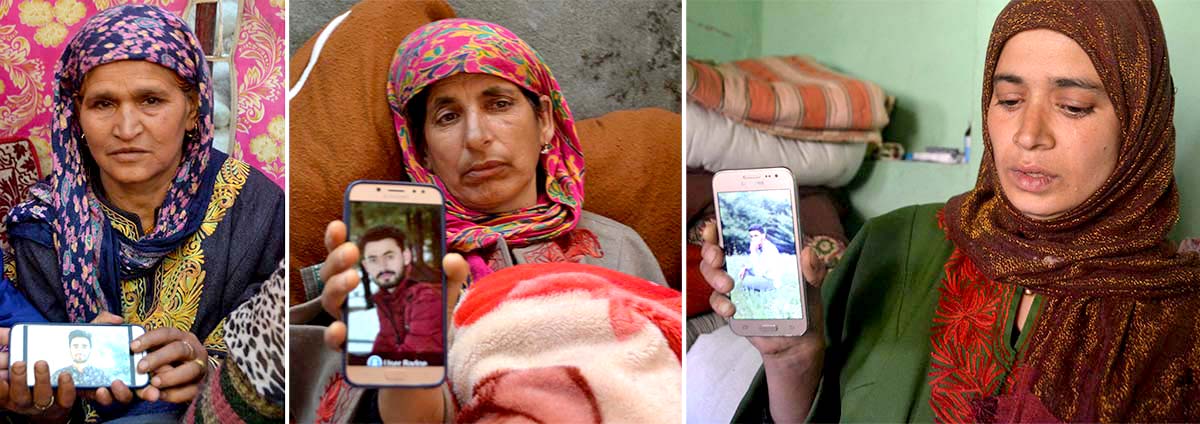
Mother of Irshad Ahmad Padder, Mother of Talib Maqbool Laway, Sister of Aaqib Gulzar Sheikh

Muqeem was a class twelfth student and was going to write his first paper on Monday. In his tenth class examination, he had scored a distinction. His younger brother is in ninth class and sister in the fifth primary. The family is ruing over their fate that their ward became the reason for the cancellation of the examination for all the students across Kashmir.

Muqeem’s younger brother, Adnan, while showing his recent date sheet recalls his mocking behaviour. Muqeem had replaced the word date by tension, referring to it as ‘tension sheet’. But his room presents a different view altogether. In his room is a little steel trunk, full of religious books like Seerat-e-Mustafa and Muhammad-e-Arabi. One of the walls of his room is full of graffiti with pro-freedom slogans. In the corner of the wall he has mentioned some dates, like July 8, 2016, and May 27, 2017; these are the dates when Burhan Wani and Sabzar Bhat, both Hizb commanders, were killed, respectively.

On the other end of Laroo, in the plywood room of Talib Maqbool Laway that he had erected on the top of his single-storey modest house, his bag and books still lie open on his study desk, along with his eyeglasses and a wristwatch. Few minutes after Muqeem’s death, Talib was brought to the same hospital, where he was declared dead within minutes of his arrival. Unlike Muqeem, Talib had to appear in his last paper of BA first semester, just 24 hours after his death. Having lost his father, when he was just two, Talib used to work in neighbouring fields to fund his studies.

Talib’s mother, Naseema Akhter, who was unaware of her son’s death till his dead body reached home, is inconsolable and repeatedly calling him: “Who will take care of your mother and sister now.” She has just one story to share with all the people coming to console her. The previous night when the guns were roaring, she took her son and kept him in her room. “In the morning everybody went to the encounter site, so did him,” she says. “I regret leaving him alone.” Naseema is now being taken care of by her daughter, Sumaira, who had to drop out of school because of poverty.

Being a gadget lover, Talib had advanced technical knowledge about mobile phones. “If anyone in the village had any problem in their phones, they used to bring it to Talib,” said the slain youth’s uncle. “It was his hobby to repair them free of cost.”

Shurath is not far away from Laroo. This hamlet has not seen any stone pelting or a casualty in the last 17 years. In the centre of the village, a few young men are busy fixing green banner on the roadside. At the centre of one banner is painted Shaheed Padder Irshad in bold Urdu letters, a photograph of the slain pasted just above it and a line, which according to his friend, best sums up Irshad’s fate: Khwab, Tamana, Yakeen, Jawani ki Dehleez, Aur phir Jam-e-Shahadat (Dream, Longing, Belief, the onset of youth and then martyrdom).

On the fateful Sunday morning, Irshad Padder son of Syedullah Padder, a recent graduate from degree college Kulgam left his home along with his brother Waheed Ahmad Padeer, also his batch mate, to join the funeral of the slain militants. But destiny had other plans.

At the encounter site, the brothers lost contact with each other. Soon after the giant boom, Waheed rushed towards the smoking blast site to help the injured. A few moments later, he had to shoulder his own brother’s corpse. “He had promised to return back with me. He broke his promise and left me all alone,” Waheed said. “I wasn’t able to save him.”

Sports lover Irshad had many medals to his credit, with cricket and volleyball being his favourite. Hugging his cricket uniform and kissing his medals, Waheed is in a state of deep shock and isolation.

Irshad was a brilliant student, securing 84 per cent marks in his BA and aspired to become a KAS officer. Recently, he had appeared in the master’s entrance test in history at the Kashmir University. “Finally I completed my degree of graduation,” Irshad’s last facebook status reads. “Thanks to Almighty for this brilliant success.”
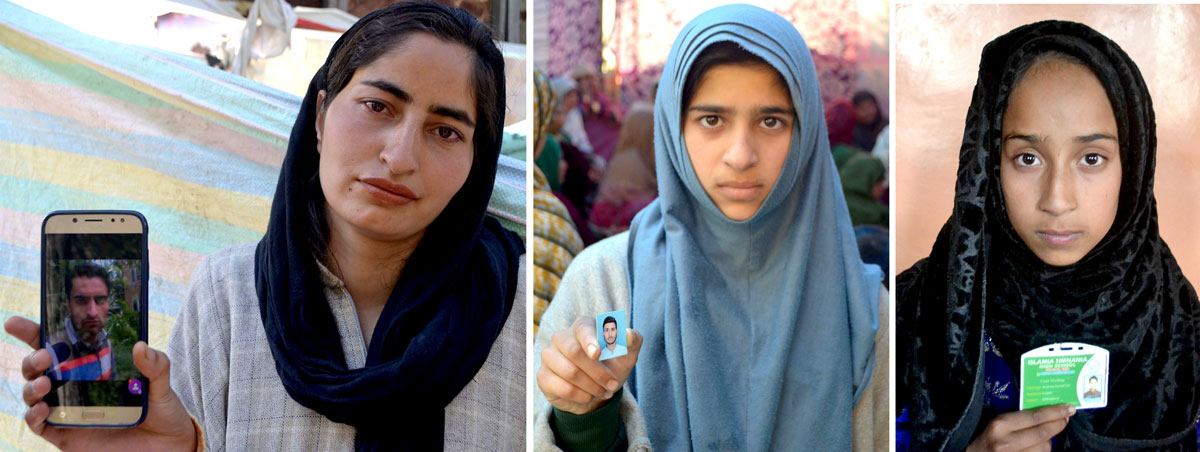
Sister of Mohd Mansoor Dar, Sister of Mohd Muqeem Bhat, Sister of Uzair Mushtaq Dar

Irshad had two brothers and three sisters, of whom the elder brother is a sub-inspector in Jammu and Kashmir Police. His father, Syedullah Padder, a labourer, says Irshad was injured at the encounter site but when he was taken to the district hospital, doctors declared him ‘brought dead.’ Irshad had four funeral prayers.

The Sunday mayhem, unprecedented in the belt, created a situation that the road connecting Kulgam with Anantnag witnesses shattered families and mourners after every one or two villages. On blood-soaked Sunday noon, at around 12:30 pm, a pall of gloom descended on Danew Bogund, when Dars’ received the corpse of Mansoor Ahmad Dar, 29, their son. In the morning, Dar had left home to visit the encounter site where he was seriously injured and succumbed to his injuries later. “His body was drenched in blood with splinters of the explosives all over him,” says Naseer Ahmad, one of his relatives.

More than 24 hours after burying his son, Ghulam Mohammad Dar sits on the porch of his well-built one storey house, surrounded by a cluster. Ghulam rarely moves around and is bed-ridden since he met a car accident a year ago. He requires the help of at least one person to move from one place to other.

For Ghulam Mohammad, the grief over the death of his son has turned into anger. As his relatives urged him to speak about his son, the 50-year-old is reluctant. “What good will happen if I talk about my beloved son? Will it bring him back? How can one explain the pain of losing his lone son,” he shouts.

Apart from aged parents, Mansoor is survived by an unmarried sister, wife and a toddler son. He was a post-graduate in history and was working as a cable operator in Devsar. Mansoor was the lone breadwinner of the family of five. His mourning friends still recall the days when Mansoor scored distinctions in the class tenth and twelfth and was a celebrated topper in the whole area.

Too young to understand the tragedy that has hit him and his family, two years old, Aezan has fallen asleep in the lap of his just widowed mother, Shaheena. Wailing in a corner of the colourful tent set up for the unending trickle of mourners, her life has turned black and white. “My husband had many dreams for our son. I can’t believe he is an orphan now,” Shakeena cries, inconsolably. “Aezan is looking for his Papa in this flood of people. I don’t know how to answer him.”

Almost a kilometre away, in Makanpora hamlet, Ayaan, a small kid places flowers at the day old grave of his maternal uncle, Aquib Gulzar. Sitting next to Aquib’s grave, Aijaz Ahmad, his elder brother is devastated by the loss. “He was more like a friend to me, we used to fight like kids,” Aijaz said. “I don’t think I will ever be able to get over his death.”

Just a few graves away from Aquib’s grave is that of his mother, who died in 2006 when Aquib was barely 8-years old. Two years after the death of his mother, Aquib’s father remarried and left his children.

Amongst all the casualties, Aquib Gulzar, 20, was the first. Son of Gulzar Ahmad Sheikh, he died on spot at 11.30 am after the shell exploded. Aquib had three brothers and three sisters, out of whom the elder brother is married and now lives separately. Aquib left his studies in 2016, and to run his family he used to sell seasonal things on a cart.

Kulgam town has turned into a desolate place, following the death Uzair Mushtaq, 12. A day before the encounter, the whole of Kulgam was in celebration mode following the Urs at a local shrine. But like every other person, Uzair’s family had no idea that the next day would turn into mayhem for them.

Sitting in the centre of a room filled with female mourners, Uzair’s mother, Shafiqa Banu, 36, has turmeric pasted on her forehead. Wailing over the death of her son, her eyes have swollen and her voice sounds hoarse.

Youngest of all the slain civilians, Uzair, son of Mushtaq Ahmad Dar, died of a ‘bullet or shell’ injury on his head. After having his breakfast on Sunday morning, Uzair took his Adhar card from his cousin sister and left the house. Instead of a direct route, he wanted to reach to the encounter site via an orchard, half a kilometre away from Laroo, where he got injured. Uzair with severe injuries over his face and head was picked by locals and taken to district hospital Kulgam. From there, doctors referred him to SMHS hospital where he succumbed to his injuries. His funeral was held at the compound of the shrine of Mir Syed Simnani.
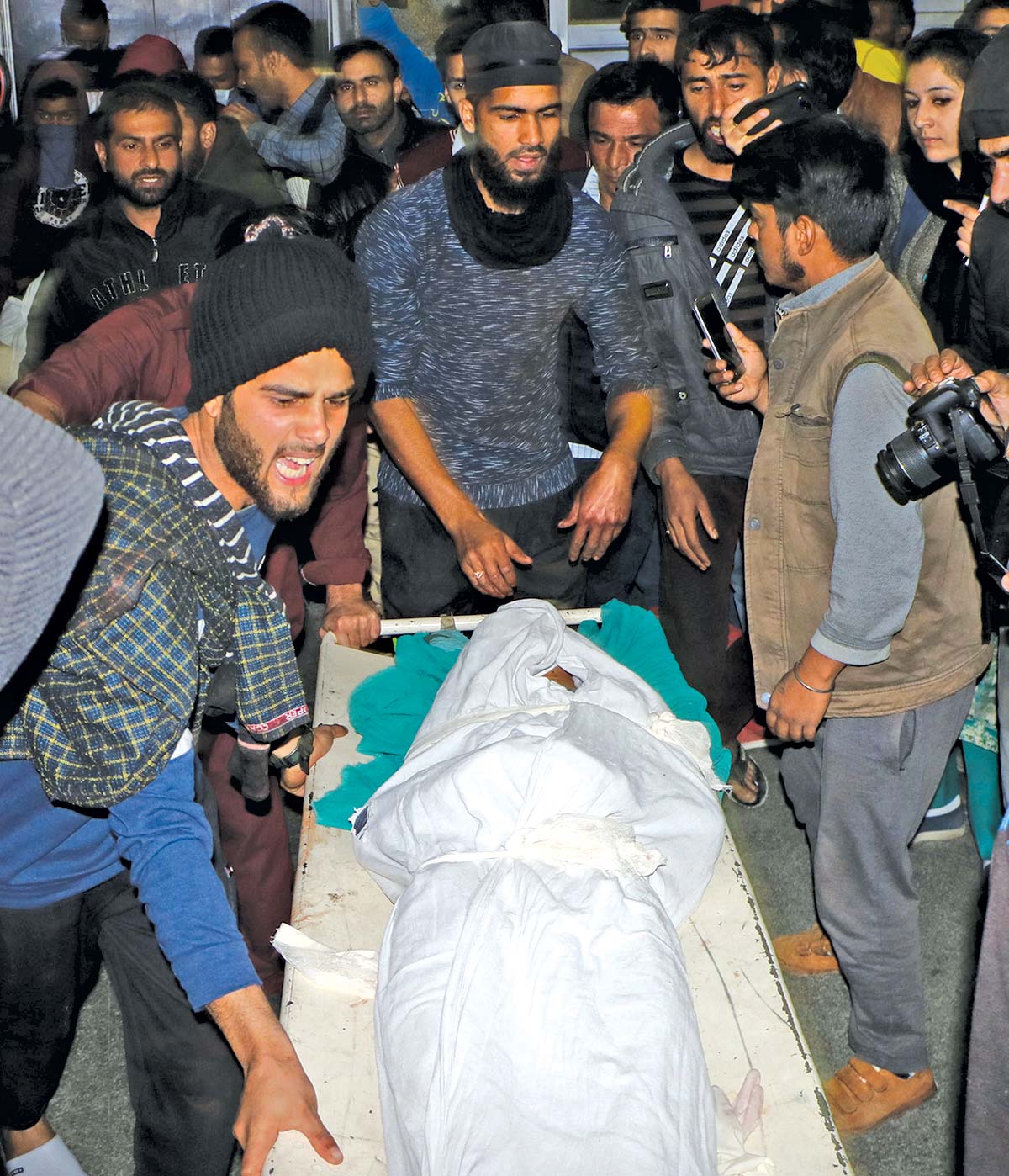
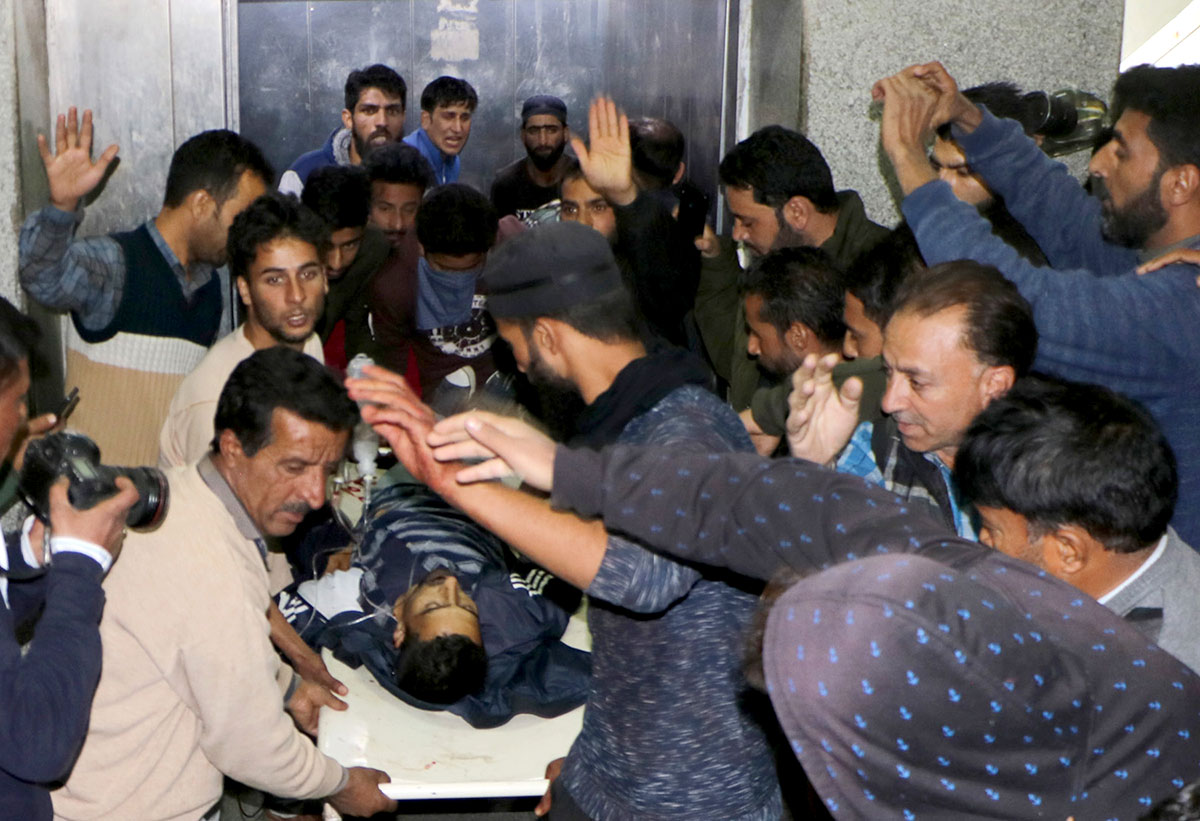
People carry body of one of the seven civilians killed in an explosion, inside a hospital in Srinagar.

“We were struggling to take the body to the graveyard after the funeral prayers were offered,” Abdul Rasheed, one of his relatives said. “But they were firing shells continuously. We had kept Uzair’s body on road and it was only after 20 minutes that we were allowed to go.”

Mushtaq, Uzair’s father, was busy harvesting paddy with no contact with his family. He carried a phone but the services were shut. When he returned home for lunch, his wife, Shafiqa, informed him that their son was not home since morning. Mushtaq heard that many of his neighbours were injured at the encounter site so he rushed to the hospital. At the hospital, Dar saw Uzair’s friend injured and as he went out to get an injection for him, he saw his other neighbours taking his son to the Srinagar hospital. “Had I been at home, I would have never allowed him to leave the house that day,” Mushtaq said, as a sob constricted his throat, cutting off his words.

Being the only son among daughters in the family of his three uncles, Uzair’s every sister cries for him. “We have only daughters in our family, and Uzair was our only son. We have another son but he is not mentally well,” his uncle Rashid said. “We three brothers had all of our hopes tied with Uzair.” In a recent video shared on social networking sites, Uzair’s younger sister, Tanzeela, 10, has uploaded an emotional video on the Youtube in which she sings an old folklore in Uzair’s memory.

Late Sunday evening, one more name was added to the list of slain civilians. In grief-stricken Hawoora that falls in Khudwani belt, people have once again gathered to mourn the death of Javiad Ahmad Lone.

“It has become a routine now,” Mohammad Hussain, Javaid’s neighbour, said. “Every now and then, this village sees blood.” Javaid was also injured at the encounter site. He was referred from Kulgam district hospital to SKIMS, where he breathed his last. Javaid is survived by four brothers, five sisters and his aged parents.

Javaid, according to his brother Ilyas Ahmad, was a minibus driver. “I was the conductor and Javaid the driver,” says Ilyas. Surrounded by his other sons, Javaid’s father, Mohammad Ibrahim Lone, raises the bottom of his pheran towards the sky and says, “Ya Allah, You are merciful and kind. I beg you to protect our sons from violence and danger. Save the people of Kashmir from internal and external oppressors and give them justice.”


from Kashmir Life https://ift.tt/2JrXGhH
via IFTTThttps://kashmirlife.net
Why Law Changed, Congress Wants To Know

Srinagar

Reacting to the proposed Municipal Laws Amendment Bill 2018, the J&K Pradesh Congress Committee (JKPCC) hit out at the government for bringing new amendment saying that the new Municipal Law should have come into force before holding ULB Elections, although the said amendment is not going to make any big difference, it is indicative of something that has been drawn in hurry. The JKPCC spokesman said that since Assembly stands intact, the bill should be debated so that Parties know it’s pros and cons.

In a Statement the JKPCC Spokesperson expressed surprise over the Municipal Laws (Amendment) Bill 2018 paving the way for elections of Mayors and Deputy Mayors of the Municipal Corporation etc through secret ballot and said Govt should have brought the amendment before holding of ULB Elections, what is the fun of introducing new amendment at this point, when the Elections to ULB were conducted as per the existing Laws he questioned.

The process of elections to the ULBs has completed, what was the need for bringing the new amendment at this time, JKPCC Spokesperson said and sought an explanation from the government.

Although the new amendment will not affect the prospects of the Congress in the upcoming elections in Srinagar Municipal Corporation, but bringing amendment at this time is highly objectionable and emphasized that the Elections to Mayor etc should be conducted as per the Existing Law, as that the process is post-poll exercise of the just concluded ULB Elections.


from Kashmir Life https://ift.tt/2P2ufsz
via IFTTThttps://kashmirlife.net

Youth offering priceless sacrifices for greater cause: Hurriyat (M)

Srinagar

Hurriyat (M) Conference on Wednesday paid tributes to two militants killed in an encounter with government forces at Tral Pulwama stating that the youth are offering priceless sacrifices for a greater cause.

The spokesman said that it’s high time that the people of Kashmir stay steadfast and display unity for their legitimate birthright, the right to self-determination.

The spokesman said that history is a witness that no military might have succeeded in puzzling the genuine struggles let alone weakening the people’s aspirations and commitment towards their goal.

The spokesman said that the way people, especially youth, are sacrificing their lives for the just cause deserves all applause and people, in general, deserve salute form their unflinching commitment and resilience, adding that, during the past 70 years of struggle against people of Kashmir braved all odds and didn’t surrender despite facing worst form of “state terrorism.”

The spokesman while expressing serious concern over the prevailing situation in Kashmir especially the ongoing “bloodbath” said that global community should wake up and take note of the pain inflicted on innocent Kashmiris and build pressure to New Delhi to honour the aspirations of people of Kashmir. The spokesman said that because of the lingering Kashmir dispute there is an instability prevailing all over and the only way to end it is to resolve the issue of Kashmir as per the aspirations of people.


from Kashmir Life https://ift.tt/2Q9r92v
via IFTTThttps://kashmirlife.net

10 Funerals, One Wedding

The consistent gloom and pain in the valley are devouring the petty patches of joy and happiness on daily basis. Shams Irfan details his crisis as a reporter who was reporting bloodletting while attending his cousin’s marriage

After a hectic week in the field, reporting the just concluded municipal elections and a series of encounters, I was looking forward to a relaxed weekend as my cousin was getting married on (Sunday) October 21, 2018. But I knew, a journalist working in post-Burhan Wani Kashmir, cannot afford the luxury to relax completely.

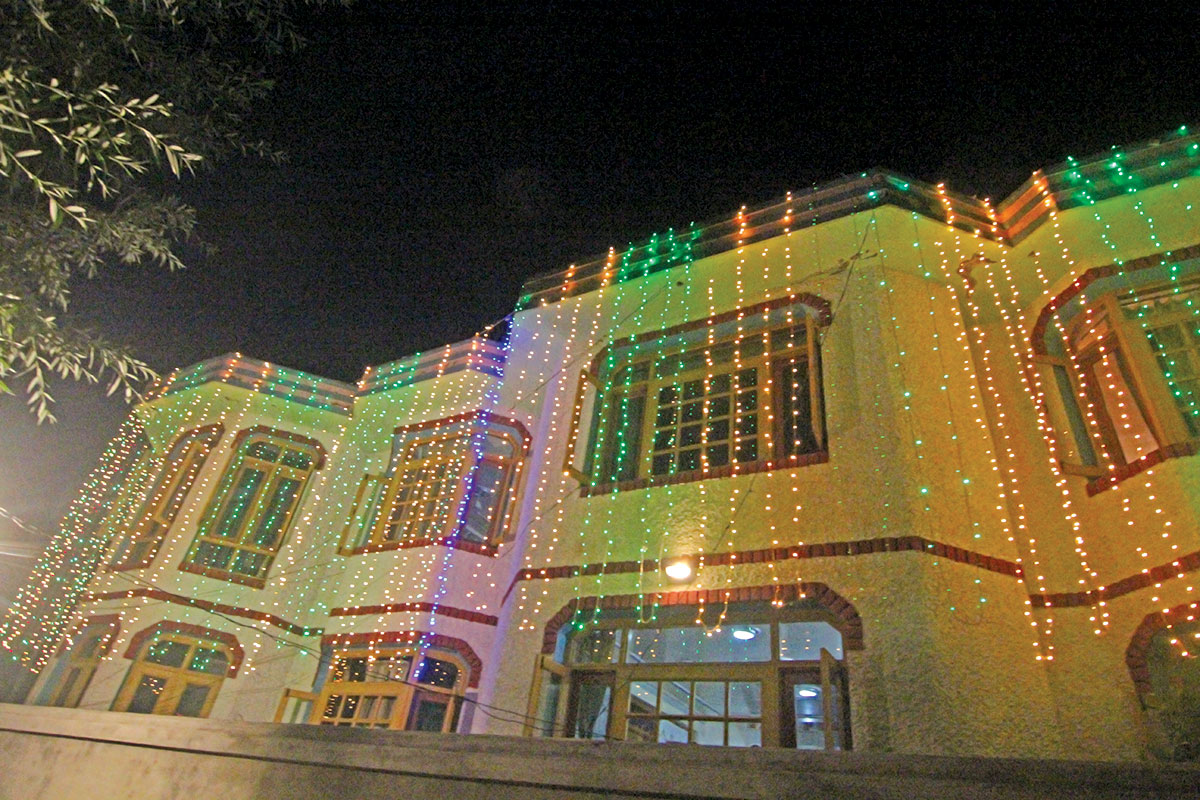
So with a bit of excitement and anxiety, I set off towards my home on late Friday night, driving on a deserted Srinagar-Pampore road, manned by at least three check-points by army and SOG in-between. But the excitement soon faded as my newsroom alerted me to a grenade attack on 44 RR’s Shadipora camp in Pulwama. As I reached home, I came to know that after the grenade attack, suspected militants and army men exchanged brief gunfire, and a bullet hit a local lady named Firdousa. At my cousin’s house, bedecked for the marriage ceremony and filled with guests, everyone was talking about Firdousa. The ill-fated Firdousa was six-months pregnant when a bullet hit her in the neck. The festive mood inside the decorated tent pitched on my cousin’s front garden, turned sombre instantly.

After quick and quiet dinner, I and a few friends from the neighbourhood retired to the groom’s room, trying our best to get the latest news updates despite a month-long internet-shutdown in south Kashmir. While others slept to get up early for a hectic day ahead, I kept rolling in my bed thinking about the unborn child, sleeping in a dark grave, buried under layers of soil, maybe cursing us all. With same thoughts in my mind, I tried to catch some sleep but failed. I watched a small fluorescent and blue string lights, hanging outside my cousin’s window dance in front of my eyes till the wee hours. With a prayer on my lips that no other bad news comes through, I fell asleep.

The next morning, the noise of Wazaas, traditional chefs and their crockery, coming from an adjacent piece of vacant land, where the food was cooked, woke me up. As expected, Saturday, proved to be a hectic day for me and my cousins. With the internet still shut, I kept ringing my newsroom in Srinagar to check the happenings in Kashmir. Every time, I rang my office, I would make a silent prayer, hoping that no mother is separated from her born or unborn son. To everybody’s respite, the day melted into the evening without causality or a killing.

The same evening, my childhood friend and now a relative Suhail A Shah, who works with a local newspaper and reports from south-Kashmir, came with his laptop, his workstation. He wore a tense look on his almost ‘war-torn face’, as he has been reporting non-stop about events and encounters in south Kashmir. Since Burhan Wani’s killing in July 2016, there have been over fifty encounters in Pulwama, Shopian, Kulgam and Islamabad districts till now. And Suhail has covered all of them without a miss.

Even before Suhail greeting the would-be-groom, he came closer to me and said in a low tone: wani gos khud’ah yiman dohan reham karun (May Allah have mercy on us, at least for a few days). The following few hours, till the groom was brought inside the tent for mehandhi (Heena ceremony), passed off peacefully, as for a few moments, both Suhail and I forgot about our collective sorrows as journalists and mingled with our relatives and friends. With smiles missing from our faces, we kept exchanging glances, knowing pretty well the fragility of festivity and life in Kashmir nowadays.

Slain who were killed by blast at Kulgam’s Laroo. KL Image: Shah Hilal

But, for sake of being social, we did our best to forget our profession and set out to ‘enjoy’ the fleeting moments.

By the time we were done with the mehndi ceremony, the final ULB results were out and BJP had managed to win 53 of 132 wards in volatile south Kashmir. A few weeks back, Suhail and I had travelled to Islamabad town on a poll day to report. There we met a BJP candidate from Cheeni Chowk ward, who waited all day for a single local vote, but no-one showed up.

At night, as we sat with our friends, sipping almond and saffron kehwa, our discussion largely revolved around militancy and bloodbath. Outside, womenfolk were busy singing traditional Kashmiri songs praising the would-be-groom, and his reunion with his soon-to-be bride.

At 2 am, as the cold October night started testing the patience of the women inside the tent, meant for summer weddings, they decided to rest their vocal cords. Within minutes, the entire neighbourhood fell silent. The silence was so deafening that I wondered if anybody lives here at all.

Bloody Start

At 6:30 am, Suhail was woken by the frenetic ringing of his cell-phone. In present times, such odd hour calls to a journalist often end up conveying bad news. And this call was no different. “There has been an encounter in Kulgam, please check,” the caller told Suhail and hung up.

Almost an hour later, I too was woken by a friend by one such odd hour call. Still heavy with sleep and the previous day’s exertion, I called my office and informed them about the encounter. As the day progressed, while my other cousins and relatives busied themselves to serve the lunch to guests, I and Suhail stayed glued to our phones trying to confirm the conflicting reports emerging from Laroo village of Kulgam.

By 11:30 am, I called my office and they confirmed the killing of three unidentified militants and injury to two army men. With internet suspended in entire south-Kashmir, it was difficult to track the happening in Kulgam and report back to our respective newsrooms.

Encounter site.

As journalists, we know that lack of information gives way to rumours and misinformation, but this was no day for complaints. By now almost everyone at the wedding venue was aware of the encounter in Laroo, Kulgam. In between updates and endless phone-calls, I kept pitching in to help my cousins prepare for the arrival of the guests. As I dashed towards the vacant piece of the plot near my cousin’s house, where the wazwan (wedding feast) was cooked, one of the chefs called me aside and asked: Kulgam kyah halat? (What is the situation in Kulgam?) The chef, a resident of a Pulwama village, told me about how one of his relatives was recently picked up by the army and tortured. He was visibly frustrated about the frequency of encounters. “Yi govah khandar…yeti cheh dohai mat’am” (What kind of marriage is this….every day we mourn).

Without saying anything, I sneaked away to find a quiet place to call a few friends in the south about the latest updates. Before I could have dialled anyone, Suhail came almost running towards me with a sad look on his face. “There has been a huge blast near the encounter site in Laroo. Many people are feared dead,” he said in a low but angry tone.

As I had no idea how to react, I simply took out my mobile phone and called my office to inform our online team about the blast. By then, the tent started to fill with guests but everyone came with one query: what is the situation in Kulgam? And the answer to their questioning eyes soon turned the air of festivity into the sombre affair.

By late afternoon, it was confirmed that five civilians were confirmed dead in the mysterious blast that went off at the encounter site. There were many more injured who were struggling for their lives in Islamabad and Srinagar hospitals.

The news of five civilians killed in Kulgam spread instantly across the two tents, where men and women sat separately waiting for lunch to be served. The sound of speeding ambulances ferrying injured from Kulgam passing barely fifty metres from groom’s house added to the tension.

As we served lunch, with our fingers crossed, to the guests who were weighed down by the pain, and spoke little to fellow guests, Suhail confirmed that the sixth civilian had succumbed to his injuries at SKIMS, Srinagar.

The mounting death toll, which we knew could be more given the reports we were getting from the encounter spot, kept both Suhail and me on the edge. We knew after lunch is served, we still have to get the bride in the evening.

The gap of three hours, between the last shift of lunch and departure of groom towards his bride’s house in nearby Pampore locality at 9 pm, was enough to keep every one of us on our toes. We knew, in present day Kashmir, the situation can change entirely in just three hours. As the internet was shut and Suhail was struggling to file his report, he decided to visit Srinagar, where connectivity was still not snapped.

As he left, I decided to take a quick nap to recharge myself, knowing well it is going to be a long night for journalists. After all, there were nine dead bodies (three militants and six civilians) waiting to be buried in restive Kulgam.

I might have dozed off for barely fifteen minutes when my phone rang. It was from a reporter friend who lives in Srinagar. “A teenager named Auqib Ahmad Sheikh has just succumbed to his injuries at SKIMS, Srinagar,” he informed.

Restless, I quickly got up and started pacing in my small room, looking vaguely outside the window from where my cousin’s decorated house was visible. I couldn’t help but weep over the irony of life in Kashmir. On one side, my cousin was getting ready to get his bride, and barely 70 kilometres south, there were ten devastated families waiting to bury their dead sons.

In my seven years of journalistic career in Kashmir, I have visited a number of victim families, who have lost their loved ones to this unending conflict. After every visit, I not only come back with their stories but their faces and tears that often stay with me for weeks together. But today, I was struggling to come to terms with the irony of life!

People carrying injured to Srinagar’s SMHS hospital.

Finally, after gathering the remaining bits of both physical and mental energy, I took a bath; equating all the time myself with the slain ten, who too were prepared for their final journey not so far away.

Outside, women once again started to sing songs praising the groom and his soon-to-be bride, but in a voice filled with anger and sorrow. A few minutes later, when my cousin came out of his room, wearing his wedding suit, my phone rang once again. It was again my friend from the south Kashmir. In a voice, full of pain, he informed me that the funerals of nine out of ten people killed today were just concluded. “time karan wuni dafan (they will be buried now),” he said in a sad voice.

For a long time, as it seemed then, I stood there surrounded by my relatives and friends, watching my cousin’s smiling face, as he boarded a decorated car to start a new chapter in his life. His eyes were filled with dreams and mind full of plans for the life ahead. As his car faded away in the darkness, I couldn’t help but think about victims of Kulgam, and their unfulfilled dreams, broken promises and shattered plans.

Lost in our own thoughts, Suhail and I quietly followed the groom’s car to participate in his nikah.

Life is just a show and show must go on.


from Kashmir Life https://ift.tt/2qkNuil
via IFTTThttps://kashmirlife.net

Illicit timber seized in central Kashmir

Srinagar

Acting on specific information, a team of forest officials of Doodganga Range laid a Naka and sized illicit timber on the intervening night of October 30 and 31.

llicit timber seized in central Kashmir’s Budgam

The party immediately tried to apprehend the smugglers who however assaulted the forest personnel with sharp-edged weapons in which one forest official got injured. The party was able to seize one horse and illicit timber of 11.93 cfts. Reportedly, the timber has been smuggled from bordering forests of Shopian Forest Division.

The smugglers managed to escape from the spot along with one horse taking advantage of darkness. Illicit timber & seized horse has been brought down to OB post-Budgam.

The identification of involved culprits is under investigation.


from Kashmir Life https://ift.tt/2Q8y4J0
via IFTTThttps://kashmirlife.net